Research · Abstract · map
Research index
Last updated: 2026-07-30
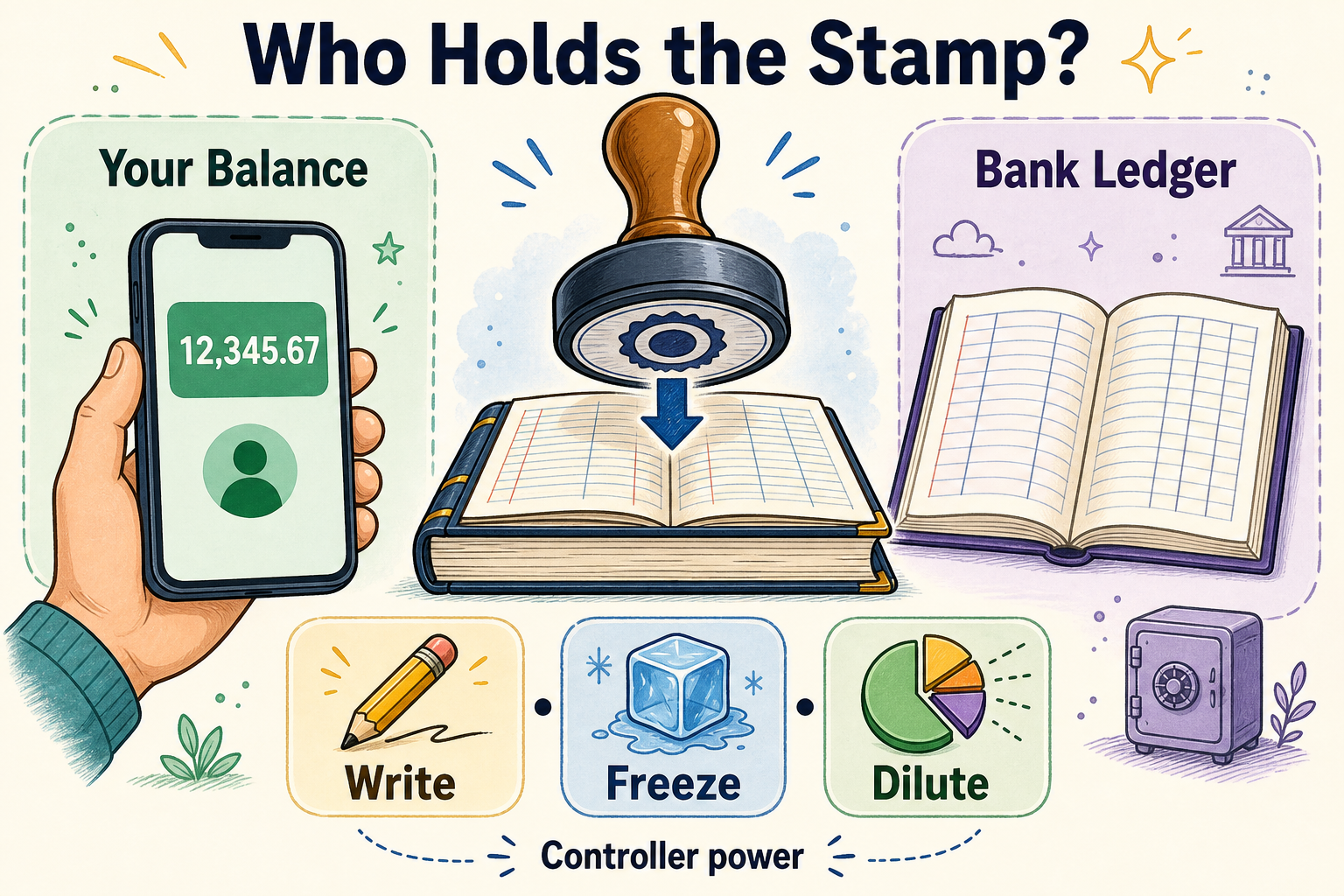
A research investigation of Lyn Alden’s Broken Money (2023)
Executive abstract
Primary source: Lyn Alden, Broken Money (2023). This package follows and extends that book’s diagnosis with 2024–2026 evidence.
Lyn Alden’s Broken Money argues that the global financial system is not merely in a bad cycle. It is structurally misaligned with savers’ need for a durable unit of account and settlement asset. The load-bearing break is technological: after the telegraph and telephone, transactions could move near light speed while scarce bearer settlement (gold) still moved at the speed of matter. Banks and states filled that speed gap with claim ledgers. Once claims floated free of gold (especially after 1971), pure fiat produced predictable entropy: broad money growth faster than hard assets, debt that must expand or reset, Cantillon winners near cheap credit and bailouts, financialization of housing and essentials, and chaos pushed onto the monetary periphery—while core reserve issuers carry the crown’s costs.
This package rebuilds the diagnosis from the book’s text, then stress-tests it with 2024–2026 debt, reserves, banking, and policy evidence, plus contrarian views. Open scarce digital money appears as a candidate technological response, not a guaranteed fix; CBDCs and regulated stablecoins can either ease payments or finish deposit-style control.
Core mechanism
Telecom separated fast commerce from slow scarce settlement → claim proliferation and centralization → pure fiat after convertibility failed → debt-based money create/destroy rules + political seigniorage → debasement, leverage, Cantillon distribution, financialization → political and human-rights friction on deposit ledgers → race between user-verifiable scarce rails and issuer-controlled digital currency.
Short answers
| Question | Short answer |
|---|---|
| What is broken? | Scarcity and neutrality of the unit of account under pure claim ledgers at global scale |
| Root cause? | Speed gap + political control of the base ledger (not only “bad people”) |
| Who pays? | Periphery currencies first; then median savers via inflation, fees, and asset exclusion |
| Who wins? | Entities with cheap long-term credit and proximity to new base money |
| Exit? | Contested: harder money / open settlement vs CBDC control vs status quo muddle |
Table of contents
Also: question-ledger · references