Last updated: 2026-09-25
Honest limits: a person still steers
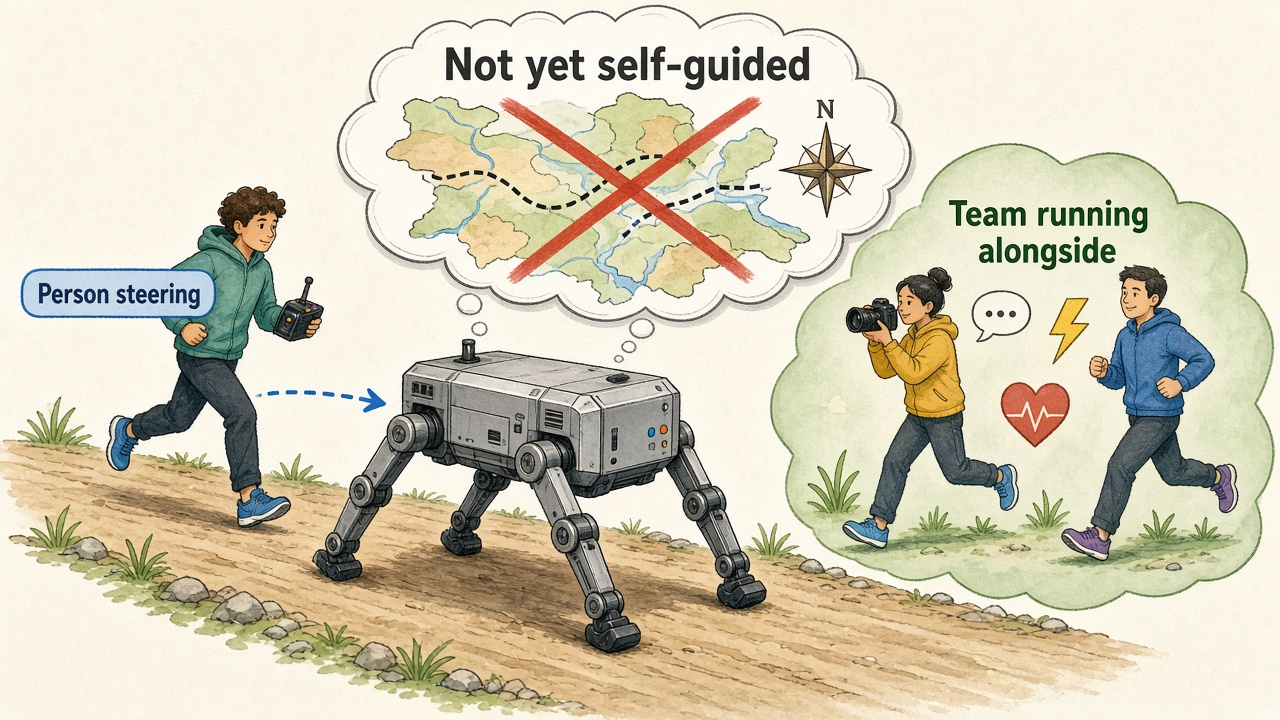
- A person steered it the whole way. The robot kept its balance and placed its feet, but direction and speed came from a person with a remote control. It carried a camera but no software to read the road. It does not yet find its own way.
- Finding its own way will cost power. Adding the "eyes and brain" to steer itself means more computers and sensors running all the time. Nobody has shown yet how much range that would take away.
- One robot, built by hand. This is a research machine. Making many that do the same, reliably, with water and dust protection, is still ahead.
- One day, one kind of road. A cool November day on paved road with leaves. Rain, heat, snow, or dust over this distance were not tested.
- Not published: how much it can carry that far, how long it takes to recharge, and exactly how big its battery is (the published figures do not agree). Any extra weight would shorten the range.
- A team helped. People ran beside it, filmed it, and took turns at the controls.
What comes next
For walking itself, range just took a big step. The next hill is a walking robot that goes the whole distance and finds its own way, without spending all its battery on seeing and thinking.
So be wary of claims like "endless range", "no people needed" or "storm-proof", and of numbers nobody has published.