Last updated: 2026-09-25
Why wasting less beats a bigger battery
If a robot runs out of battery, why not just give it a bigger one?
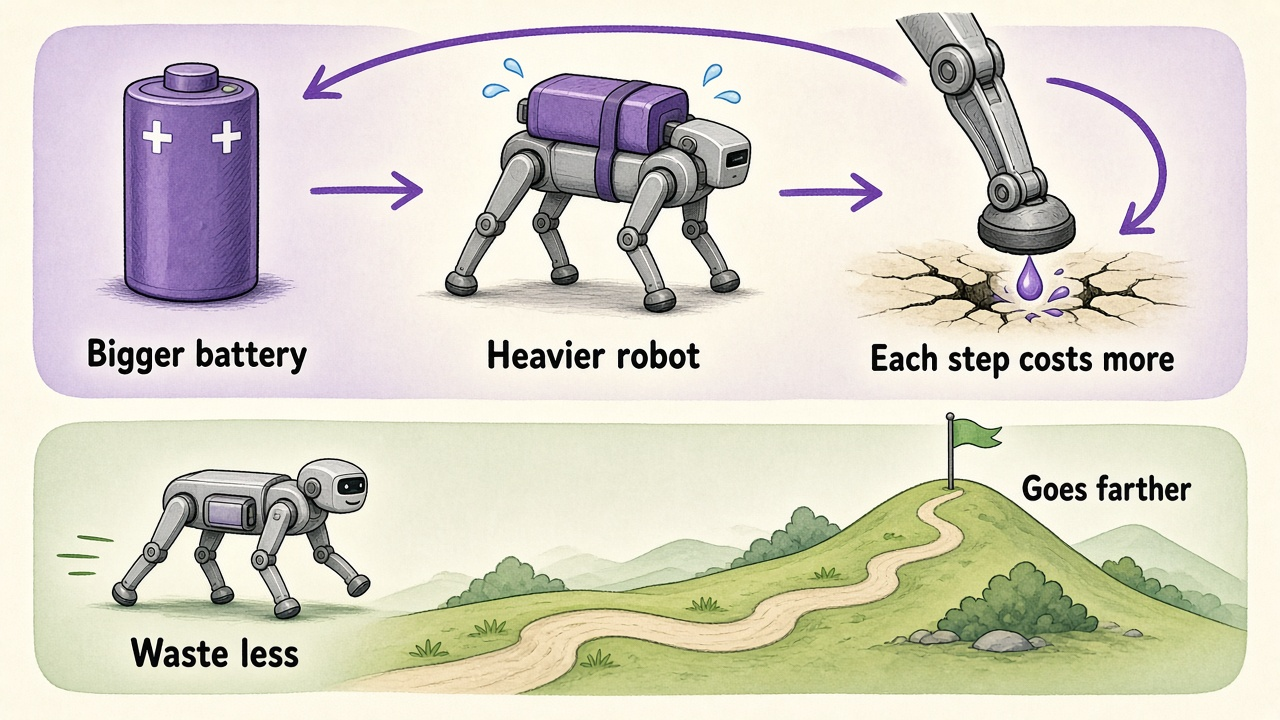
The bigger-battery trap
Batteries are heavy. Add more battery and the legs must hold up and swing more weight, so every step costs more energy. Motor heat grows faster than the weight does, so extra battery pays back less than you would hope.
The team did give the robot a bigger battery between its two races. They paid for the extra weight by making the legs lighter and the motors waste less. Across other four-legged robots, a bigger battery adds only a little range. This robot gets far more distance out of each unit of battery.
Slow is not always better
The computer and sensors use power every minute, moving or not. Walk very slowly and the trip takes longer, so that steady drain eats more of the battery. Walk too fast and the bumps and swings cost more. For this robot the least wasteful pace was about 3 metres per second, a steady jog of around 11 km/h.
Steady beats stop-and-go
At its first race the robot kept changing speed to stay with the runners around it. Every speed-up cost energy, and it ran flat about 10 km early. Pacing matters as much as parts.
So range grows by wasting less per step, at a steady pace. Not by carrying more.