Last updated: 2026-09-25
Where a walking robot's energy goes
A wheel rolls. Once it is moving, it needs only a little push. A leg is different. It has to hold the body up the whole time, even when standing still, and it stops and starts again with every step.
In an electric motor, holding up weight takes electric current. Current flowing through the motor's copper wires makes heat. That heat is energy the battery paid for that does not move the robot anywhere.
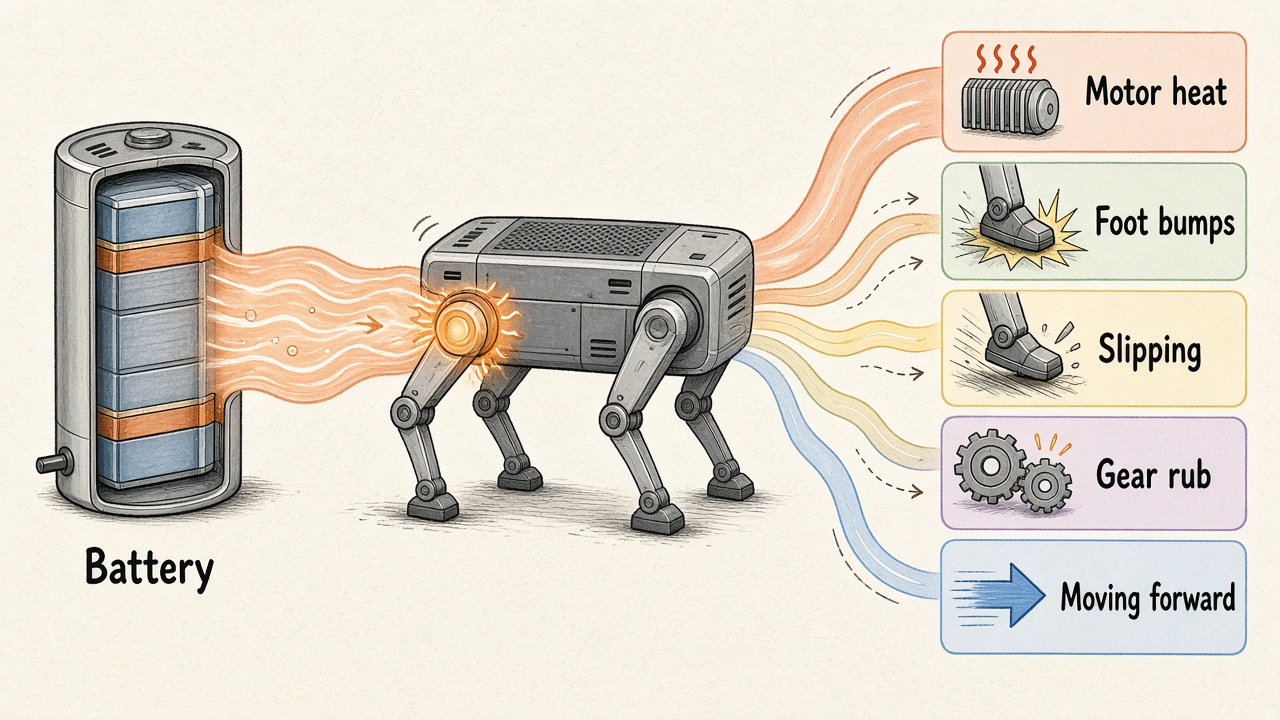
The leaks
- Motor heat. On flat road, about two-thirds of the robot's power turned into heat in its motors and the electronics that feed them.
- Foot bumps. Each time a foot slams down, some motion is lost as a jolt.
- Slipping. A foot that skids wastes the push it was giving.
- Gear rub. Gears and joints lose a little to friction.
- Always-on electronics. The robot's computer and sensors draw power the whole time.
A fair yardstick
Engineers compare walkers with a number called cost of transport: how much energy it takes to move each kilogram one metre. Lower is better. It lets you compare a robot, a person, and a car fairly, whatever their size. This robot's number over the whole marathon was 0.25.
Downhill gives a little back
Going downhill, the legs act as brakes. The motors then work like small generators and push a little energy back into the battery.
So the range of a walking robot is set by one thing above all: how much energy leaks away with every step.