Last updated: 2026-09-25
A robot dog walks a whole marathon on one charge — Tutorial
A four-legged robot can now go a whole marathon on one battery charge because it wastes much less energy with every step. That means walking robots can finally travel far enough for long jobs, far from any charger.
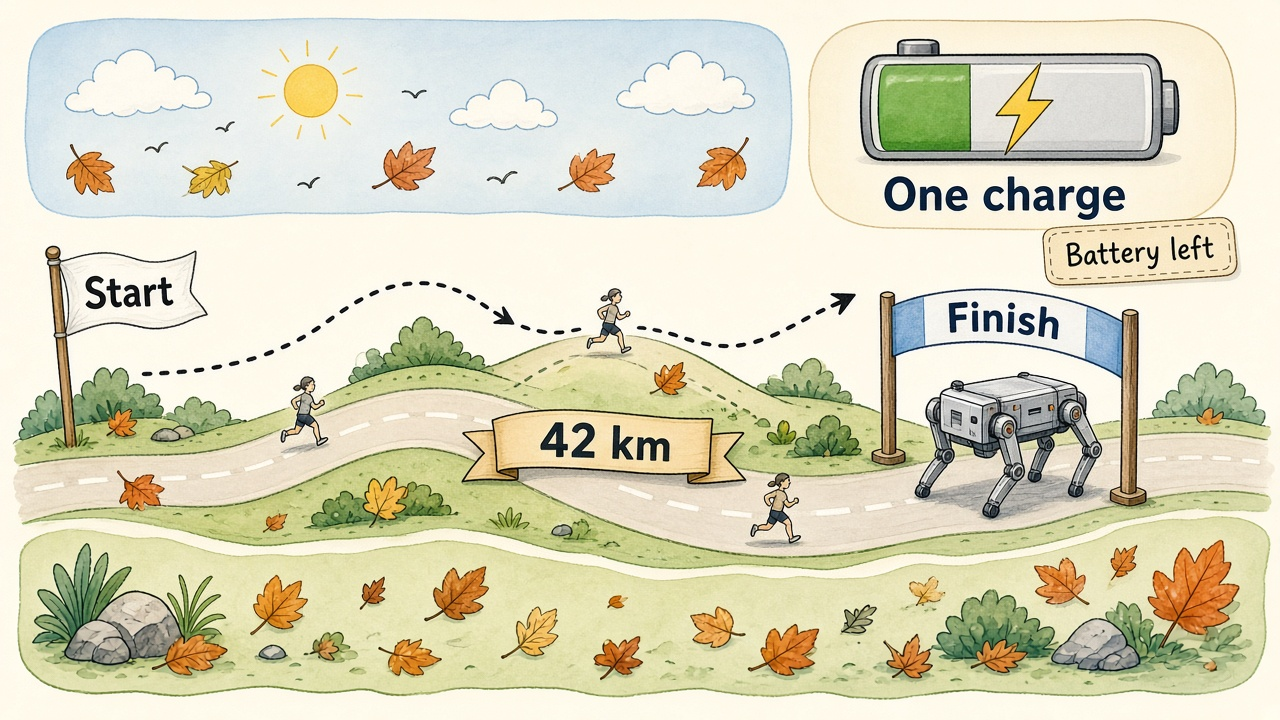
In plain words: robot dogs used to run out of battery after a short walk. Engineers found where each step was wasting energy and fixed it, and one walked 42 km over hills without recharging. A person steered it the whole way, and that limit stays in the lesson.
| Page | Title | Concept (one line) | Best read | Illustration |
|---|---|---|---|---|
| 01 | A whole marathon on one charge | A four-legged robot walked a full 42 km road marathon, over hills, without recharging or swapping its battery. | First. | 01 |
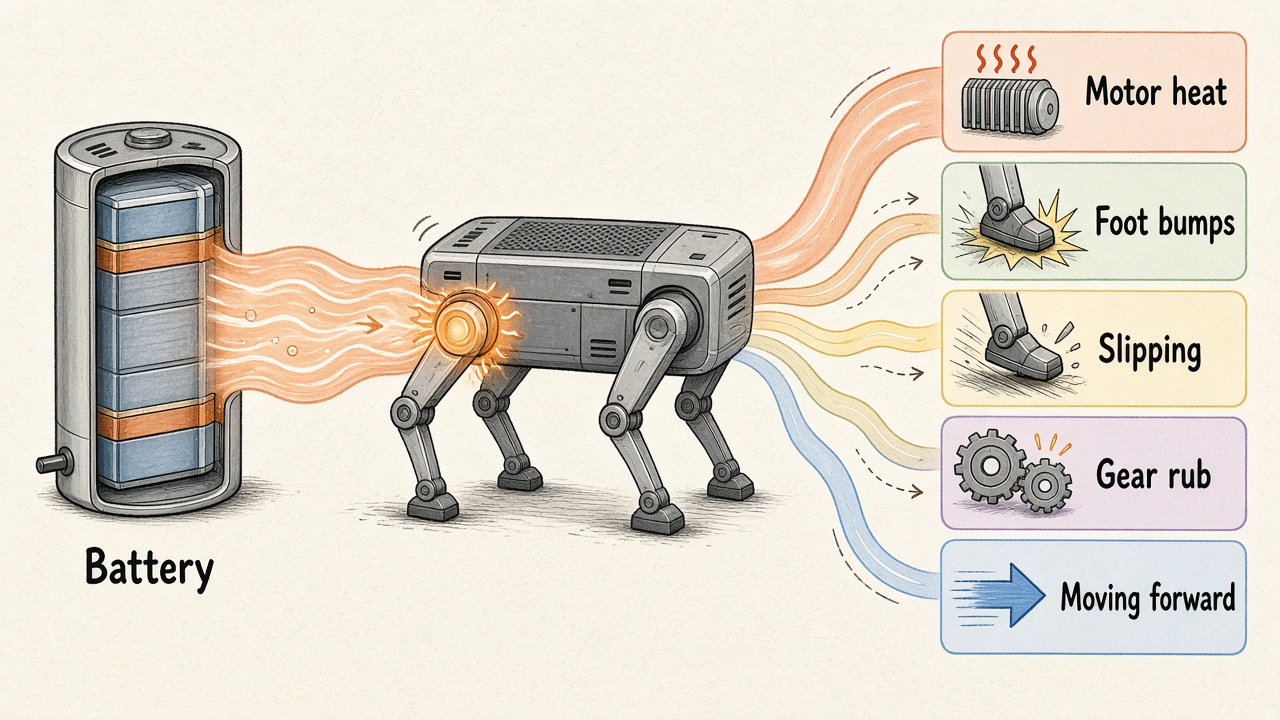
| 02 | Where a walking robot's energy goes | Motors heat up just holding the body up; feet bump and slip; gears rub. Range depends on cutting that waste. | After chapter 01. | 02 |
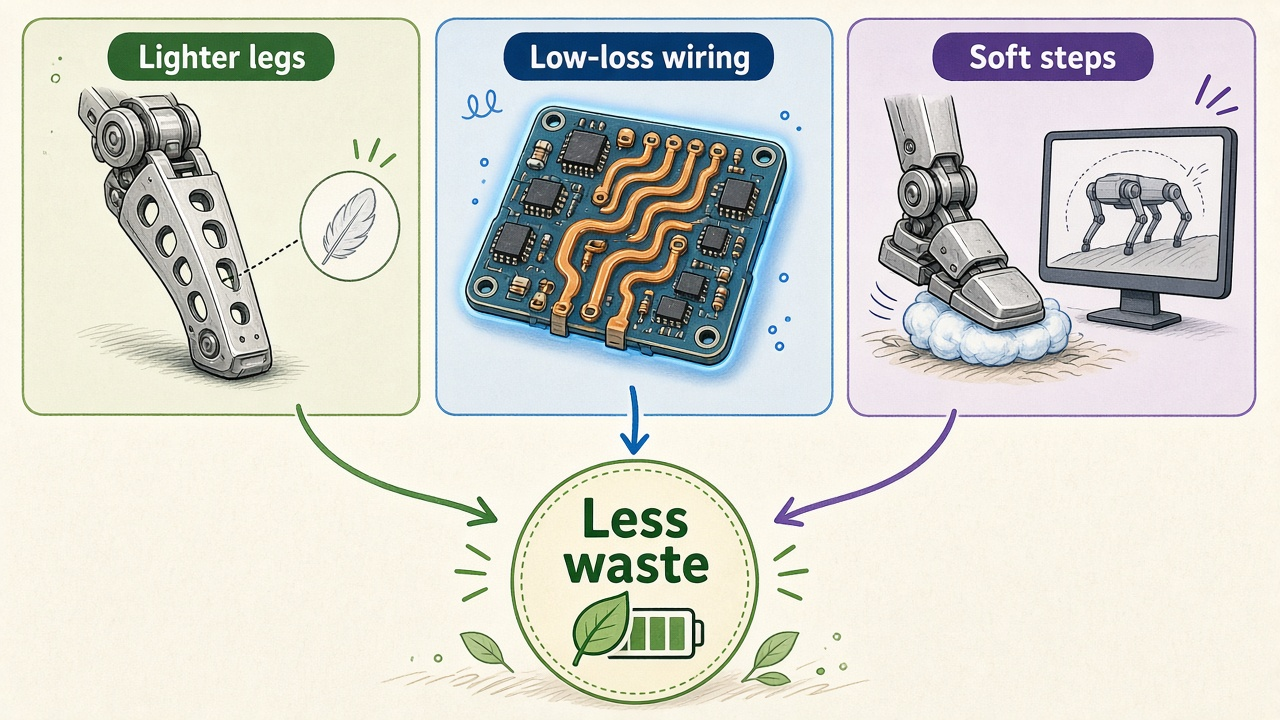
| 03 | Three fixes that work together | Lighter legs, low-loss motor electronics, and a walking style learned in simulation that steps softly and does not slip. | After chapter 02. | 03 |
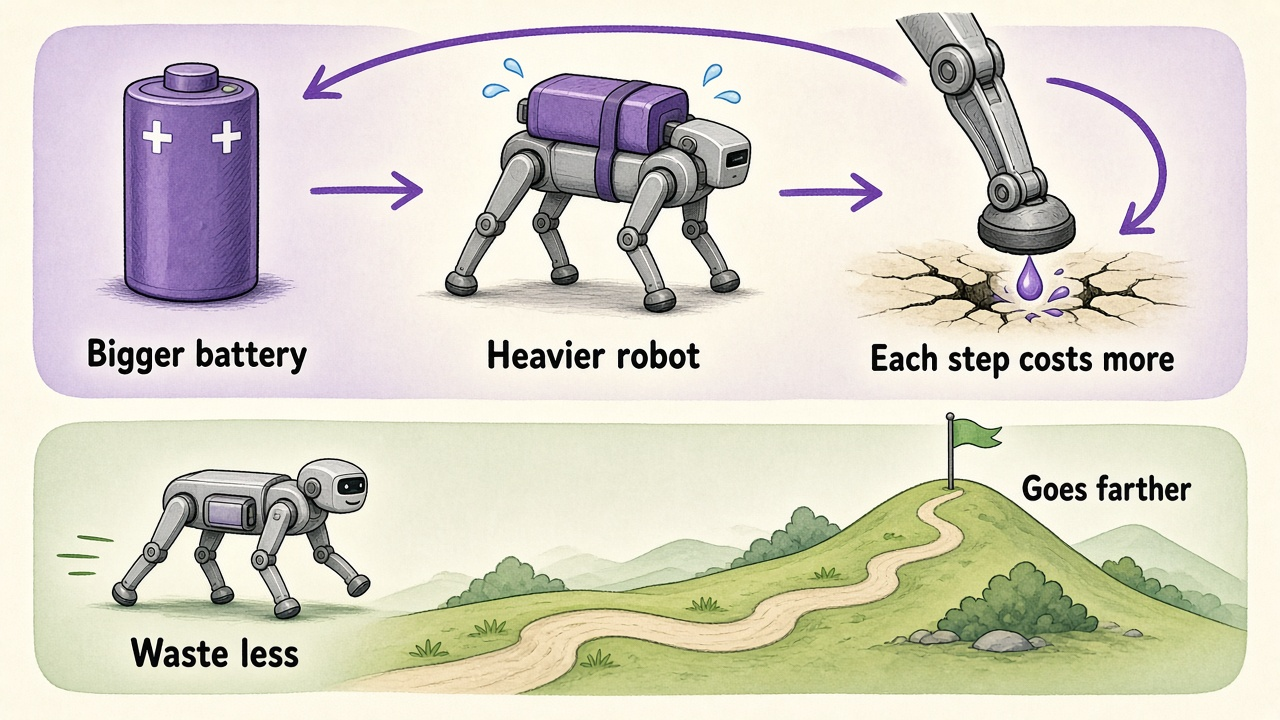
| 04 | Why wasting less beats a bigger battery | A bigger battery makes every step cost more; very slow is wasteful too. A steady pace and less waste win. | After chapter 03. | 04 |
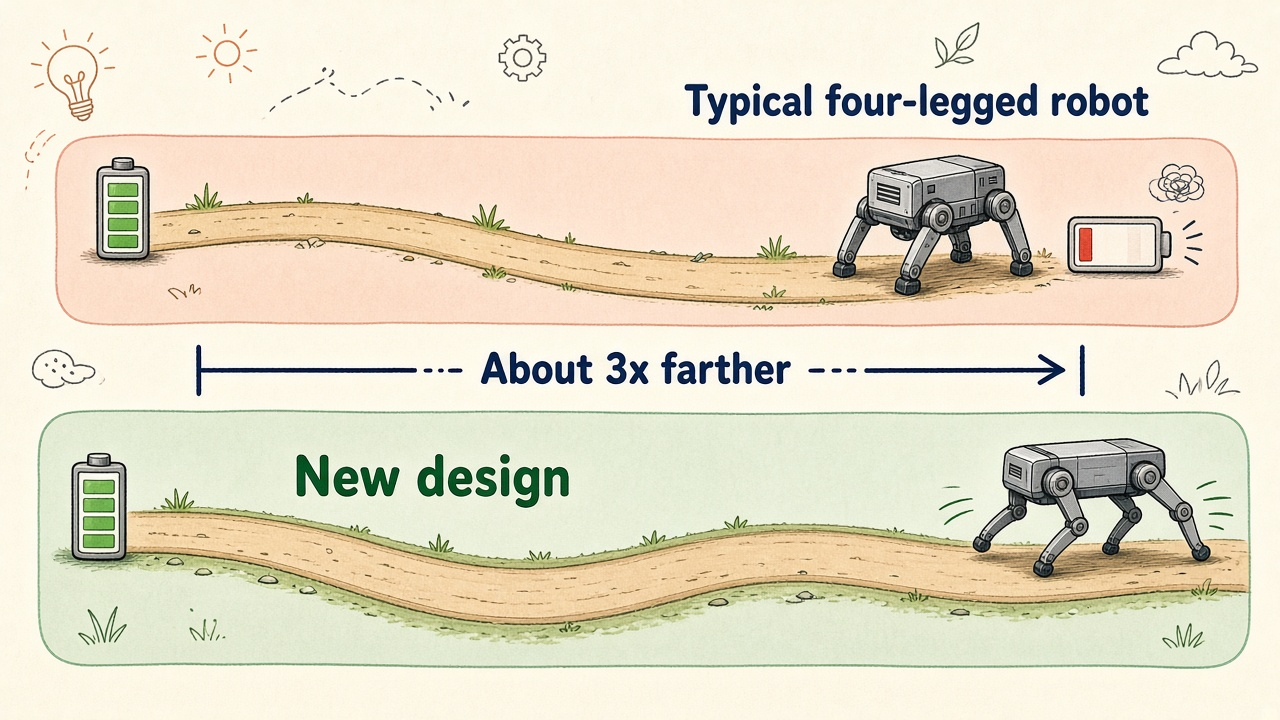
| 05 | About three times farther | For its battery size it goes about three times farther than other four-legged robots, but wheels still win on smooth ground. | After chapter 04. | 05 |
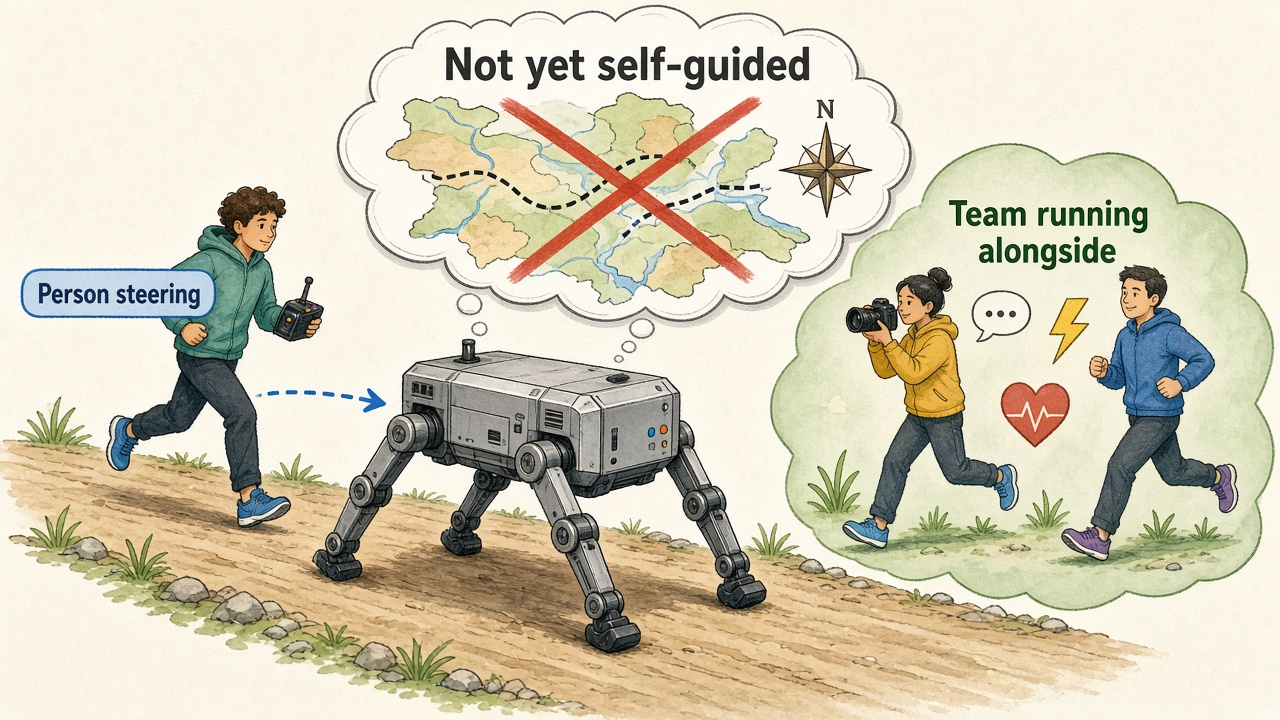
| 06 | Honest limits: a person still steers | A person steered it; one hand-built robot, one cool day, paved road. Payload, recharge time, and weather are not published. | After chapter 05. | 06 |
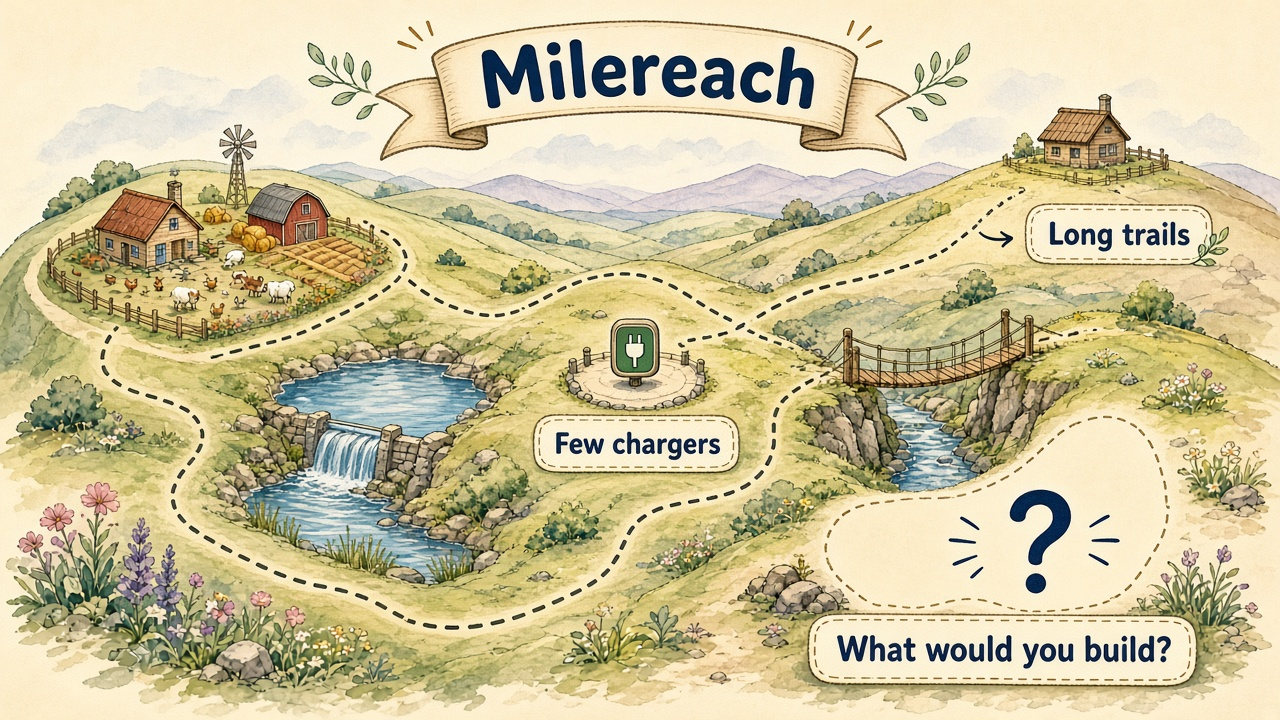
| 07 | Invent at Milereach | Invent a way the long hill routes of Milereach get covered. Leave the design open. No brand. | Last, when you are ready to invent. | 07 |
Invent with this lesson at https://warmersun.com/forge/?q=spotlight-automator-milereach-one-charge-2026. Free signup. No card.
Sources
- Peer-reviewed science journal paper by the research team (published 23 Sep 2026) — race time and distance, single battery charge, energy used, cost of transport, loss breakdown, range estimate, comparison with other walking robots
- University research releases (Nov 2024 and Sep 2026) — the race, the first attempt that ran flat at about 37 km, the team alongside, the path to a product
- Independent science reporting (Sep 2026) — a person steering by remote; outside expert views on what the run did and did not prove
- The team's public race logs and training code — energy use over the run, no battery swap
- University release (15 Nov 2024) — battery capacity raised by 33% after the first attempt ran flat (chapter 04); the journal paper lists the robot's two battery pack options
- Journal paper figure caption — each leg weighs 1.1 kg without its motor unit (chapter 03)
- Journal paper extended data table — treadmill test at 4 m/s: about 40% more energy lost without the soft-footfall rule (chapter 03)
- Journal paper supplementary data — battery and range figures for 12 electric four-legged robots, many estimated from maker spec sheets (chapter 05)
- Still unresolved (September 2026) — exact battery size and steepest slope (published figures disagree), reasons for short stops, payload, recharge time, weather tolerance at this distance