Last updated: 2026-09-02
Two clocks
When a phone says a payment “went through,” it is usually reporting the fast clock: an operator has ordered the transfer and shown a success screen, sometimes in a fraction of a second. On some public-ledger dollar rails that fast signal is a preconfirmation — a preview of the next block, not the court.
The slow clock is the court. The ledger still has to post a real block. Ethereum, sitting underneath a layer 2, still has to receive the data. If someone needs to withdraw from the fast chain back to Ethereum, that can take hours to days, because there has to be time to challenge a lie.
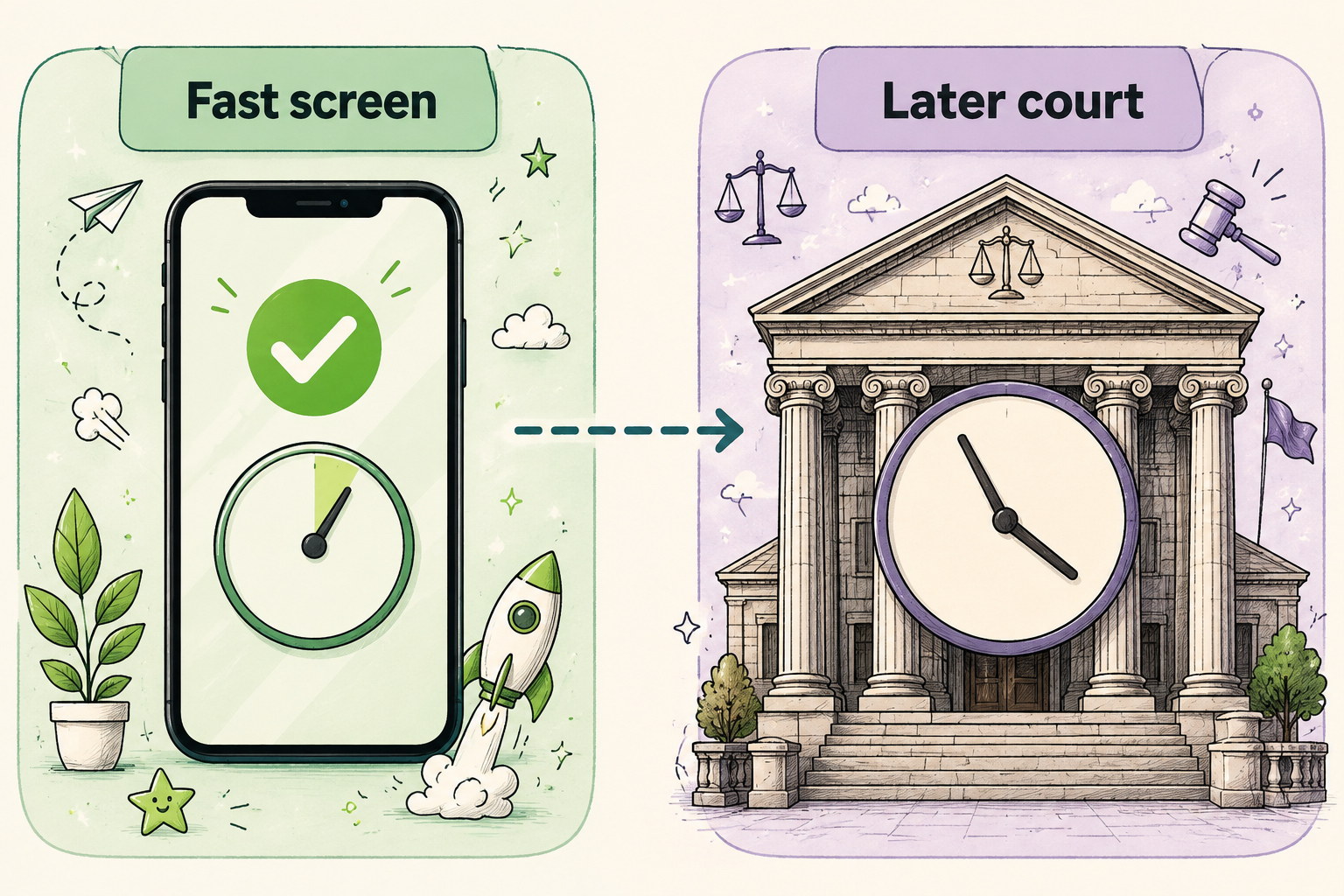
These clocks are easy to mash into one word: instant. Instant for a stall restock is the fast clock. Instant as in “no one can ever unwind this” is the slow clock. They are not the same promise.
The hard-to-vary fact is this: if you treat the fast screen as the finished court, you have built a hosted matching engine — a shop that shows green lights — not a public ledger with an appeal. Apps that restock ice from a 200 millisecond tick without a plan for a wrong tick will strand a stall with spoiled fish and a dispute.
A good local invent names both clocks. Who can spend after the fast beep? What happens if the later court disagrees? That is not pessimism. That is the mechanism.