Last updated: 2026-09-02
A slice you can freeze
Neighbors sometimes want a small slice of a stall after hours — a claim on tomorrow’s catch, a padlock on a shared till, a line in a notebook. Paper shares get lost. Handshake shares turn into arguments. A token is just a ledger line that a phone can hold: this person owns this slice.
On cheap public-ledger dollar rails, some tokens are built so the issuer can pause transfers, block an address, or seize a balance. That is not a bug in the regulated case. Securities and many dollar tokens are required to freeze. A chain-native token standard can make those controls one shared surface so wallets and shops integrate once. The same controls mean a slice is not an unstoppable coin.
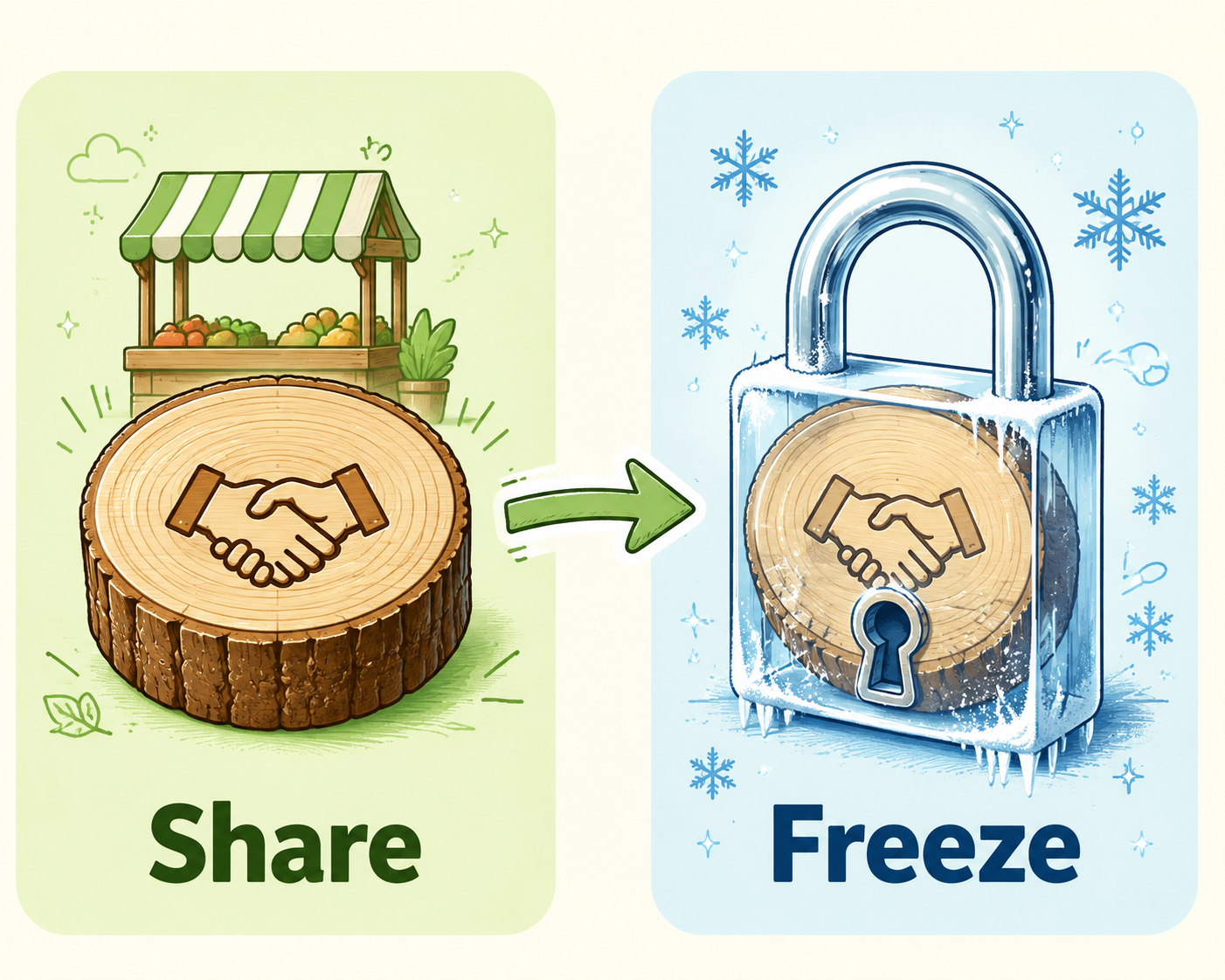
A local application is a stall-share workflow neighbors can hold after hours: how big the slice is, who can freeze it, who sees the freeze, and what happens to the padlock if the issuer pauses the token. Invent the local rule. Do not invent a magic coin that courts cannot touch.
The tempting mistake is to treat “on a blockchain” as “no one can stop this.” If an issuer can freeze, say so in the invent. If Mira would not accept a share that can vanish on a compliance screen, the design is not done.
A second tempting mistake is a city-wide stock exchange in the first week. Pilot one stall’s after-hours slice. Keep the notebook honest about freeze.