Last updated: 2026-09-02
Arrive and spend
A family send can leave a city and still miss Sunday market. The transfer shop is shut. The bus has gone. Grandmother is waiting with an envelope that did not arrive. The harm is not that money cannot move. The harm is that it does not arrive in time to spend.
Cheap public-ledger dollars unlock a remittance-shaped use: a send that can show on a cousin’s phone before the stalls open, with a fee small enough that a week’s float is not eaten. Arrive-and-spend means the cousin can pay a stall in the same dollars, or cash out through a door that is actually open, without a second three-day wait.
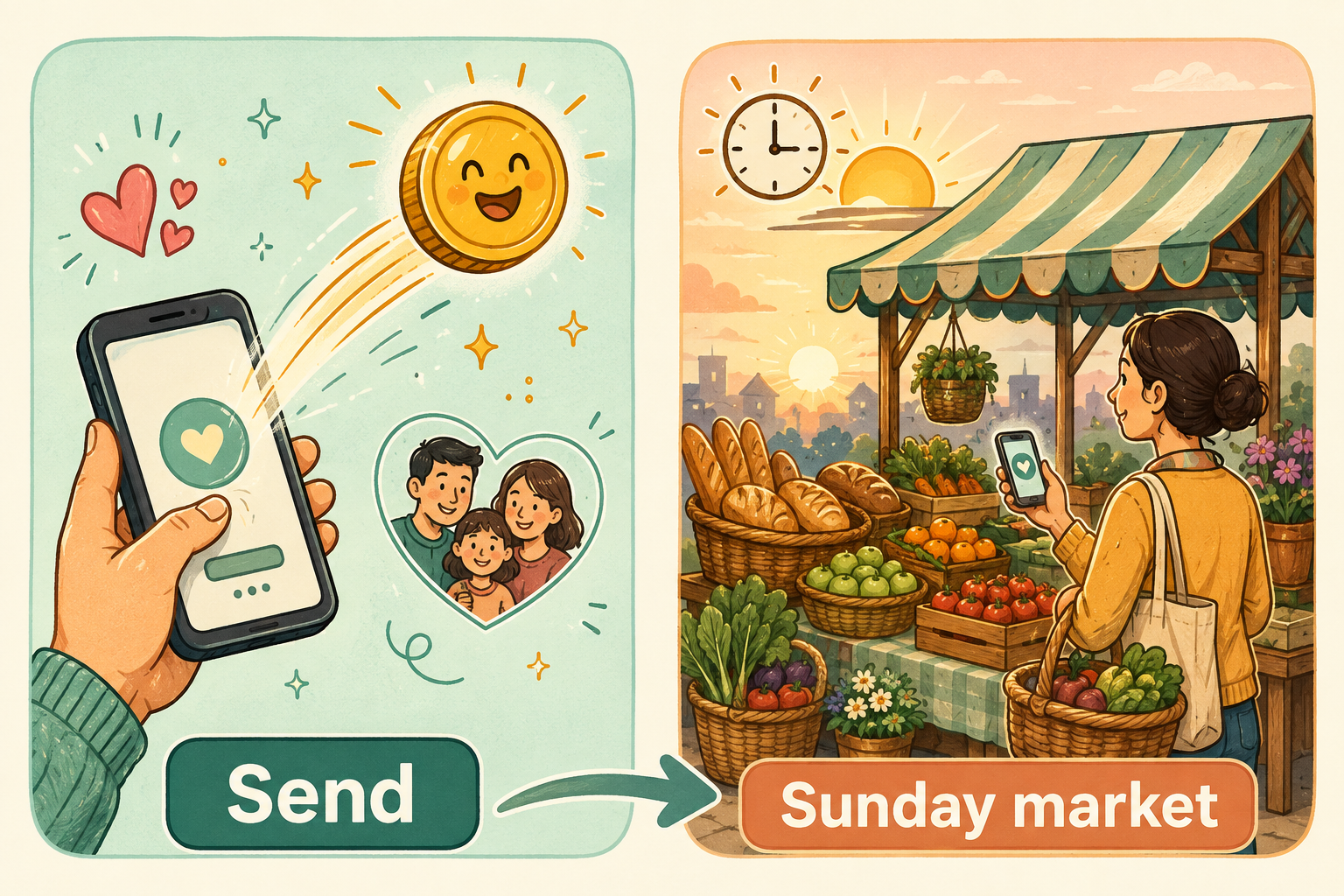
A local application is one family corridor: named sender, named receiver, a Sunday deadline, and one failure if the shop is shut. It is not a new national currency. It is not a volume slogan about trillions of tokens circling a chain.
Honest limits stay on the table. Someone still needs an on-ramp at the sending end and a way to turn the token into bread at the receiving end. An issuer can freeze an account. A stalled operator pauses the corridor. If your invent assumes the shop is always open and the token is always cash, you have drawn a poster, not a corridor.
Name when the cousin can spend. Name what happens if the phone is dead. Then the invent is a send a family could try this year.