Last updated: 2026-08-15
6. Bonds Fine as a Web
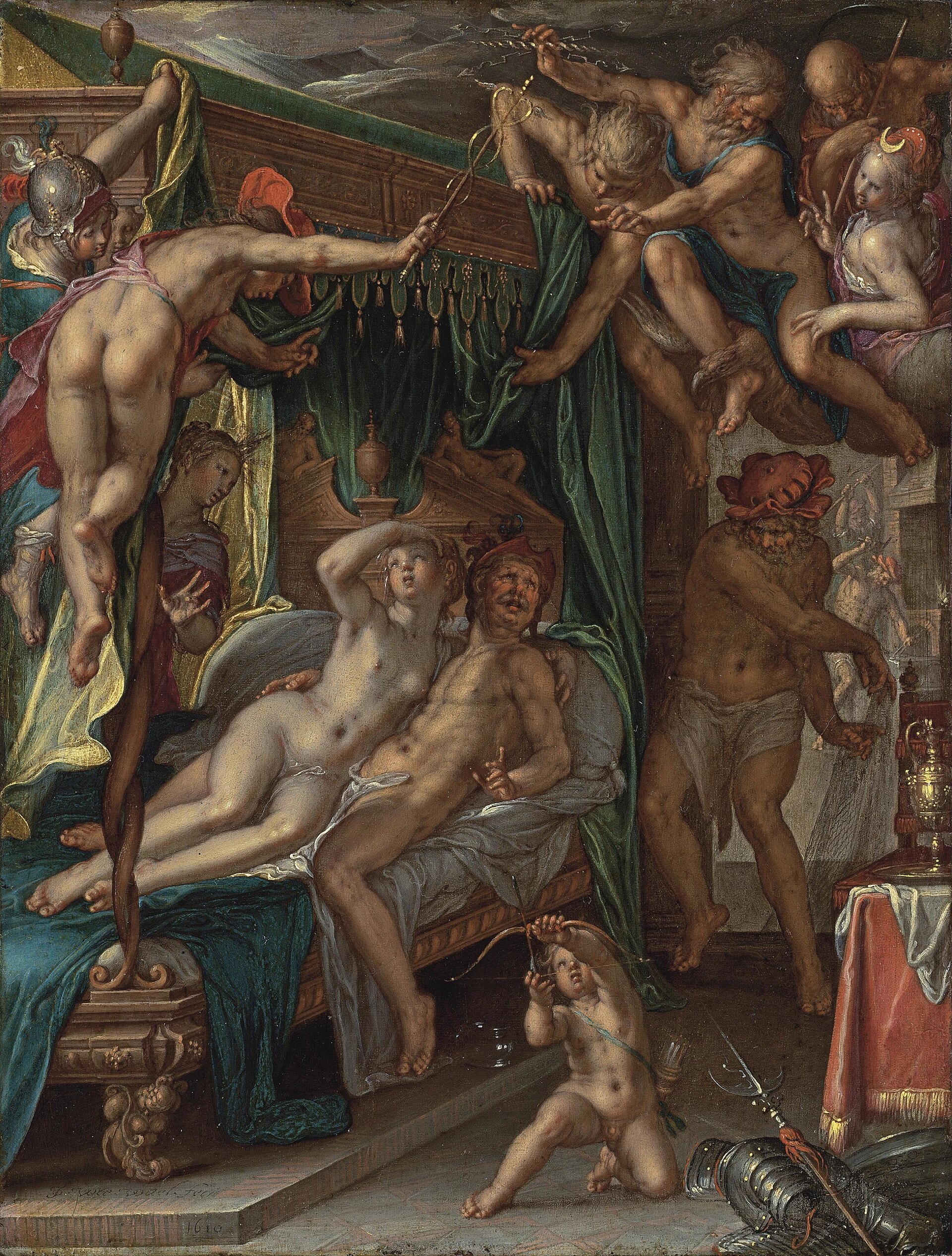
Helios saw them.
That is the whole beginning. Not a rumor. The sun, who sees for a living, marked Ares and Aphrodite lying together in the smith’s house and took the news to the husband.
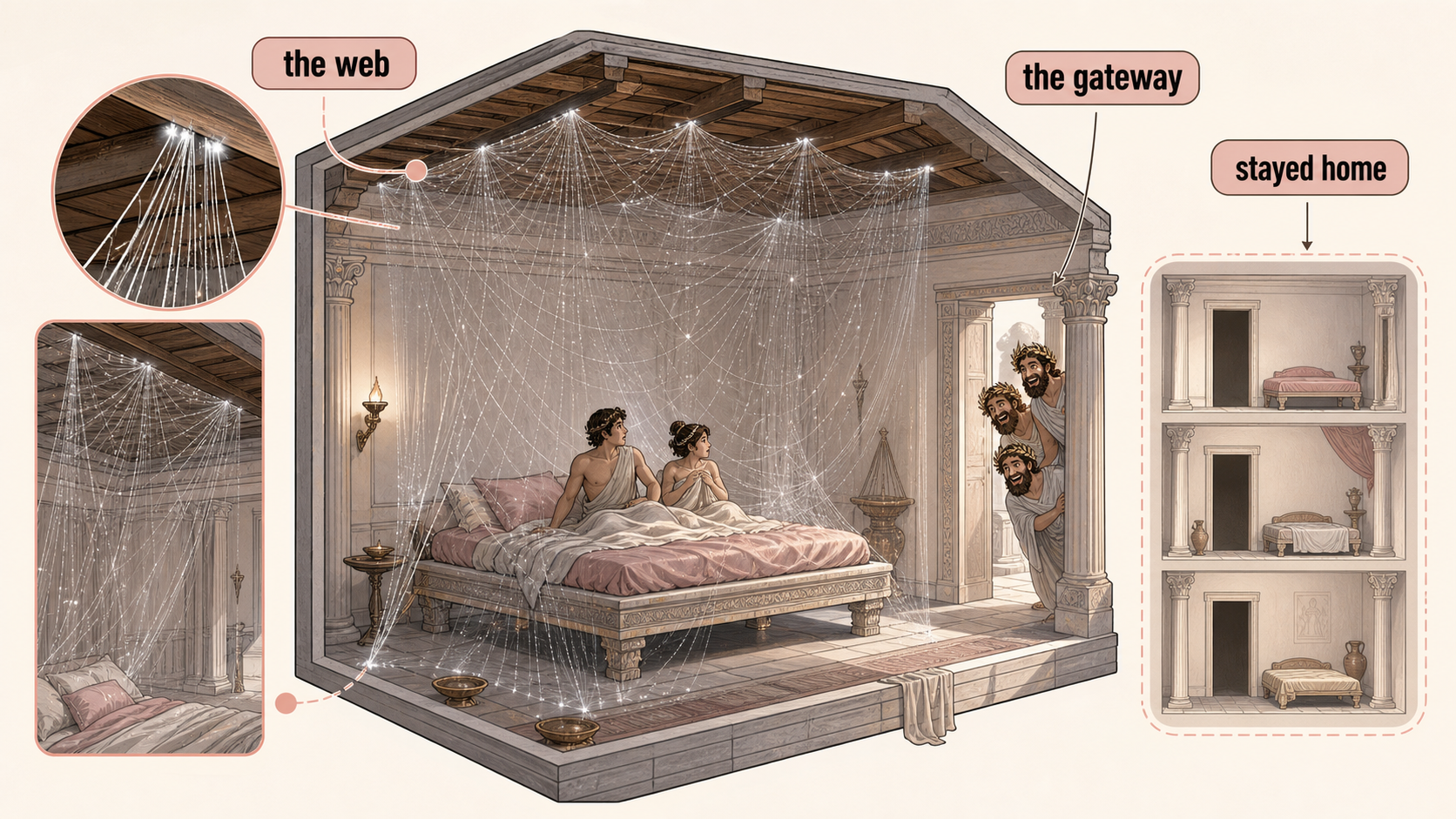
Hephaestus heard it and went to the forge. He set the great anvil on its block. He made bonds that could not be broken or loosed. Then he went to the bedroom and spread them around the bed-posts and hung more from the beams, fine as spiders’ webs, so well made that no one, not even the gods, could see them.
He pretended to leave for Lemnos.
Ares kept no blind watch. He saw the craftsman go and walked straight to the house. Aphrodite had only just come from her father. Ares took her hand. Come to bed. Hephaestus is gone.
A welcome thing, the poem says, it seemed to her to lie with him.
They went to the couch. They lay down. The bonds clung. They could not stir. Then they knew there was no more escaping.
Hephaestus had not gone to Lemnos. He stood in the gateway and screamed for every god to come see a laughable matter and a monstrous one.
The gods came. The goddesses stayed home, for shame.
That refusal is already a criticism, sitting in plain sight.
The male gods laughed. Hermes said he would take three times the bonds, and the goddesses looking too. Poseidon did not laugh. He stood surety — he promised to pay if Ares ran — and that promise is what opened the trap. Hephaestus wanted his bride-price back from Zeus. What he got was a fine, a bath, and a proverb.
Ares is swift, the song says. Hephaestus is slow. The slow catch the swift.
Later English will call the bonds a golden net. Homer does not. He says spider-web, unbreakable, unseen. Gold is how a later ear recognizes a divine object. The old image is better. You do not see a web until you have already walked into it.
The marriage, if this is the marriage, produces no child in these lines. It produces a proverb and a bath.
The child will come later. It will be an object. It will be worn by the daughter of the affair.