Last updated: 2026-07-20
AI × additive manufacturing convergence
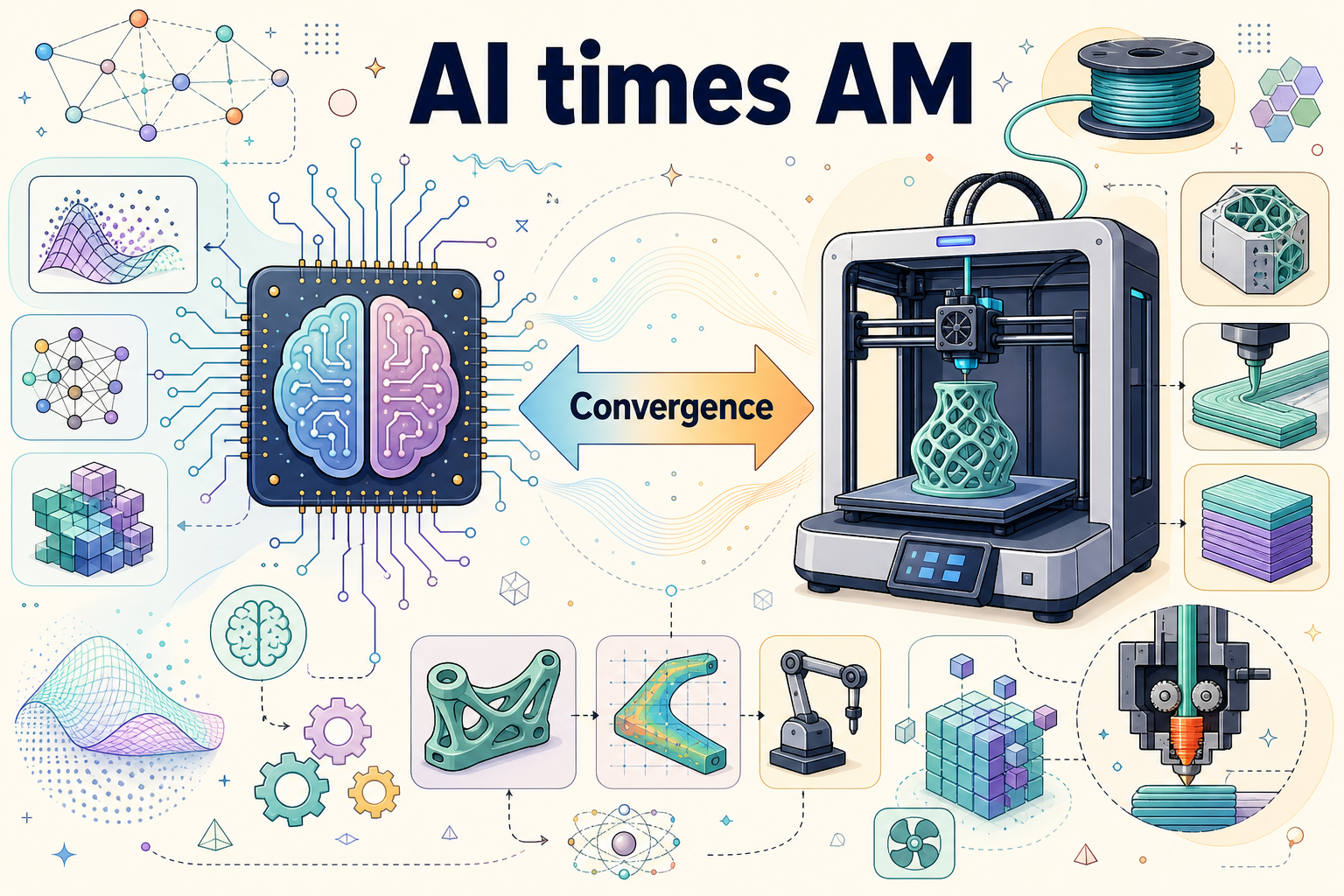
Strength of the convergence in 2026
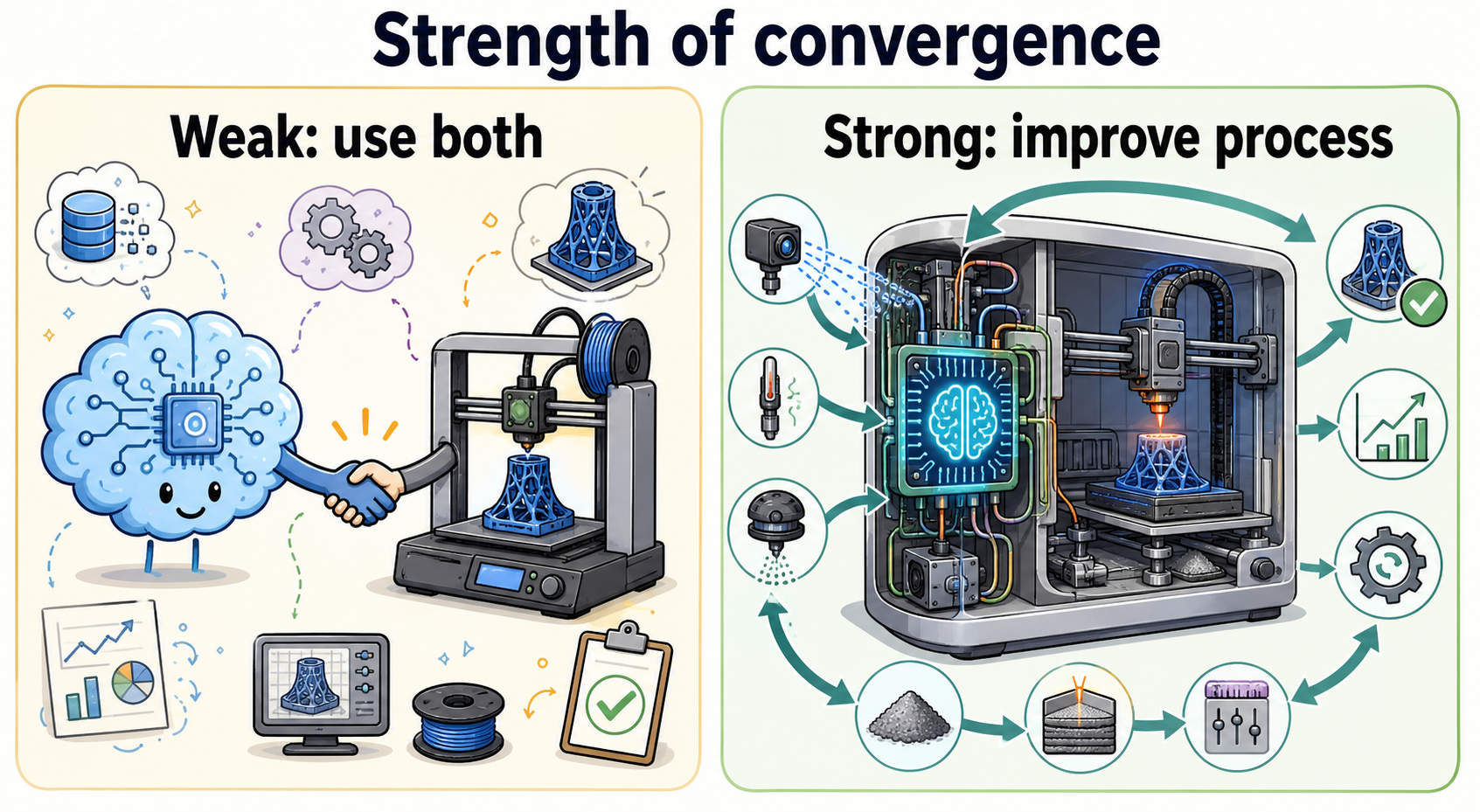
❓ Is AI × AM weak convergence or strong convergence?
Weak convergence (common and valuable today): use AI and AM together—generative design proposes a lattice bracket; an engineer prints it on an existing PBF machine. Each EmTech helps the project; neither fundamentally unlocks a new regime in the other every week.
Strong convergence (emerging, uneven): use AI to push AM’s process capability—closed-loop control of melt pools, learned parameter sets that expand alloy windows, synthetic monitoring data that trains defect models when labeled failures are rare. Here AI changes what AM can reliably make.
As of 2026, industrial reality is mostly weak-to-moderate convergence with pockets of strong process-AI. Marketing often labels the whole stack “AI-powered manufacturing.” Serious buyers separate design AI, build-prep automation, and in-process control.
Generative design and topology optimization
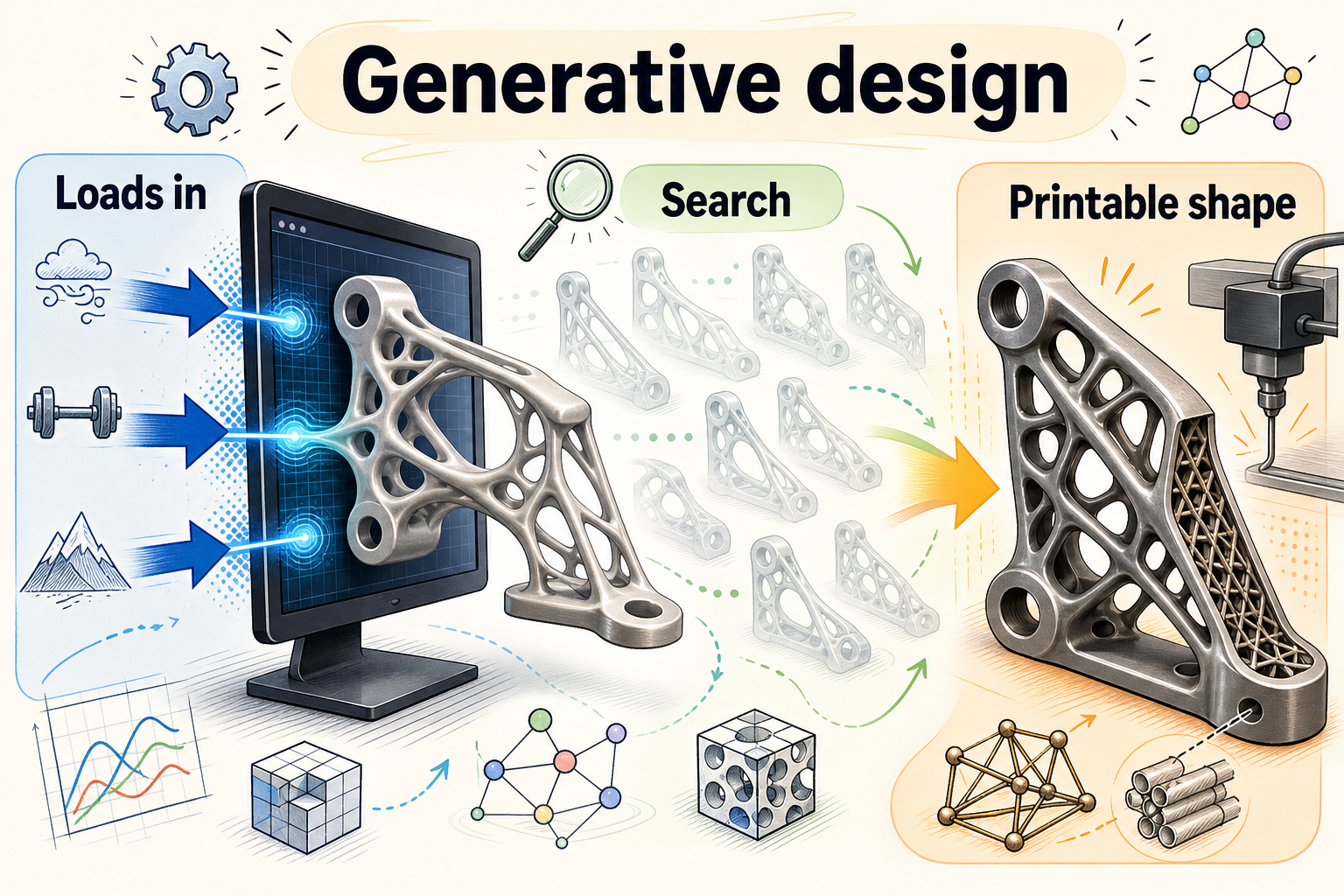
❓ What is production-used versus slideware?
Topology optimization and generative design explore geometries under load and constraint sets. AM is uniquely able to produce many of those shapes. Tools in active professional use include AM-aware platforms (e.g., nTopology-class implicit modeling, Altair Inspire-class optimization, Autodesk Fusion generative features) and build-prep suites (Materialise Magics and peers) that now advertise faster support generation and implicit workflows (2025 release coverage).
Limits:
- Optimization ignores poorly specified loads and manufacturing constraints → pretty failures.
- Fatigue, buckling, and certification still need human and test gates.
- “Organic” shapes that cannot be supported, inspected, or cleaned are not free wins.
Good explanation: Generative design searches a design space; AM expands the feasible manufacturing set of that space. AI does not remove physics or the need for a validation loop.
Process monitoring, twins, and LLMs
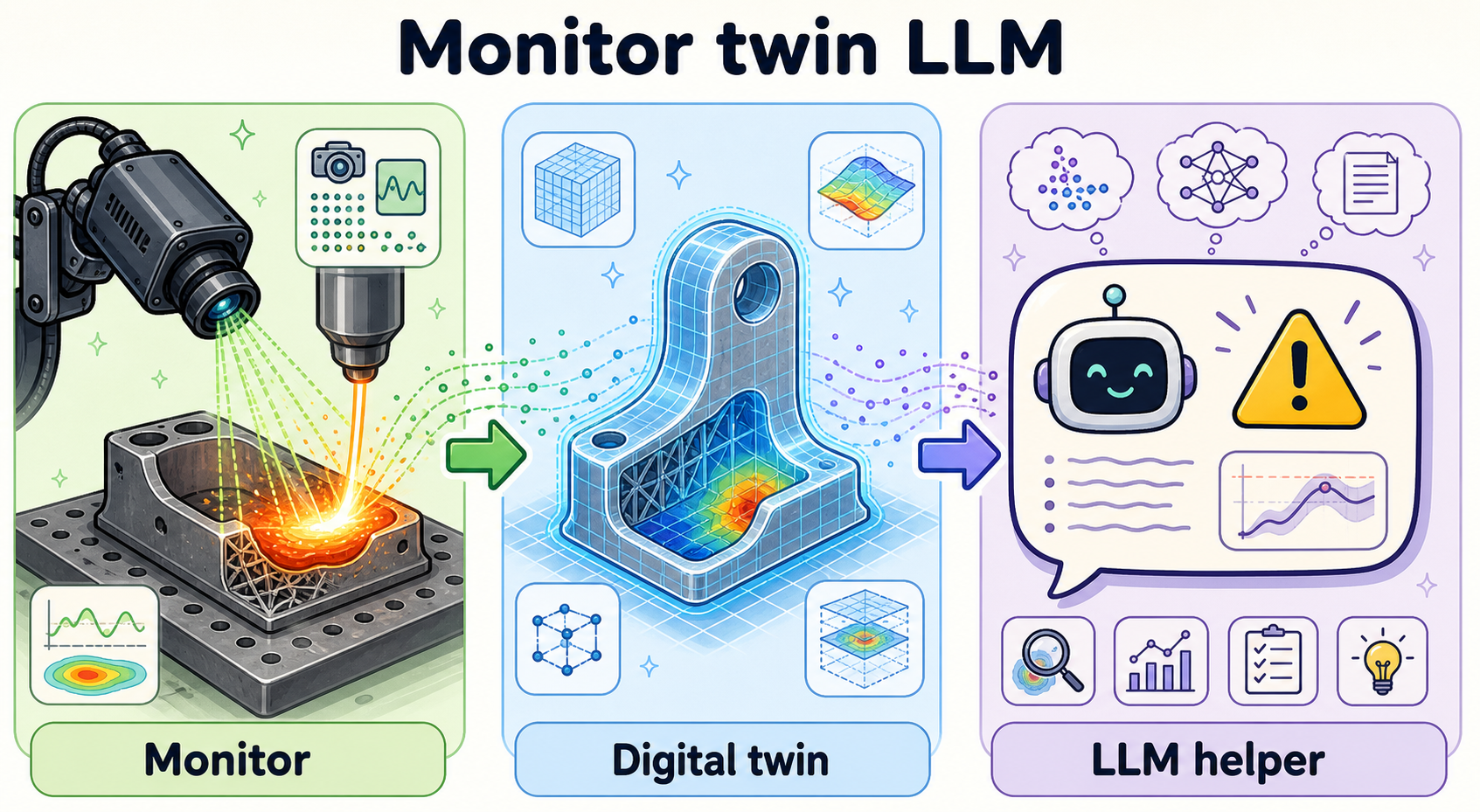
❓ Can AI replace traditional quality control?
In-process monitoring + ML classifiers can flag anomalies layer-by-layer, cut scrap, and focus NDT. They are increasingly table stakes on high-end metal systems.
Digital twins of residual stress and distortion help orientation and support strategy; accuracy varies by alloy and geometry. They assist engineers; they do not yet universally stamp “first-time-right flight part.”
LLMs and knowledge systems help retrieve process playbooks, draft work instructions, and tutor junior engineers. Risk: confident wrong metallurgy. Treat LLMs as interface layers over controlled knowledge bases, not as materials engineers of record.
A 2026 review framing of generative AI for AM emphasizes four buckets: generative design for AM; process planning/monitoring/control; data augmentation; knowledge acquisition—useful taxonomy for separating hype from roadmap items.
Talent bottleneck
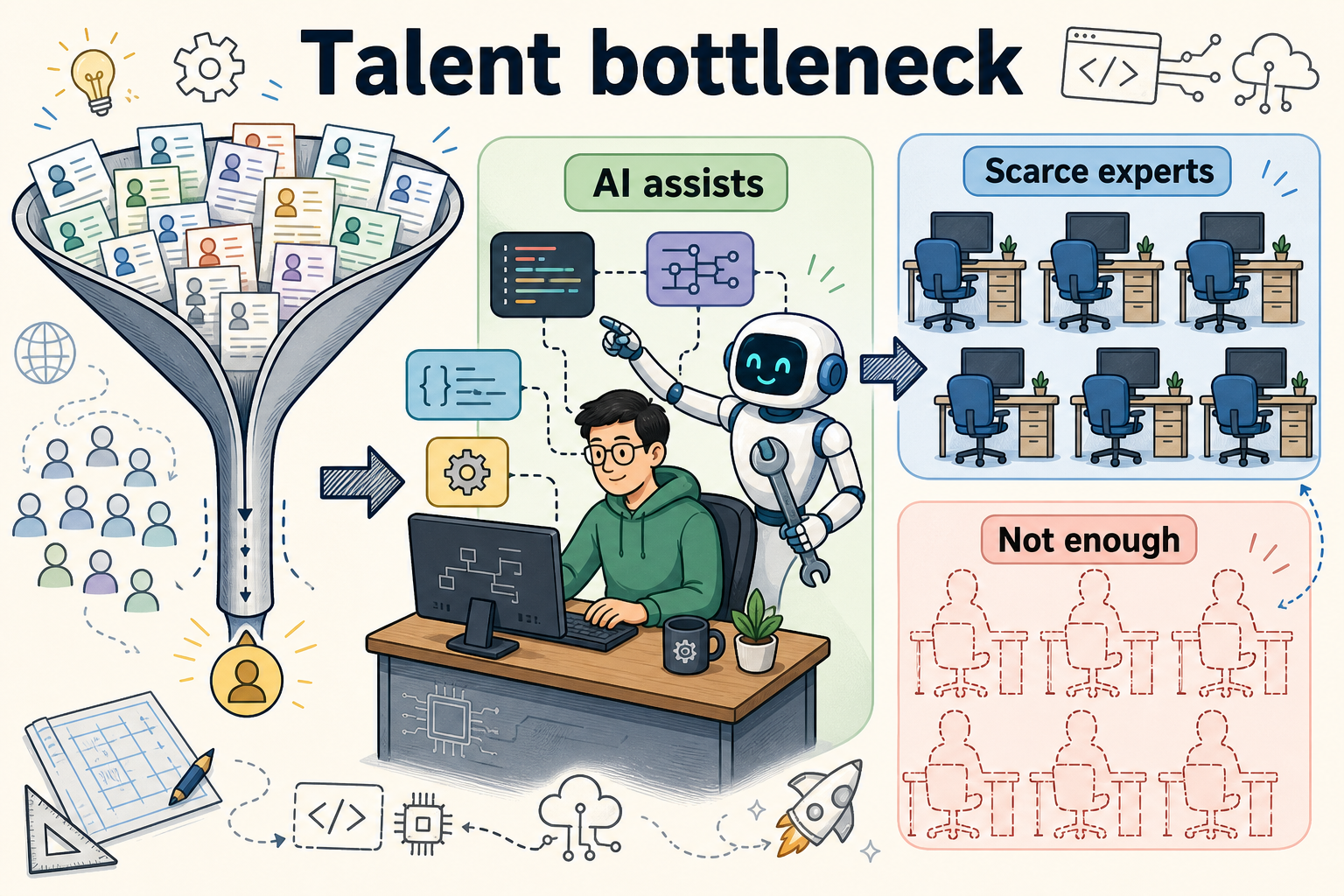
❓ Does AI remove the DfAM skills shortage?
Partially. Automated orientation, supports, and nesting compress technician time. Generative tools help non-specialists propose candidates. But responsibility for structural integrity, powder practice, and special processes remains scarce. AI concentrates some skill in software vendors and power users; it does not staff your night-shift HIP clerk.