Last updated: 2026-07-20
Consumer and prosumer vs industrial
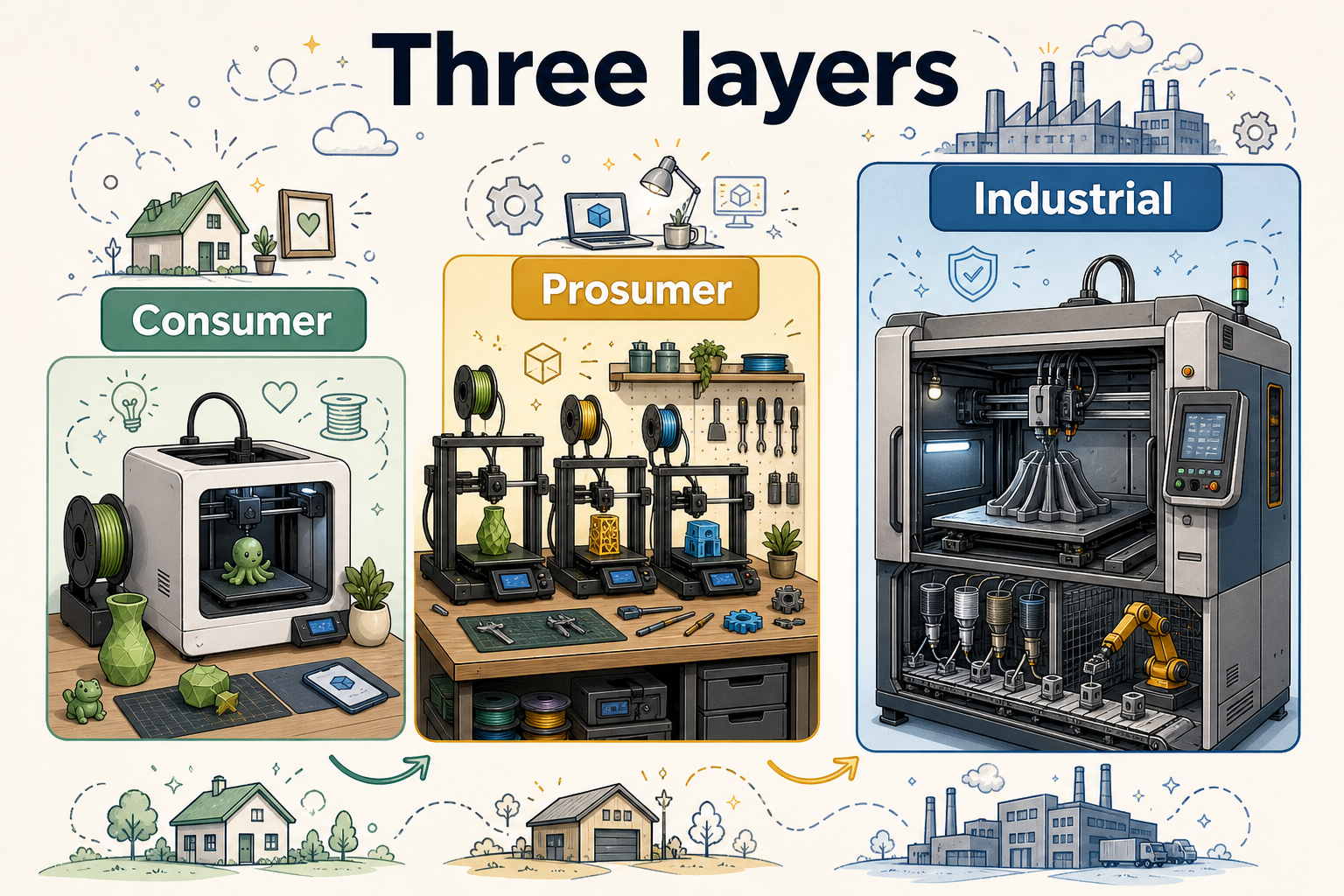
What happened to “every home a factory”?
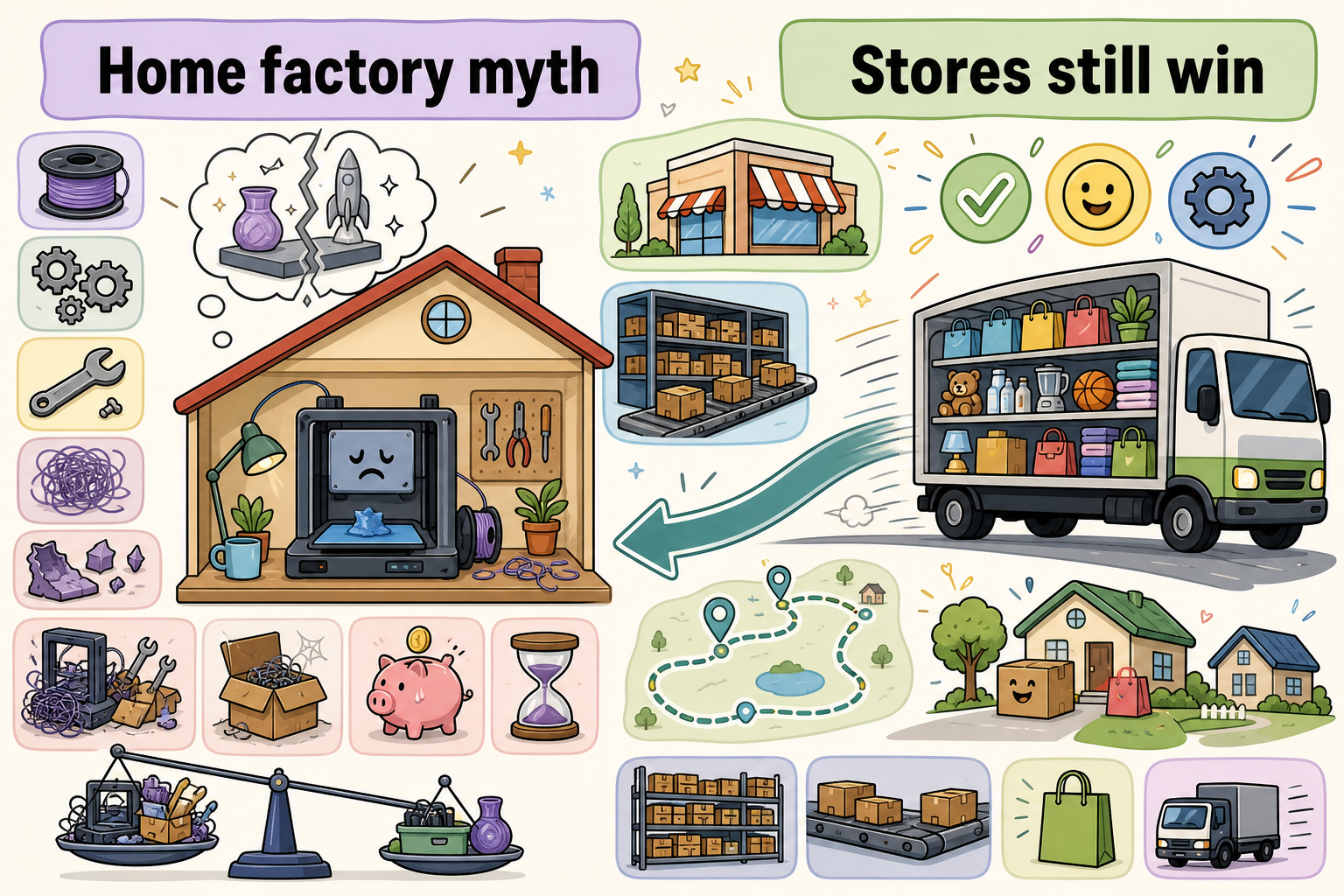
❓ Why did the 2010s consumer revolution narrative stall while industrial AM continued?
Around 2012–2015, desktop printers entered libraries, schools, and maker spaces. Media treated FDM plastic parts as the start of desktop factories. That narrative failed as a manufacturing revolution for clear mechanistic reasons:
- Most household objects are optimized for injection-molded unit cost, surface finish, and multi-material assemblies AM desktops do not match.
- Materials and reliability were toys relative to factory standards.
- Design skill and finishing labor did not disappear.
- Retail supply chains already deliver cheap goods faster than home print + sand + paint.
What remained valuable: education, prototyping, hobbyist creation, small-batch customized goods, and a talent pipeline. Gartner-era predictions (massive consumer IP destruction, universal home manufacturing) largely did not occur as stated—a useful humility check on AM forecasting.
The 2023–2026 prosumer speed wave
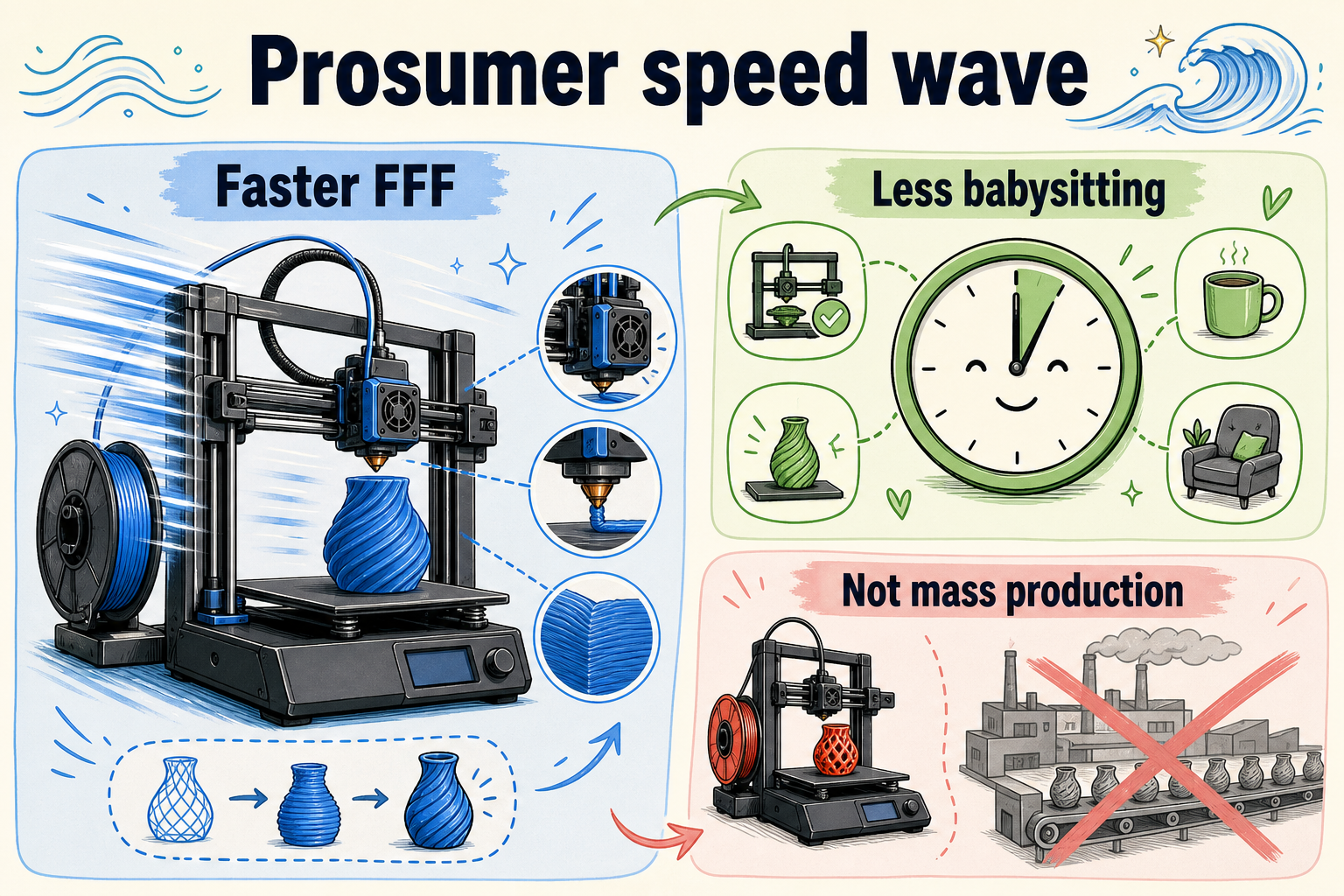
❓ Did cheap high-speed printers change anything real?
Yes, inside their lane. High-speed CoreXY-style machines, better input shaping, multi-toolhead systems, and aggressive Chinese manufacturing (Bambu Lab and peers in trade discourse) collapsed the time and babysitting cost of polymer FFF. “Slow desktop printer” is less acceptable. That wave:
- Expanded light business use (fixtures, short-run products, education fleets).
- Increased competitive pressure on legacy desktop brands.
- Still did not make home printing a substitute for mass manufacturing.
China’s industrial statistics intermittently show very high growth rates in 3D printing device output—relevant to hardware supply and pricing, not proof that end-use AM already dominates factories.
Healthy split
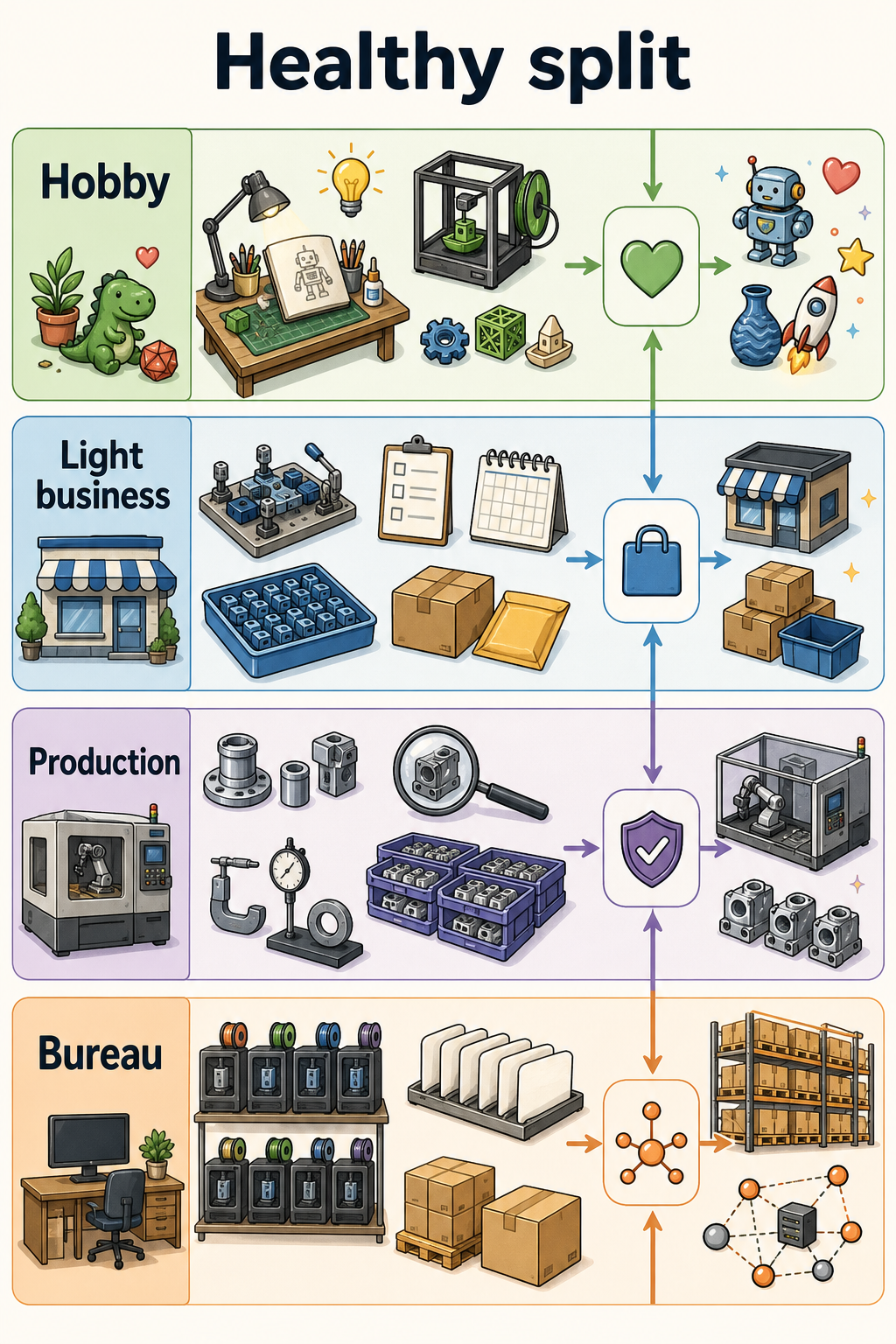
| Layer | Job to be done | Success metric |
|---|---|---|
| Consumer hobby | Create, learn, customize | Fun, reliability, community |
| Prosumer / light industrial | Jigs, short runs, field fixes | Uptime, material range, cost/part |
| Industrial production | Qualified end-use parts | Allowables, yield, audit trail, $/good part |
| Service bureau | Capacity without CapEx | Lead time, certifications, breadth |
Conflating layers produces bad strategy: buying a desktop farm to “do aerospace,” or dismissing AM entirely because a library printer warped a phone case.