Last updated: 2026-07-20
13. The Surgical Tool
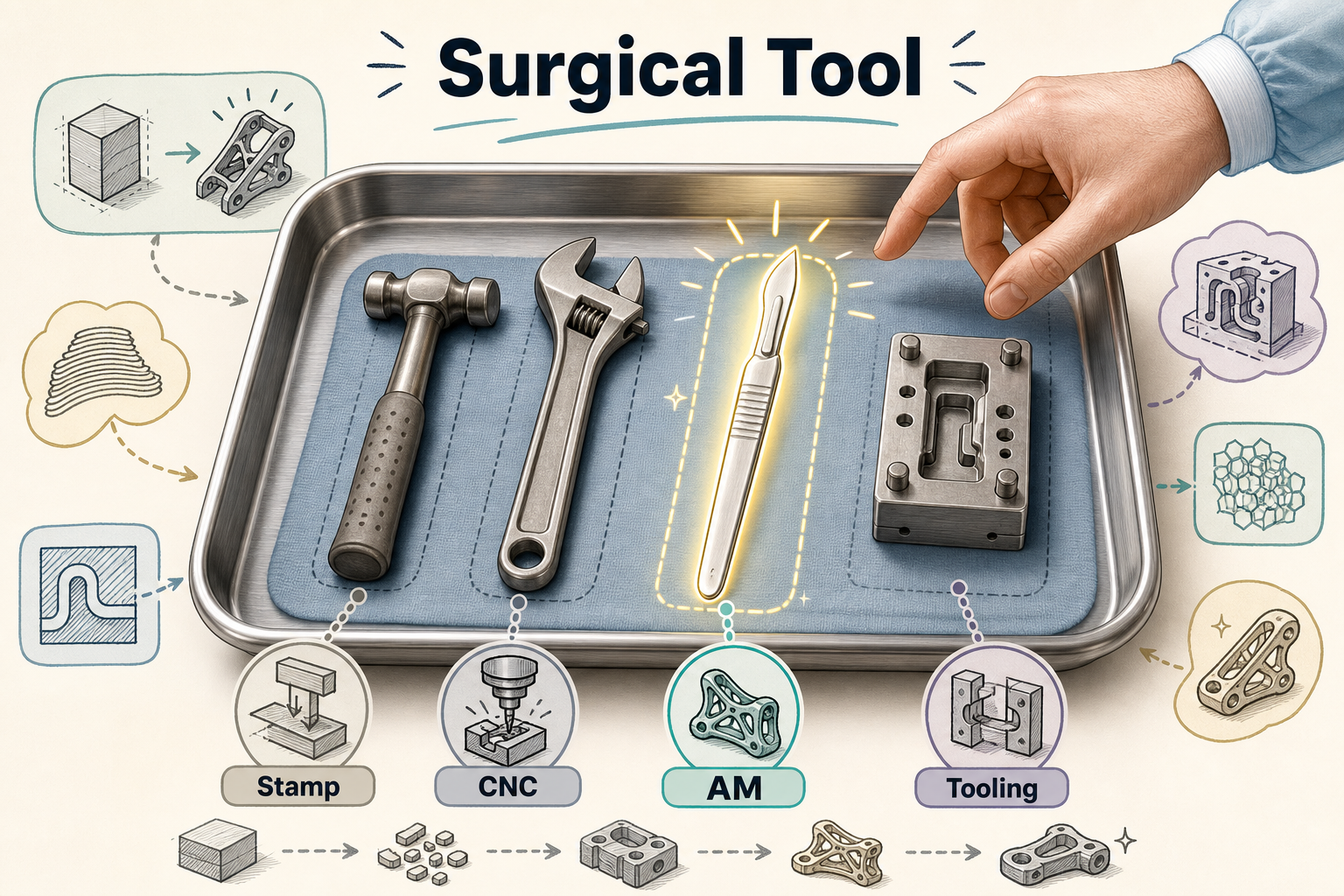
The causal chain that should anchor strategy through the early 2030s is not mysterious. Additive manufacturing turns geometry and change into software-shaped problems by joining material from three-dimensional model data layer by layer. Value appears when that freedom beats tooling and logistics costs and when process control produces certifiable properties. Progress is therefore gated by physics, powder, post-process, and proof — not by CAD marketing. AI and robotics improve search, control, and handling inside the gate. They do not remove it.
Bottlenecks, ranked for 2026–2032: qualification speed and cost, especially for structural metal; feedstock cost and powder quality systems; post-processing automation; true build rate at acceptable properties through multi-laser, binder, or hybrid routes; trusted and sovereign machine and software stacks for defence and critical infrastructure; design-for-additive and special-process talent; interoperable digital thread from design through build, inspect, and certify.
Plausible paths are not certainties. Steady industrial deepening means something like eight to fifteen percent ecosystem growth with aerospace, medical, and energy leading; it fails if growth stalls under five percent for years with no new qualified applications. Volume metal via binder or hybrid routes requires auto-relevant cost curves and allowables; it fails if sinter scatter and distortion stay unsolved at rate. A defence-trusted additive boom requires budgets and NDAA-like rules that stick while allied vendors scale; it fails if waivers gut restrictions and budgets fade. Pure-play hardware recovery needs cash discipline and niche focus; it fails if another rollup cycle arrives without production anchors. Strong AI process control needs first-time-right rates to jump and scrap to collapse; it fails if monitoring remains after-the-fact theater.
Manufacturers should start where geometry, spares, or customization already hurt. Fund design-for-additive and quality systems, not only a machine. Prefer hybrid cells and bureau partners before vanity farms of capital equipment. Measure good parts per month through the full chain, not laser-on hours.
Investors and lenders should separate captive value inside products from equipment equity. Stress-test pure-plays on cash runway, customer concentration, and defence eligibility. Materials, software, and accredited services can be cleaner picks than fifth-place metal box vendors. Treat geopolitical eligibility as a binary filter for defence-exposed revenue.
Canadian public-sector and industrial-strategy readers should align additive investments with Defence Industrial Strategy capacity goals and allied trust standards. Build qualification labs, powder safety, and workforce as public goods that multiply private machines. Do not equate printers purchased with sovereign capability.
Product classes worth tracking as stable shelves include metal laser powder bed fusion systems; metal binder jetting systems; directed energy deposition and hybrid cells; industrial polymer powder bed systems; continuous-fiber material extrusion; vat photopolymerization dental and medical lines; build-prep and quality software platforms; metal powder feedstock supply. Individual machine generations will churn. The shelves are the map.
Unresolved on purpose: full Wohlers micro-tables behind paywalls; true global manufacturing value-add share; binder-jet structural allowables at automotive scale; net climate life-cycle accounts for metal powder bed fusion versus forged and cast routes; the end-state of Nano Dimension’s residual strategy.
One sentence is enough to carry out of the room.
Additive manufacturing is a proven way to turn digital geometry into certified physical advantage in narrow, high-value domains — and a proven way to lose money when treated as a universal factory replacement or a pure-play hype equity.
It is a surgical tool. Use it where anatomy demands a scalpel.