Last updated: 2026-09-24
Wheat on a chessboard
The old chessboard story has many versions, but its arithmetic is clear. Put one grain of wheat on the first square, two on the second, four on the third, and keep doubling until the sixty-fourth square.
The early squares look harmless. Even the first ten add up to only 1,023 grains. But by the time the board is half full, the next square alone contains more grain than all the squares in the first half combined.
This is the central feature of a doubling series: the later stages dominate the total. The early terms teach the pattern; the final terms create the scale.
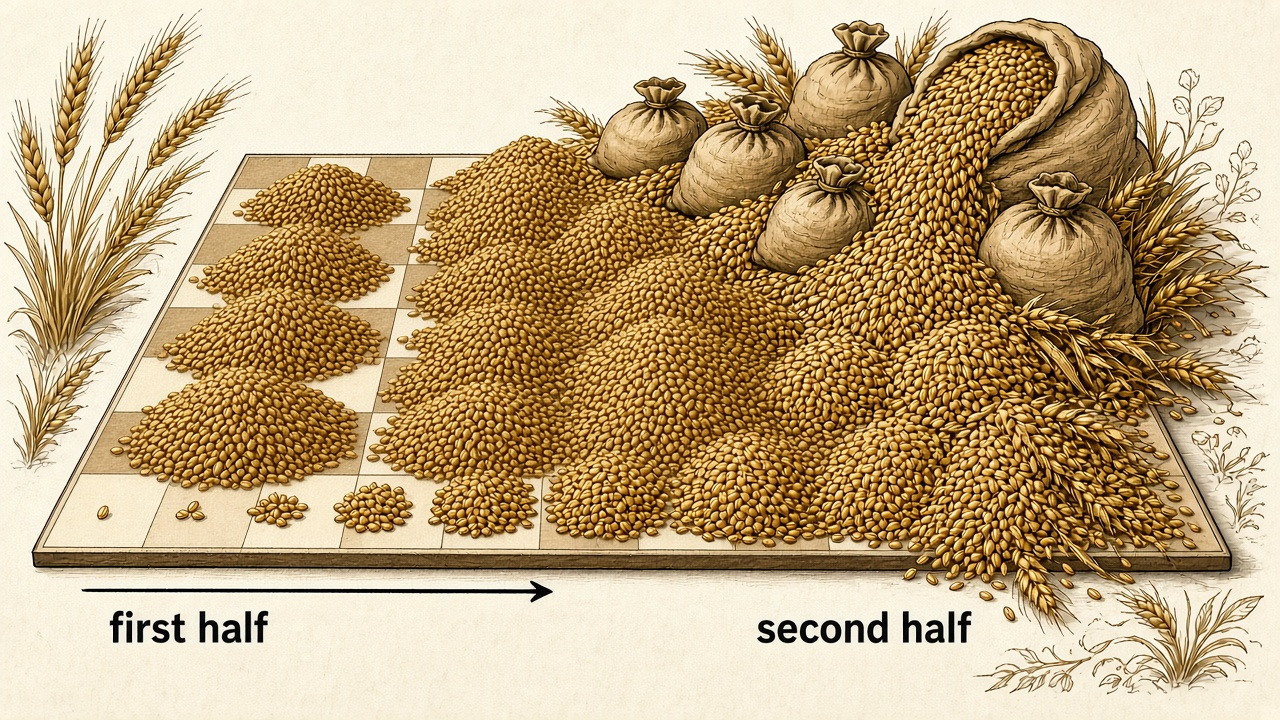
The story is useful because it turns an abstract sequence into a physical problem. A request that begins with one grain ends with more wheat than a kingdom could easily supply.
Next, take the same rule beyond the chessboard and into physical distance.