Last updated: 2026-08-15
The Ivory Girl of Cyprus
Pygmalion was a king, or a sculptor, or both, on the island where Aphrodite came ashore.
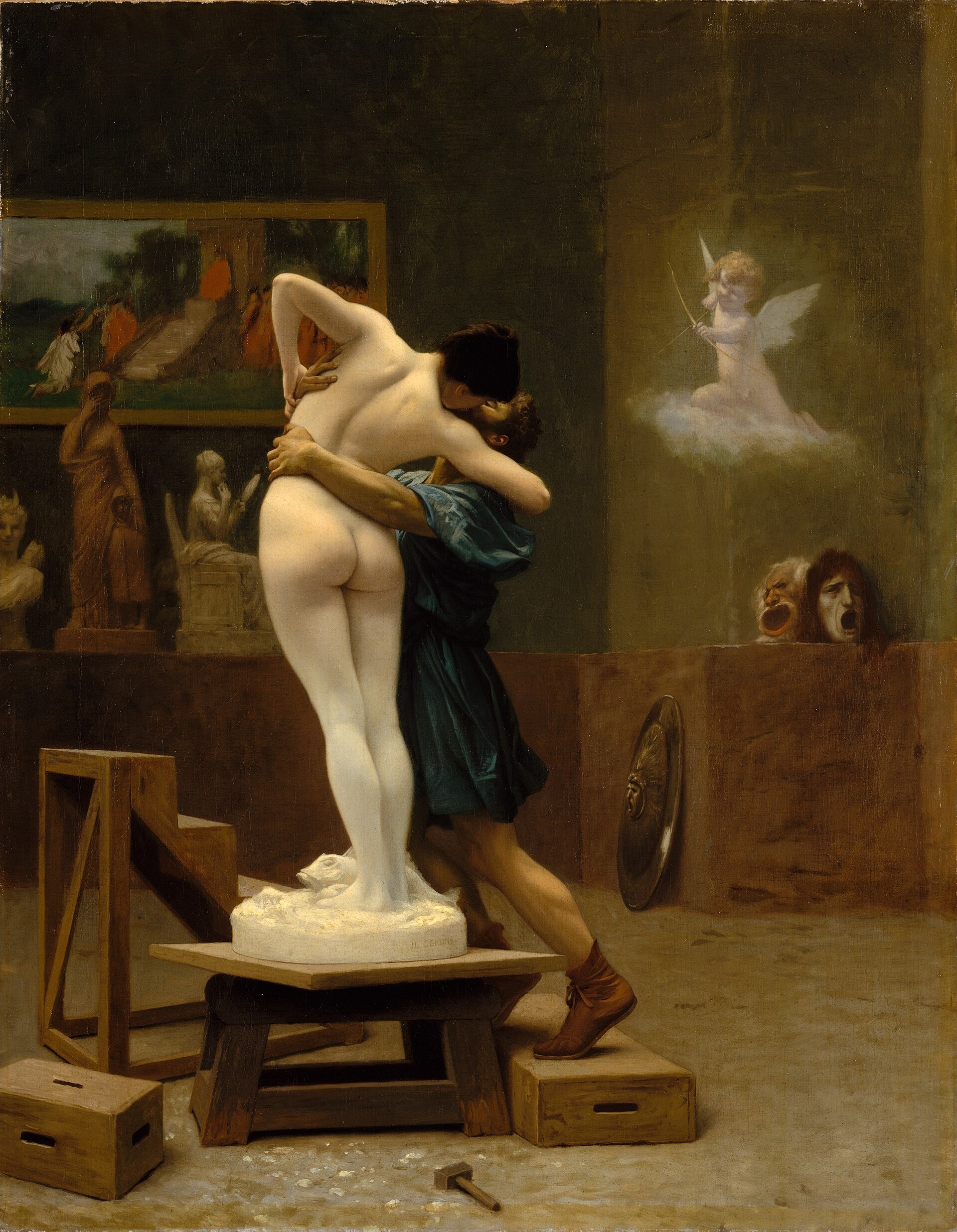
Ovid, who loves a craftsman almost as much as he loves a metamorphosis, says the man had seen the Propoetides of Amathus go hard. Those women denied the goddess and were turned, first into public whores, then into stone. Pygmalion, disgusted with living women, carved a body out of ivory so faultless he fell in love with his own work. He dressed it. He laid it in his bed. He brought it gifts. He talked to it. The statue did not answer. That was part of the pleasure and all of the grief.
At Aphrodite’s festival he did not dare ask for the girl herself. He asked for a wife like the ivory. The goddess, who understands a loophole, knew what he meant. When he went home and kissed the mouth, it was warm. The ivory yielded under his fingers the way wax from Hymettus yields under the sun. She blushed. She raised her eyes and saw her lover and the sky at the same time.
They have a child, Paphos, who gives the city its name. In some tellings the girl’s name is Galatea. That name is later. The old engine is older than the name: a man makes a woman, and the love goddess agrees to finish the job.
This is Pandora run backward, and it is not Hephaestus’s story. The smith, under Zeus’s order, assembled a girl to be a sorrow. Here a mortal assembles a girl to be a mercy, and Aphrodite — on her own island, at her own feast — says yes. Craft plus desire can animate as well as trap. The difference is who holds the will. Zeus used the smith to punish men. Pygmalion used skill to refuse men, and the foam-goddess, who had been foam and ivory-pale herself when she stepped onto Cyprus, recognized the prayer.
No net. No refund. A blush.
The story is Roman in the form we have it. The island is Greek. The thought is the pairing’s mirror: what if the love goddess and the making-instinct were on the same side, just once, in a room without an audience.
Why This Story Works
It is the control experiment the marriage never runs. When Aphrodite blesses a made woman instead of fleeing a made trap, the issue is a city, not a curse.
Source
- Ovid, Metamorphoses 10.243–297. Context and Aphrodite’s Cyprus cult: https://www.britannica.com/topic/Aphrodite-Greek-mythology
- Theoi heroes, Pygmalion: https://www.theoi.com/Heros/Pygmalion.html