Last updated: 2026-08-15
The Herdsman on Ida
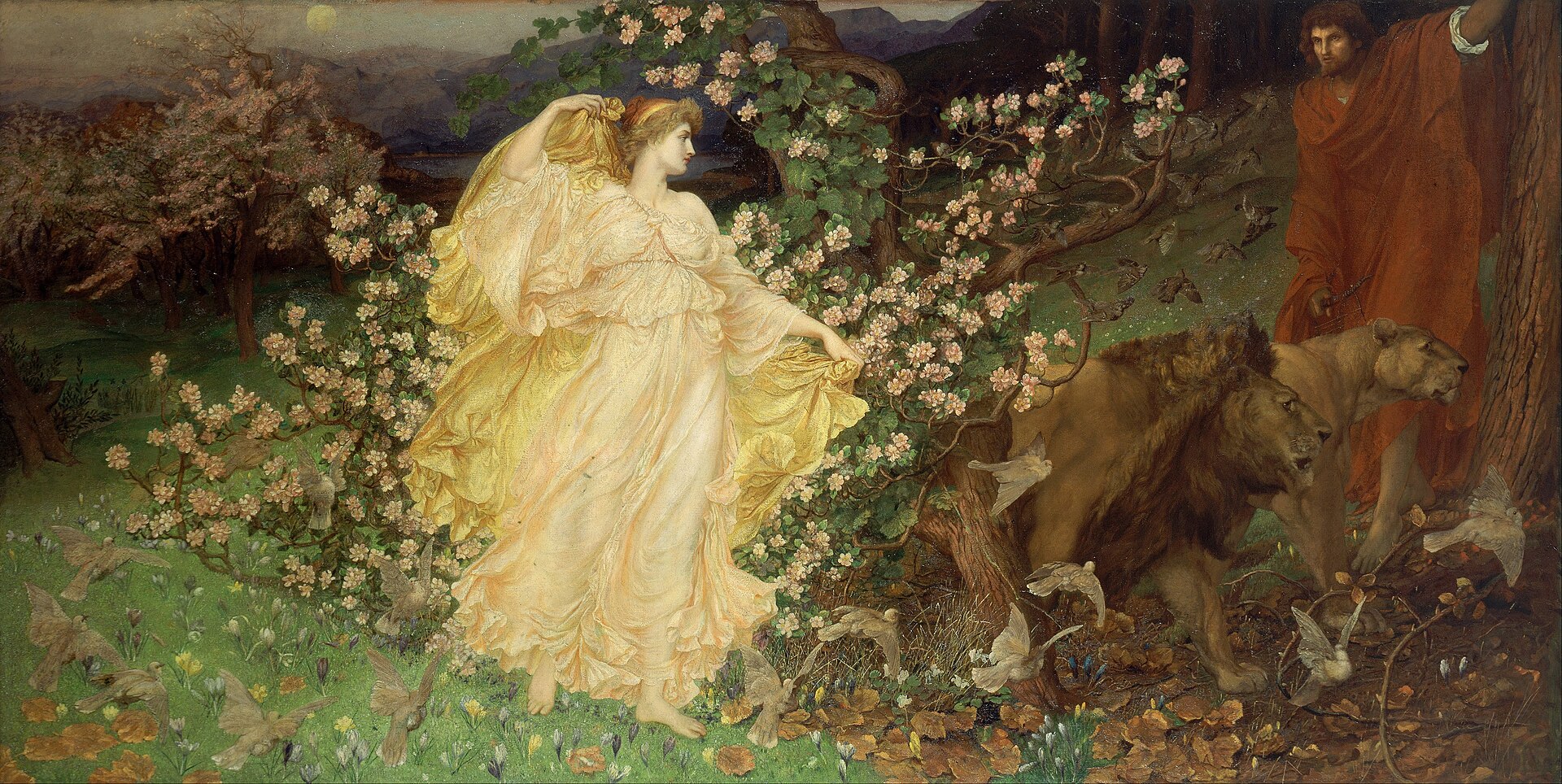
Anchises was tending cattle on the high slopes of Ida when the girl walked out of the trees.
She did not look like a goddess. That was the point. Zeus had put the wanting into her, and she had put a mortal shape over the wanting. In the long hymn that remembers this, she tells the man she is a Phrygian princess, snatched from a dance by Hermes and dropped here to be his wife. She names a dowry. She names his parents. She begs him, by Zeus, to take her properly, the way a man takes a bride he will have to explain in the morning.
Anchises is not a fool. He says what a careful man says to a woman who looks like that on a mountain. If you are a goddess, be kind. If you are mortal, a man could die of this.
She swears she is not.
They go into the bed. The hymn does not linger for our sake. It lingers because the whole poem is a revenge on the goddess who had been making other gods do this to mortal women and then laughing. Zeus, tired of being driven, turned her own force around. She is the hunter in every other story. Here she is the one who cannot leave the slope until the thing is done.
In the morning she stands up to her height. The disguise falls off. Anchises covers his face and begs not to be left strengthless among men. A mortal who has lain with Aphrodite does not get to stay the person he was at supper.
She tells him he will have a son, Aeneas. She tells him to say the mother was a nymph of the mountain, not her. If he boasts — if he says, with a heart emptied of sense, that he made love to the Lady of Cythera — Zeus will smite him with a smoking thunderbolt.
Then she is gone into the windy sky.
The hymn is the twin of the net, and it is not in the net’s house. No bonds, no gateway full of laughing gods, no refund. A father traps a will instead of a body. Desire is forced to want a mortal and then to fear the story. The child of that fear will walk out of Troy with his father on his back, and Rome will later call the mother Venus and the boy an ancestor.
Anchises, if the later rumor is trusted, does boast. His body pays. The hymn itself stops before that punishment. It leaves him with a command and a secret, which is another kind of bond, and one no smith had to forge.
Why This Story Works
It shows that the Greeks had more than one way to catch Aphrodite. The marriage plot catches her in a bed she chose. The hymn catches her in a bed she was made to want. Both are revenge on a force that had been getting away with hunting everyone else.
Source
- Homeric Hymn 5 to Aphrodite, English at https://www.uh.edu/~cldue/texts/aphrodite.html
- Discussion of Zeus’s revenge in the hymn: V. Frangeskou, Scripta Classica Israelica 14 (1995)