Last updated: 2026-08-15
8. Separate Temples
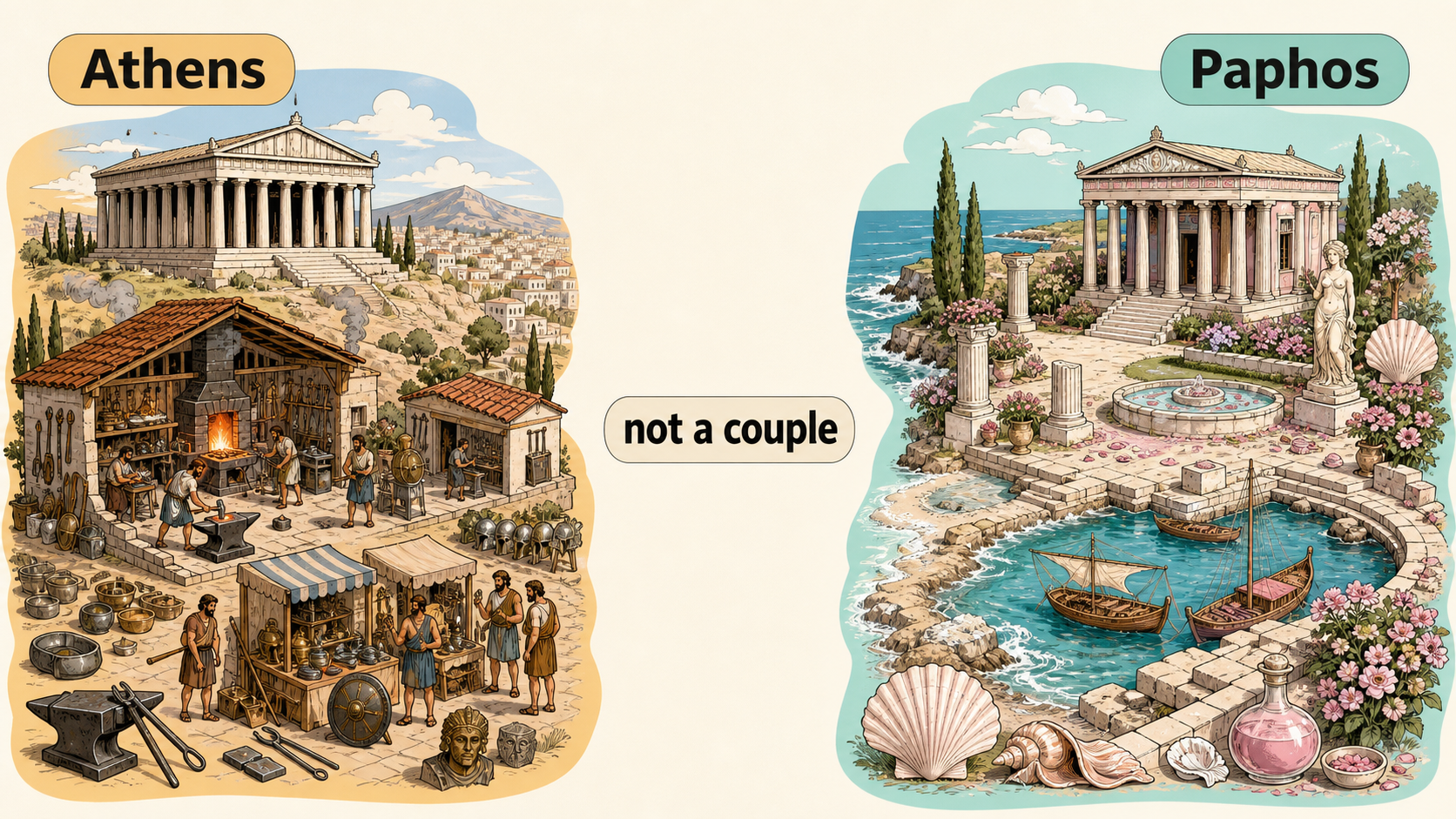
No city married them in stone the way the poems married them in a bed.
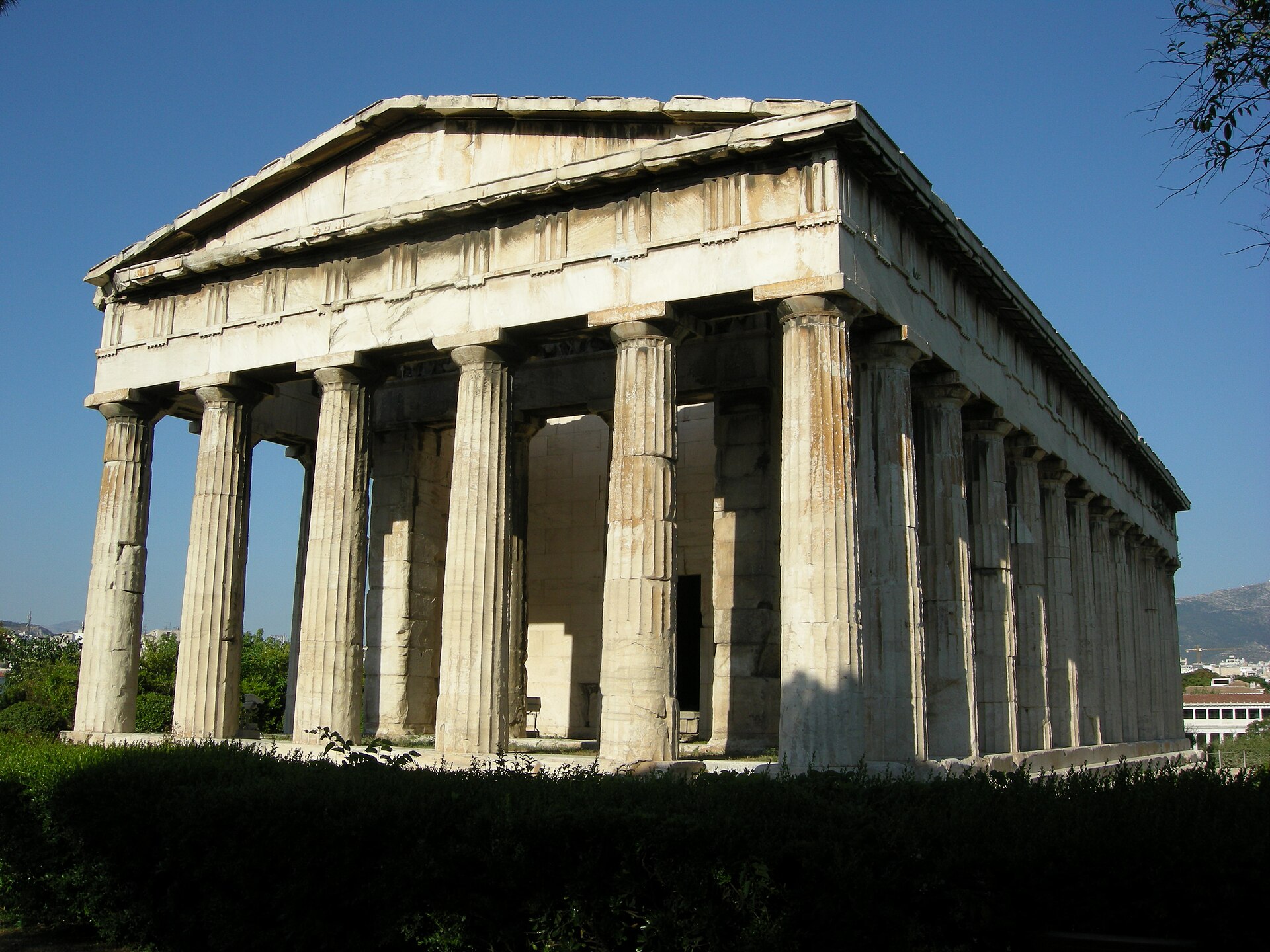
Hephaestus had two homes. Lemnos was the mythic one: forge-island, dearest land. Athens was the civic one. Above the market, the Hephaisteion still stands, among the least ruined temples in the Greek world. It did not house a love goddess. It housed the smith beside Athena of work. Bronze-workers had a festival. The city honored fire that had been put to use.
That is the Iliad’s household made into a calendar. The smith plus a working partner. Not the smith plus Desire.
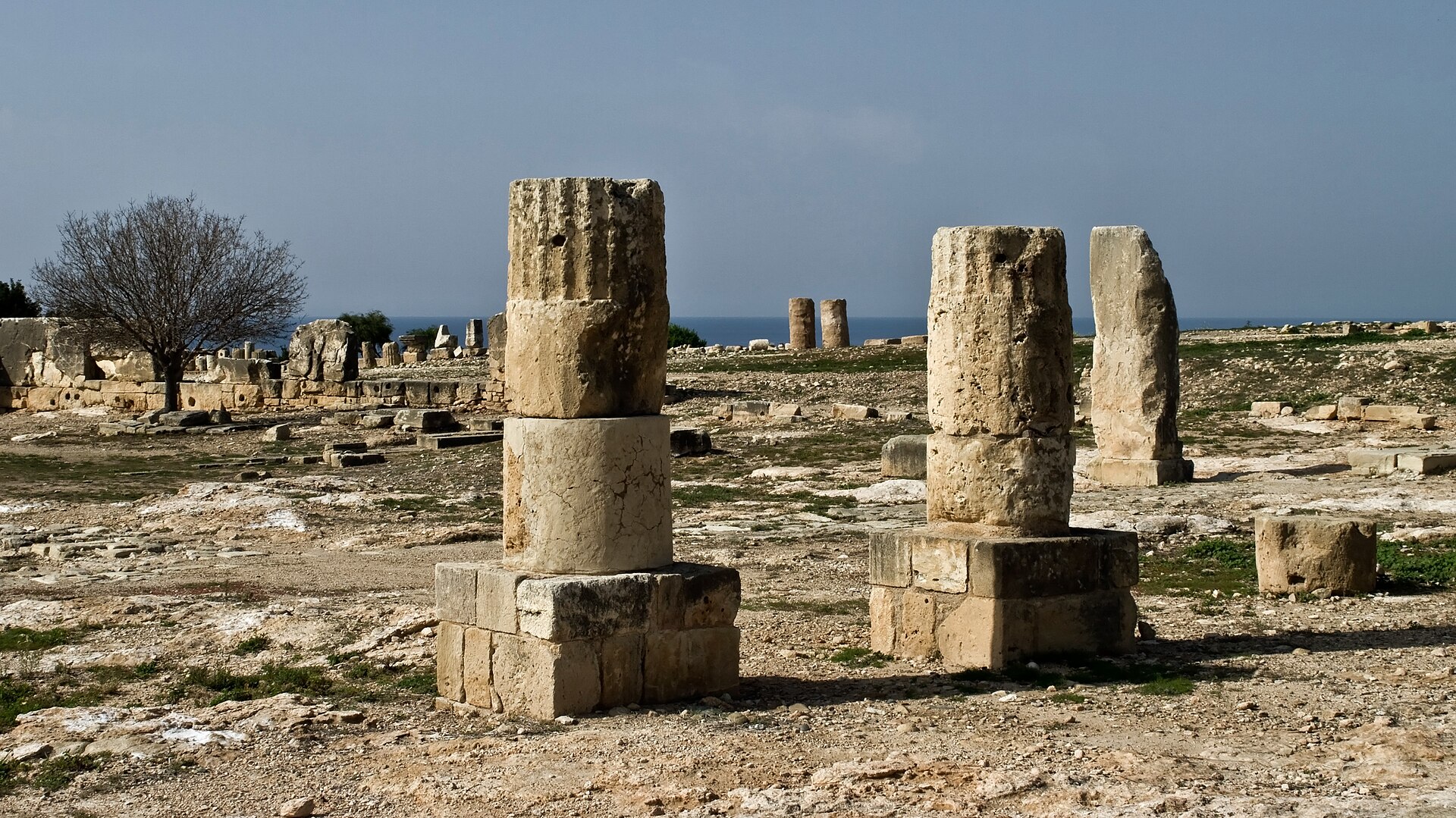
Aphrodite landed where the foam story said she would. Cythera first, then Cyprus — especially Paphos — and on the mainland the great magnet was Corinth, a port that understood expensive company.
Two of her civic titles, Urania and Pandemos, would later be moralized at another dinner party. In Plato’s Symposium, a speaker splits them into heavenly love of souls and common love of bodies. Cult did not mean that. Urania is an honorific. Pandemos names her “of all the people.” The philosophy is a later tool laid on older civic names.
Then there is Corinth’s reputation.
An ancient geographer, Strabo, says the sanctuary of Aphrodite was so rich it possessed more than a thousand dedicated courtesans. A victory ode remembers a hundred girls vowed to the goddess if a man won at Olympia.
That is enough to prove a real link between a port goddess and courtesans. It is not enough to prove a temple of nonstop sacred sex. The picture of a thousand girls under incense and columns is one of the most successful urban legends in classical studies. The honest residue is smaller and still sharp. Corinth was famous for companions. Aphrodite was their goddess. The rest is tourism.
Cult tells you what a city needed. Athens needed metal and work sharing a temple above the market. Cyprus needed a landing of desire. Corinth needed a goddess who understood a port. Lemnos needed fire in the ground.
None of those needs requires a married couple.
The myths marry them anyway, because a story has a problem a temple calendar does not. A story has to put making and wanting in one room and watch what breaks.