Last updated: 2026-08-15
2. A Maiden in the Foam
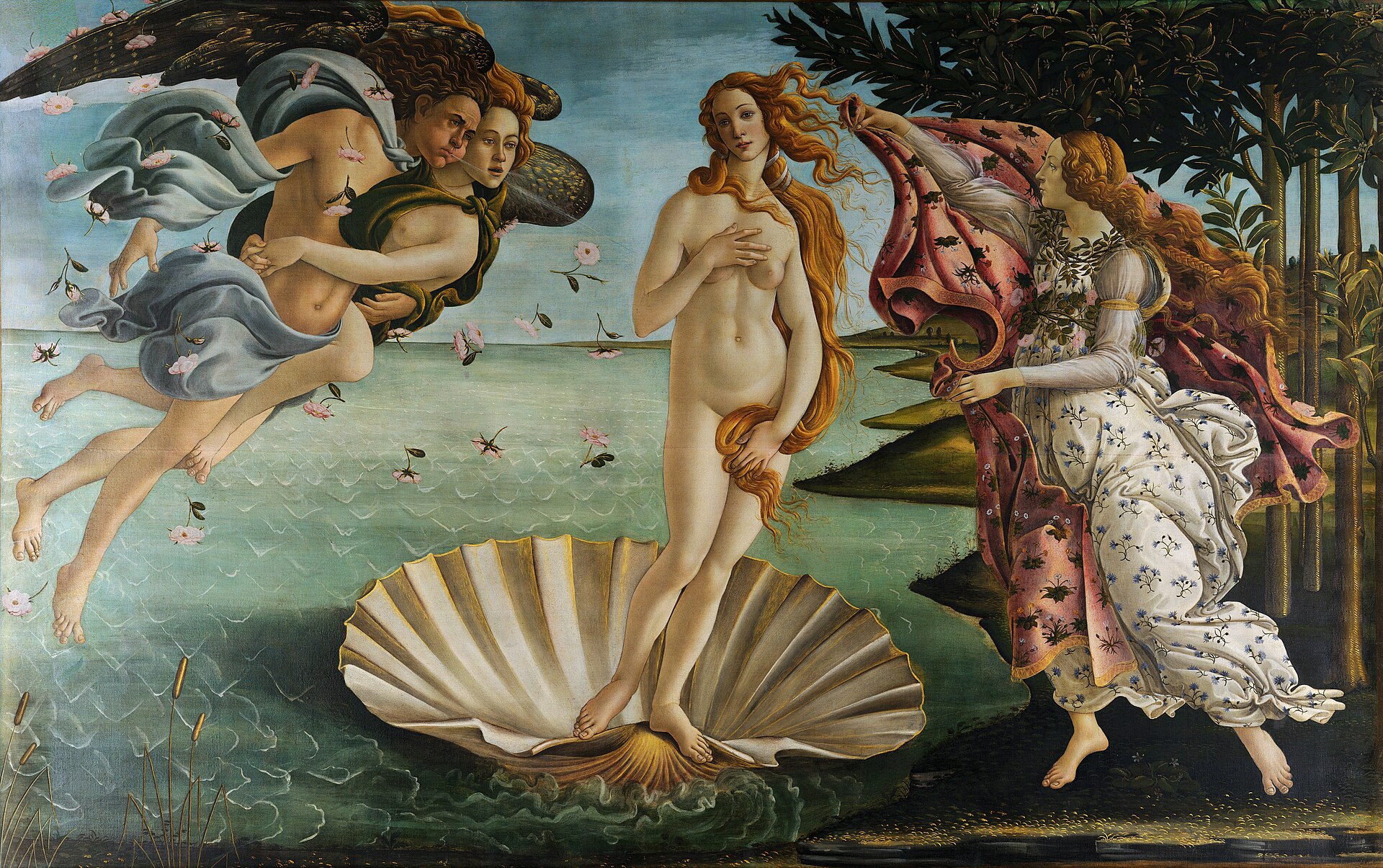
The oldest birth story for Aphrodite is not a seashell postcard.
Kronos hid in his parents’ bed with a flint sickle. Ouranos — Heaven — came down to lie on Earth, as he always had. The son castrated the father and threw what he cut into the water. The pieces drifted a long time. White foam spread from the immortal flesh. In the foam a girl grew.
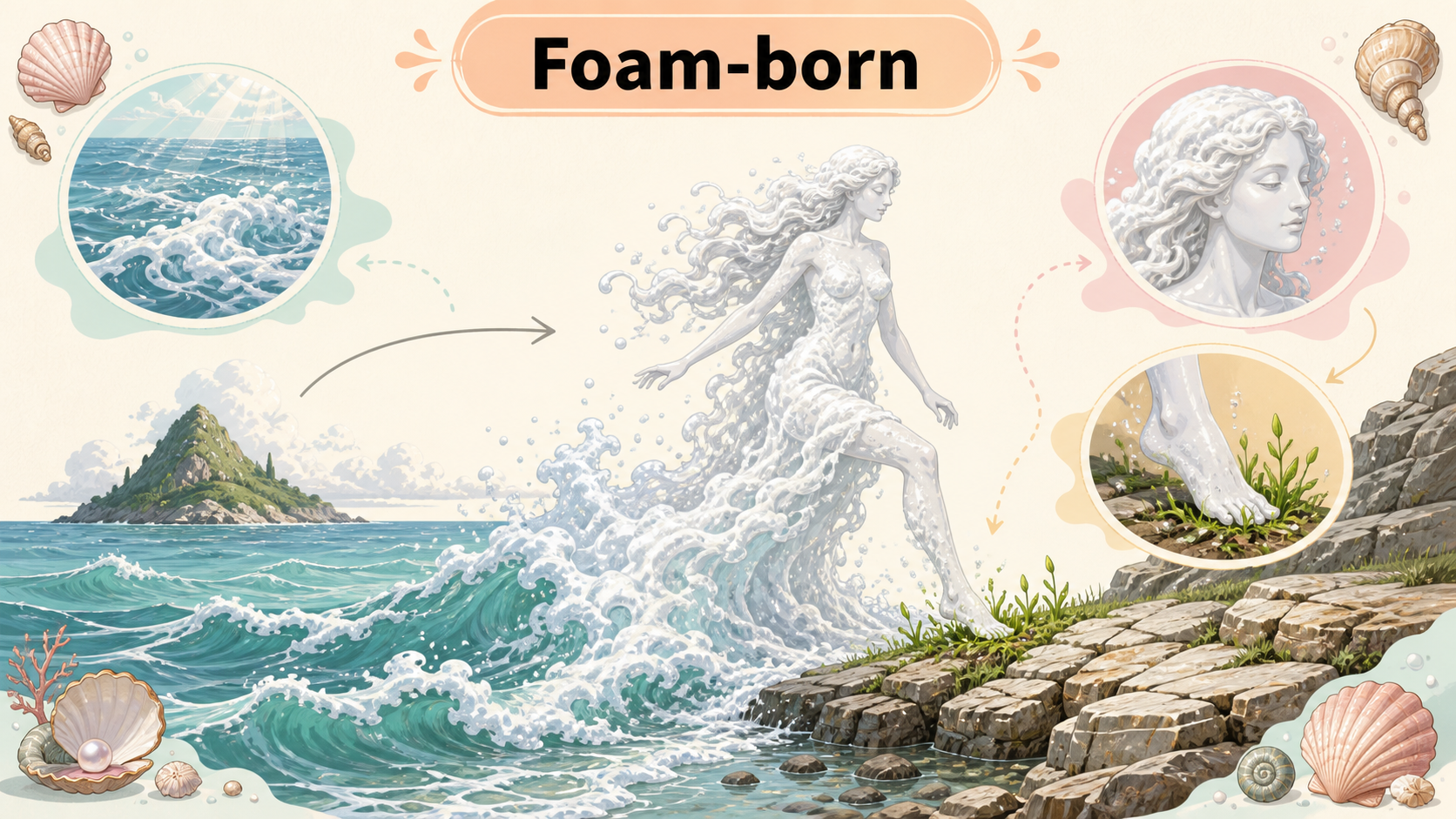
That telling comes from Hesiod, a poet roughly of Homer’s world, writing a family tree of the gods rather than a war story. He likes to explain names. Aphros is foam. Aphrodite is foam-born. She touched Cythera, so she is Cytherea. The birth finished in the swell off Cyprus, so she is Cyprogenes.
She stepped onto the island as an awful and lovely goddess, and grass rose under her feet.
Sexual love, in this genealogy, enters the world as the leftover of a son mutilating a father. The blood that hit the earth became Furies and Giants. The part that hit the water became the goddess later blamed for every bed she did not even attend.
In this version she is older than Zeus. She is not a daughter anyone can give away. She is the sea’s answer to a crime in the sky.
Homer needed a different woman.
In the Iliad, Aphrodite is wounded in the fighting before Troy. She does not run to Ocean. She runs to her mother, Dione. Zeus is her father. In Demodocus’s song she has “but newly come from the presence of her father,” and her husband will demand that this father pay back the wooing-gifts — the bride-price — for his shameless girl.
Foam cannot be billed. A father can.
So the tradition keeps two Aphrodites. That is not sloppy. It is two jobs. One goddess must be able to arrive from outside the family, like a foreign luxury landing on an island. The other must sit in Zeus’s household as someone who can be transferred.
A long hymn to Aphrodite calls her Zeus’s daughter and then has Zeus turn her own weapon against her. Tired of being driven by her into mortal women, he makes her want a mortal man: Anchises, a herdsman on the slopes of Mount Ida. She lies with him. She bears Aeneas. She forbids the man to boast.
That hymn is not the marriage story. It is the other old experiment. Someone had to trap Aphrodite. Zeus does it to her will. The smith will do it to her body.
Hephaestus has two births as well. Those belong in the next chapter, because they end in a fall.