Last updated: 2026-09-24
Better tools help make better tools
Technology does not improve on its own. People use existing tools to design, test, manufacture, and coordinate the next generation. Faster computing can shorten a design cycle; better instruments can reveal a problem that was previously invisible; improved manufacturing equipment can make more capable components.
That feedback loop helps explain why some technical fields move faster than ordinary planning cycles. It is not a universal law, and it does not mean improvement continues forever. It is a practical reason to ask whether a long-lived plan has a way to absorb a better option when one arrives.
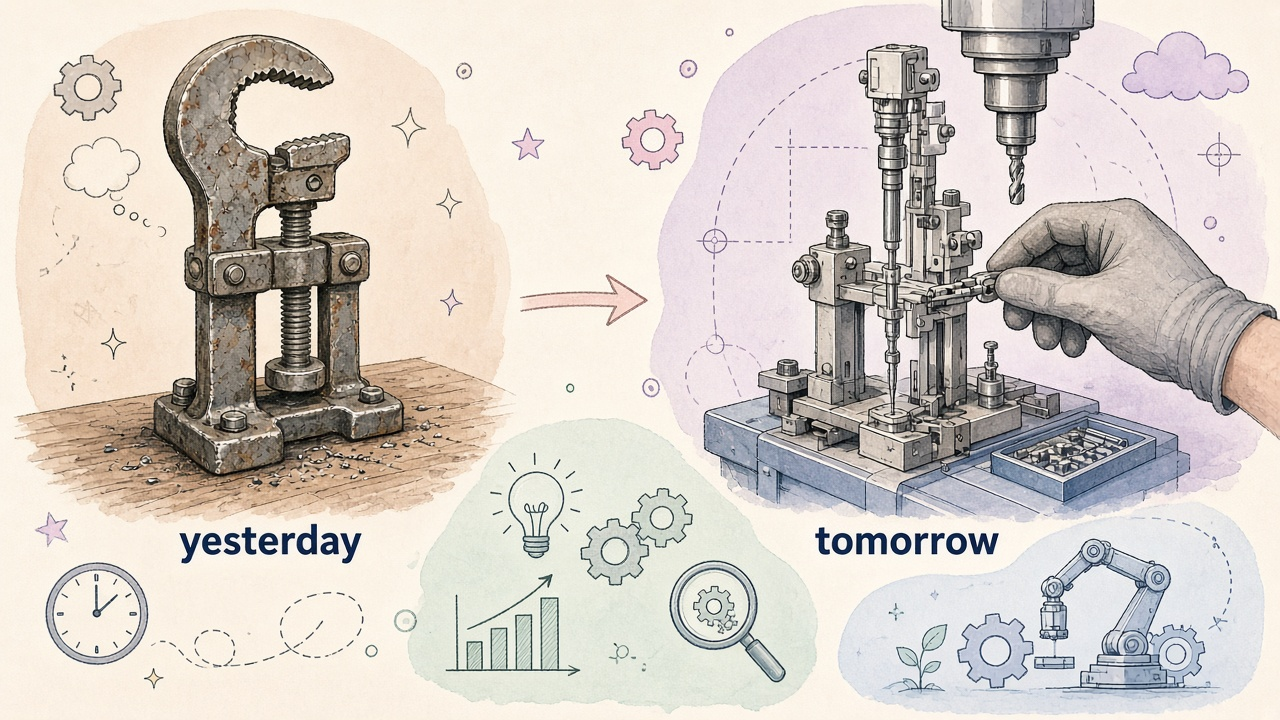
For Chen, the useful conclusion is modest. The yard does not need to predict a distant future. It needs to avoid treating today’s component list as permanent when the components are part of a fast-moving supply chain.
Contracts, safety checks, and budgets still matter. A changing market is not a reason to replace equipment on a whim. It is a reason to decide in advance when the team will look again and what evidence would justify a change.
That brings us back to the decision that caused the problem: a plan that locked itself to the technology available on the day it was signed.