Last updated: 2026-09-16
Rivers first for ocean plastic — Tutorial
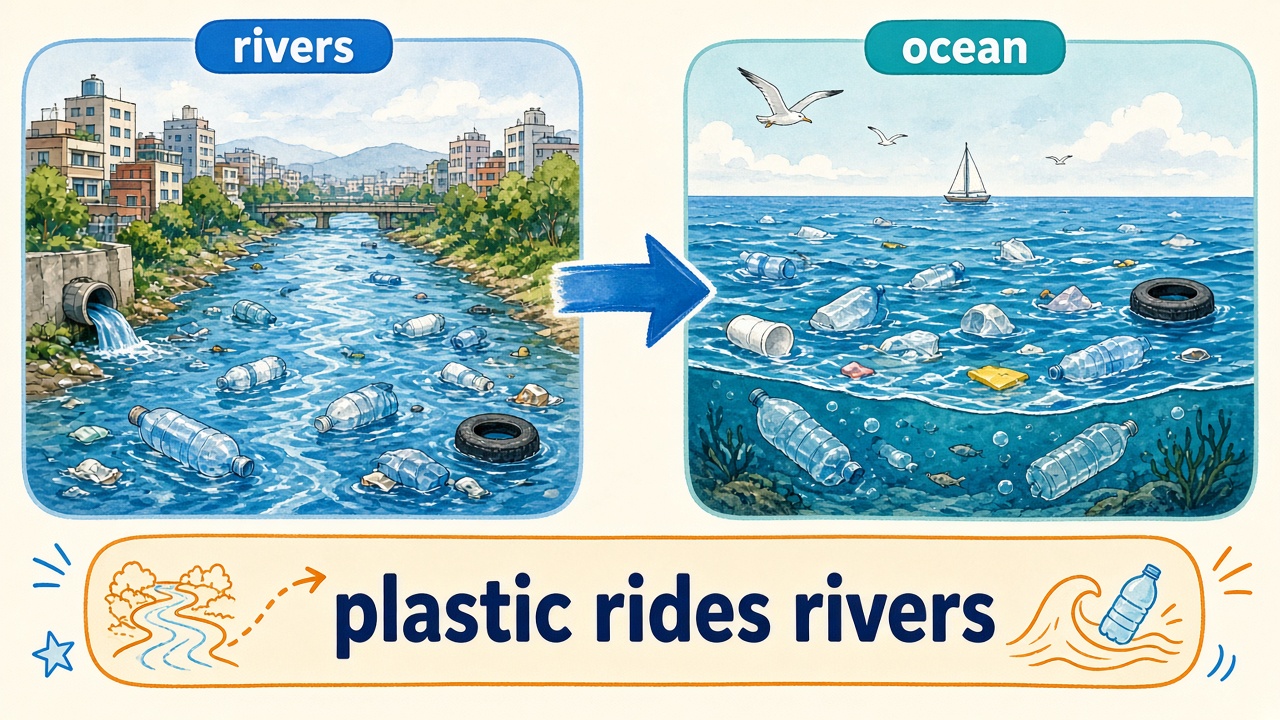
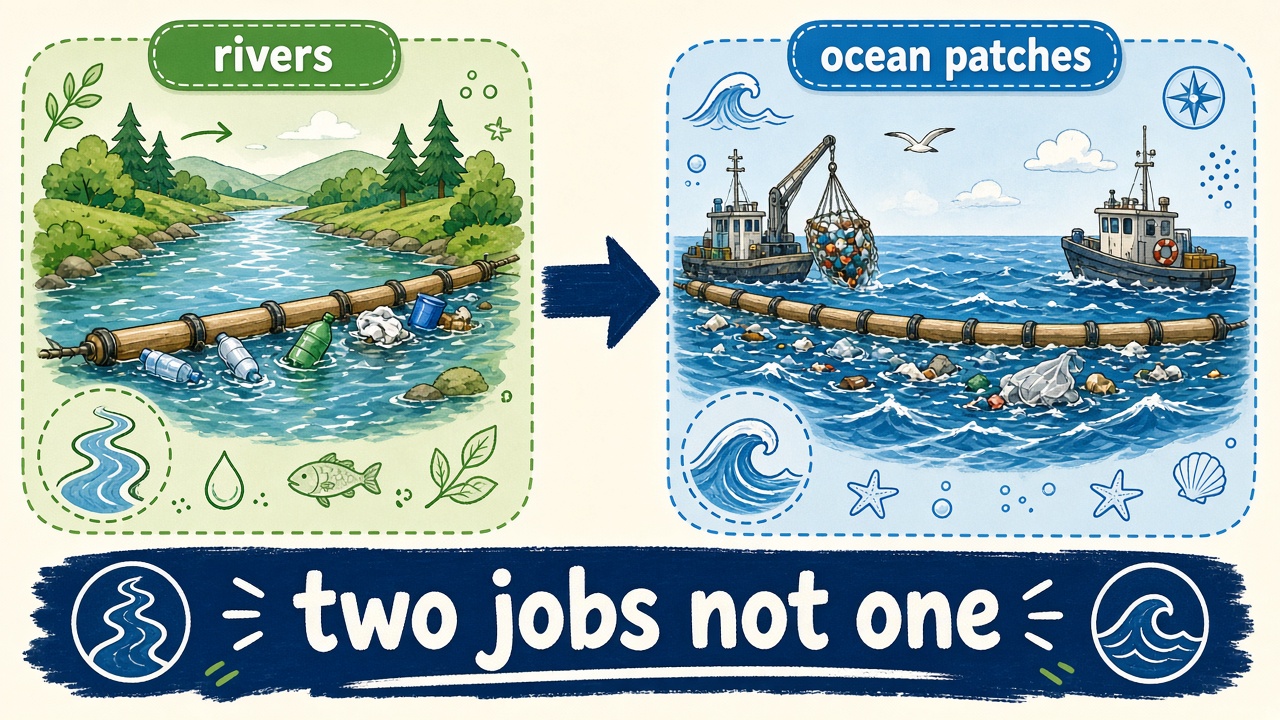
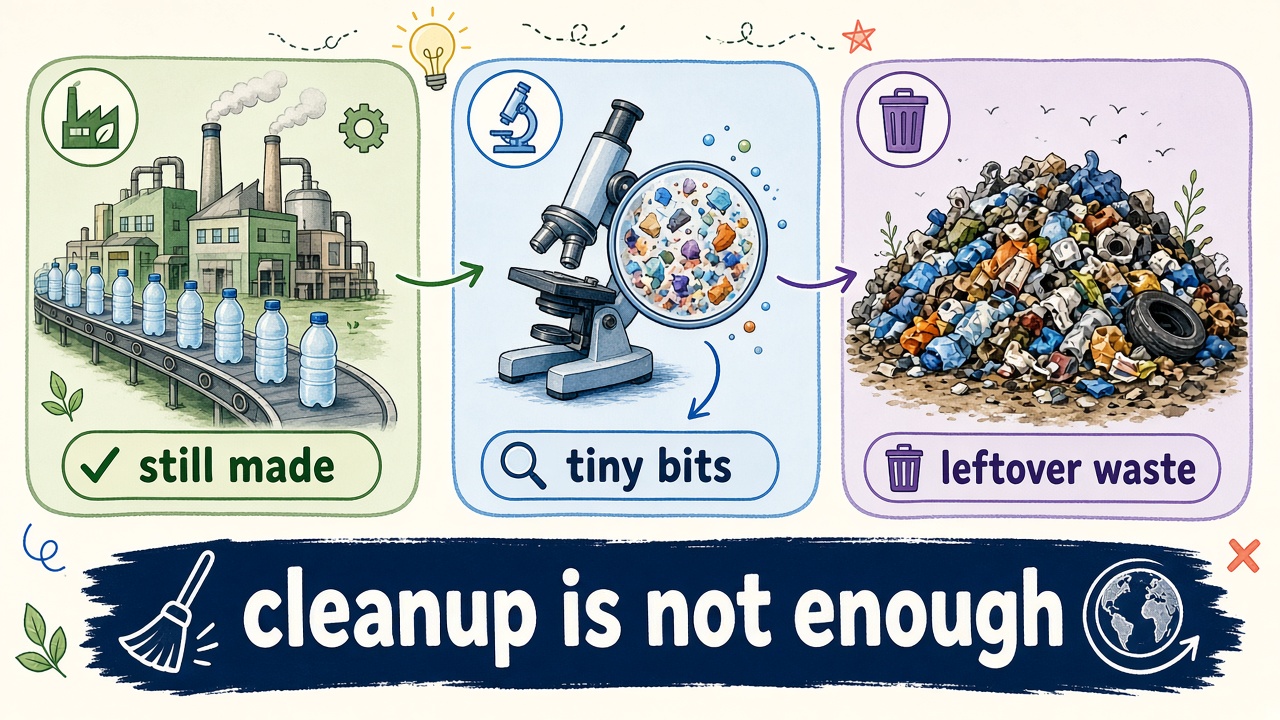
Most ocean plastic arrives through rivers — catch it there, and clean the big floating patches separately. Trash is easier to guide in a river channel than after it fans out at sea. Ocean barriers clean floating plastic that already escaped. Cleanup helps — it does not stop plastic production or vacuum microplastics by itself.
| Page | Title | Concept (one line) | When the tutor offers it | Illustration |
|---|---|---|---|---|
| 01 | Plastic rides rivers into the ocean | Most manageable floating ocean plastic travels through rivers first. | First beat, before catch mechanics. | 01 |
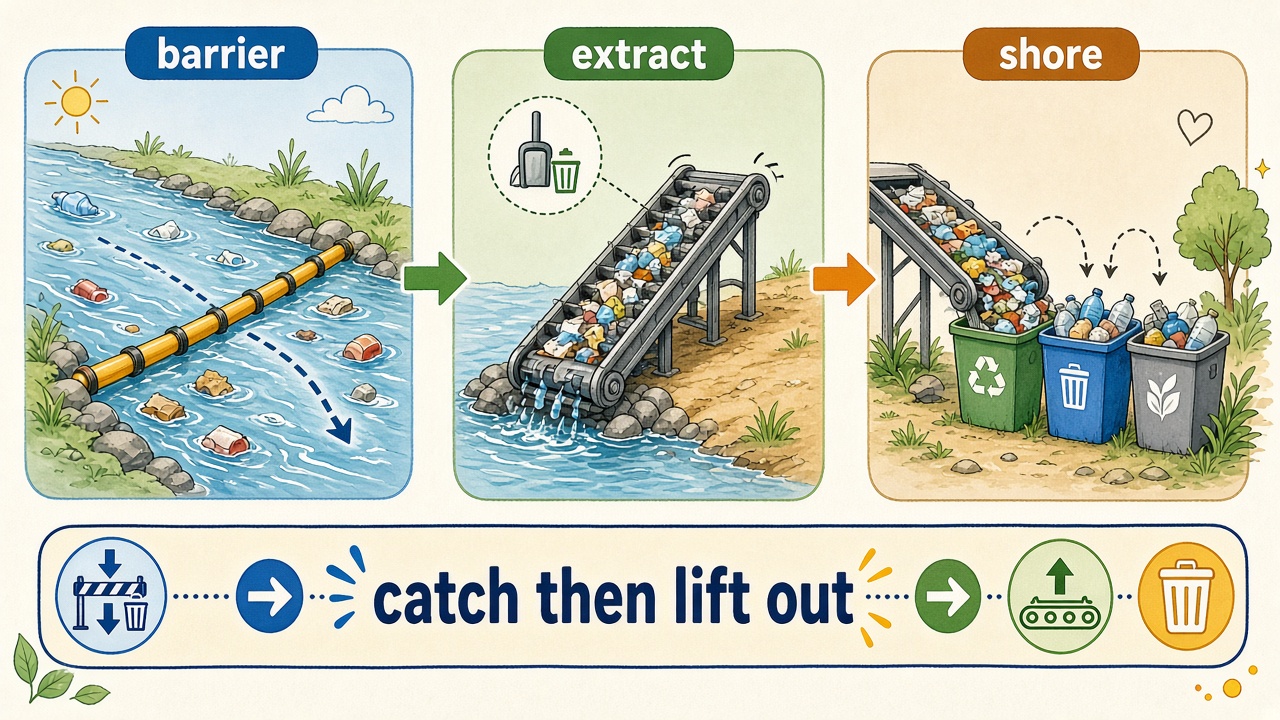
| 02 | Catch, then lift to shore | Barrier → extract → shore waste path. | After rivers; before local instance. | 02 |
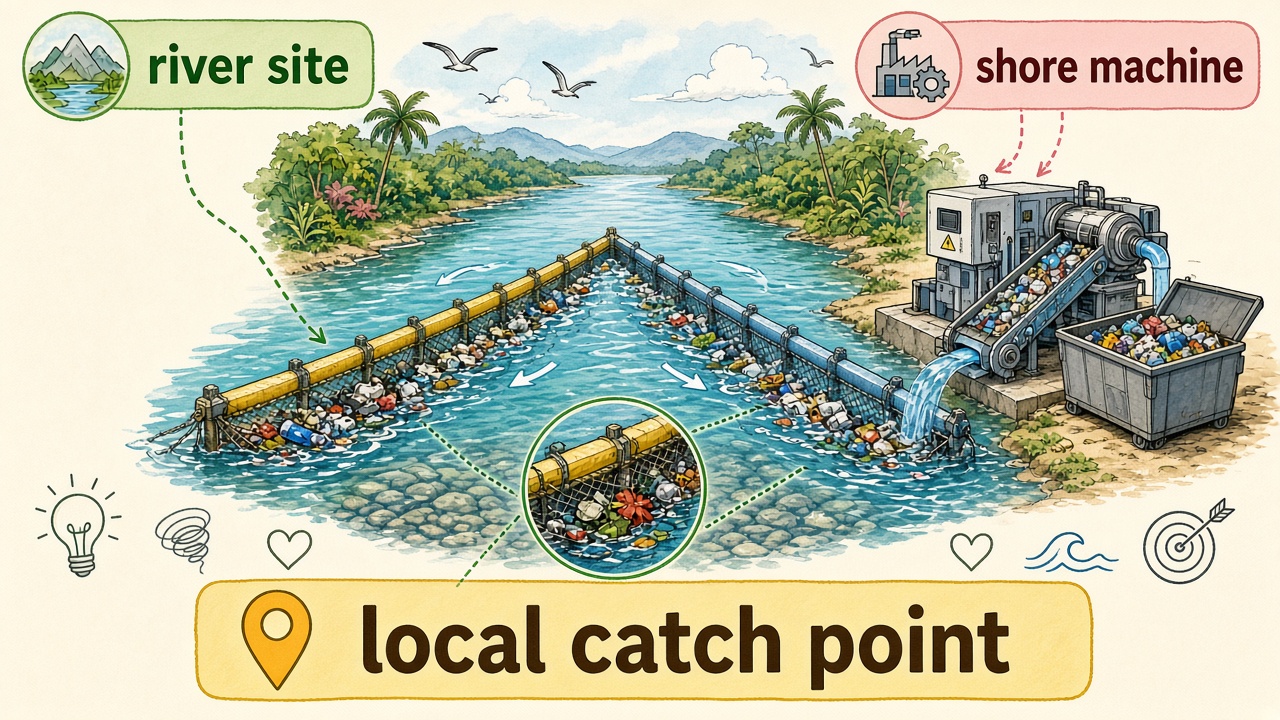
| 03 | A real river needs a shore path | Barriers plus a shore machine only work with a local waste path. | After mechanism; before ocean job. | 03 |
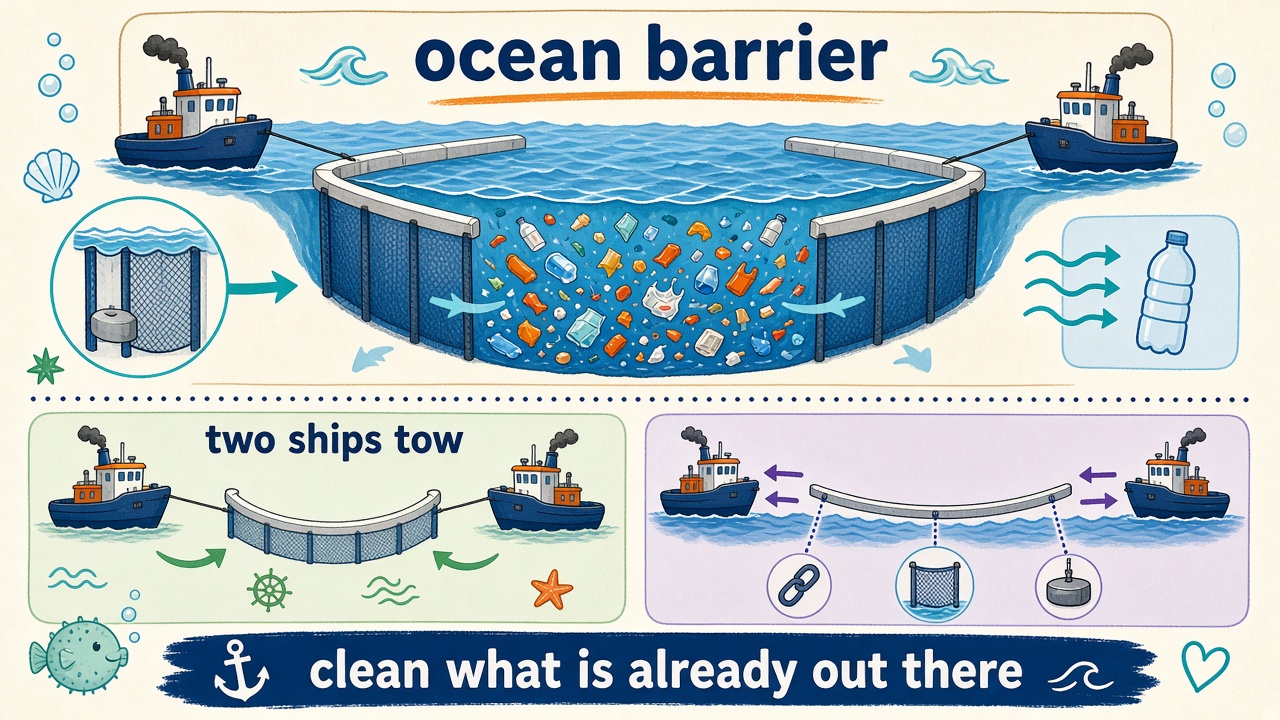
| 04 | Ocean patches need a different machine | Ship-towed ocean barriers clean legacy floating plastic — not a river catch. | After local catch; before the one idea. | 04 |
| 05 | Two jobs, not one | Most ocean plastic arrives through rivers — catch it there, and clean the big floating patches separately. | Core one idea after both jobs are clear. | 05 |
| 06 | Cleanup is useful — not a full fix | Production, microplastics, waste systems, and hard questions remain. | After the one idea; before invent. | 06 |
| 07 | Invent a way this river mouth stops feeding the ocean | Open invent for a river-mouth coast — no prescribed brand. | Last page / invent gate. | — |
Sources
- The Ocean Cleanup — homepage, milestones, rivers, System 03 beginner’s guide, Cisadane update, 30 Cities materials (org self-reports; fetched 2026-09-16)
- Annual Report 2024 PDF — assets.theoceancleanup.com/…/TOC_AnnualReport-2024…
- PeerJ-style neuston / surface-life impact analysis — peerj.com/articles/15021
- Dialogue Earth — ocean cleanup harm debate — dialogue.earth/…