Last updated: 2026-09-16
A real river needs a shore path
On real rivers, crews have shown the pattern in public updates: barriers that can span bank to bank, trash lifted toward shore, and a riverside waste path that sorts and creates local jobs.
One published river example (organization estimate, not an independent audit) talks about thousands of tons of trash a year heading toward the sea from a single waterway — and about barriers plus a direct-to-shore lift feeding a community waste bank.
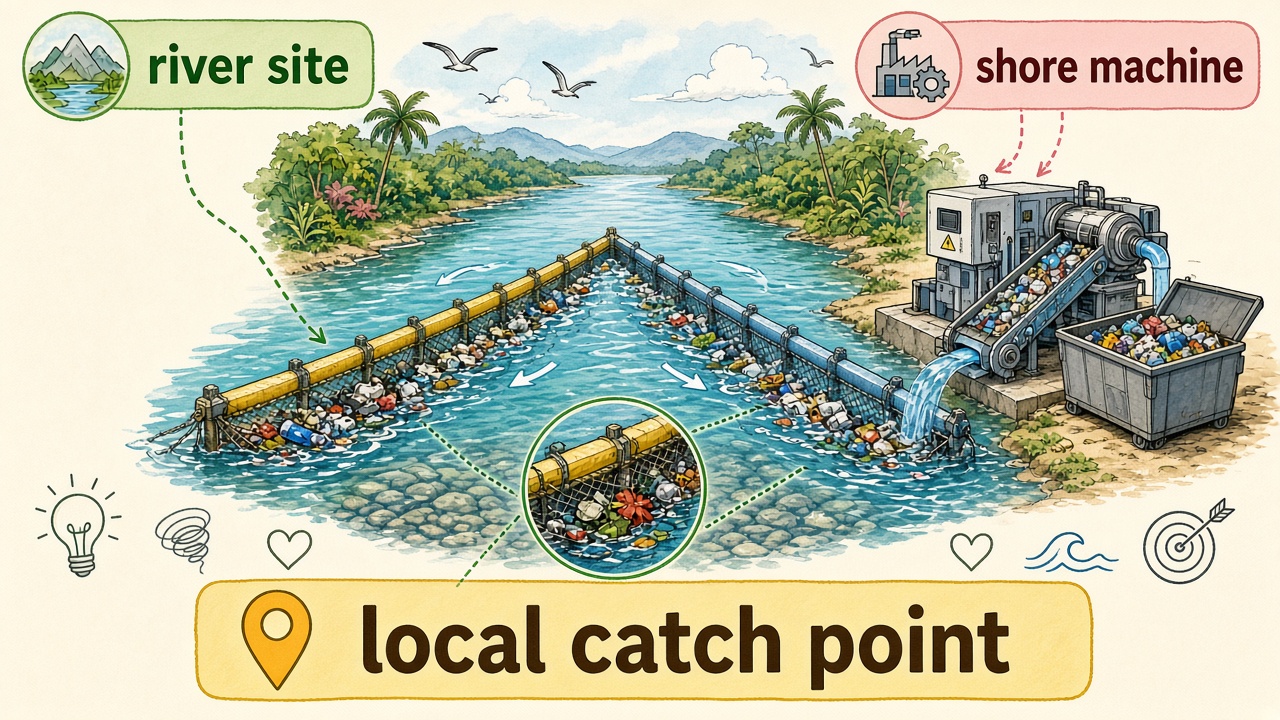
What a stranger should restate: a river can be blocked bank to bank, trash can be lifted to land, and cleanup only “works” if a local waste system receives the catch. The machine is half the story. The shore path is the other half.
That local pattern is grounding for inventing — not a brand you must copy as the answer.