Last updated: 2026-08-15
10. After the Greeks
Rome changed the names and kept the bed.
Hephaestus became Vulcan. Aphrodite became Venus. The forge could sit under Mount Etna. English, which inherited Latin schoolrooms, still says Venus and Vulcan more readily than Aphrodite and Hephaestus. The Greek tension — foam-born outsider versus Dione’s daughter — is harder to hear in the new names.
Venus also became a political grandmother. Through Aeneas, the son of the hymn’s forced desire, she enters the blood-story of Julius Caesar’s family. That Venus is not the woman in the spider-web. That Venus is an ancestor.
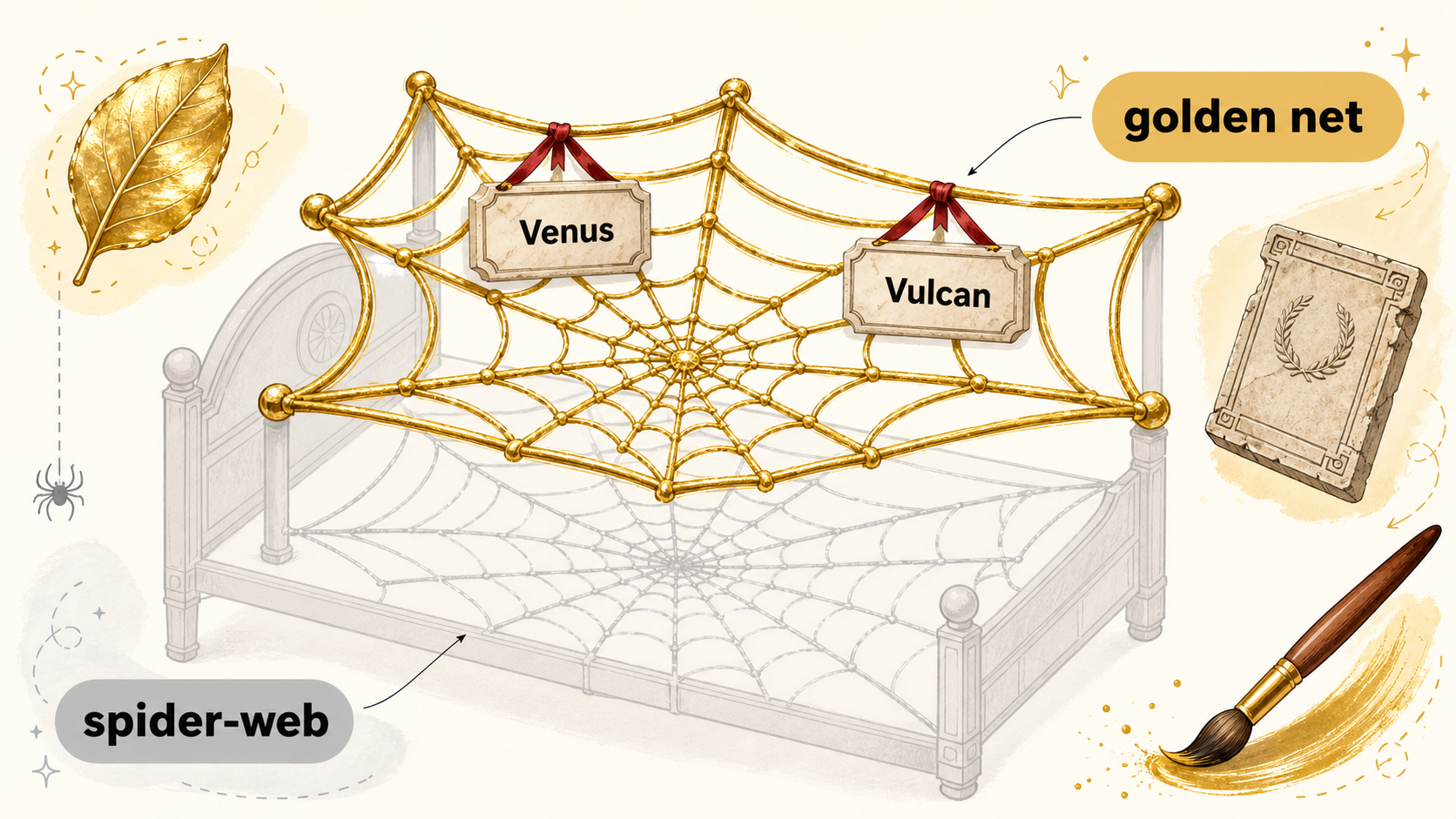
“Golden net” is a later title. Homer said spider-web, unbreakable, unseen. Gold is how a later ear recognizes a divine object. The handle is fine. The quotation is not.
The thousand girls of Corinth are a mixed thing. Ancient writers give the hooks. Later writing turned them into a tourist fact: columns, incense, a temple that never closed. Peel the postcard off and what remains is still interesting. A port goddess. Courtesans who prayed. A city that could not outrun its reputation.
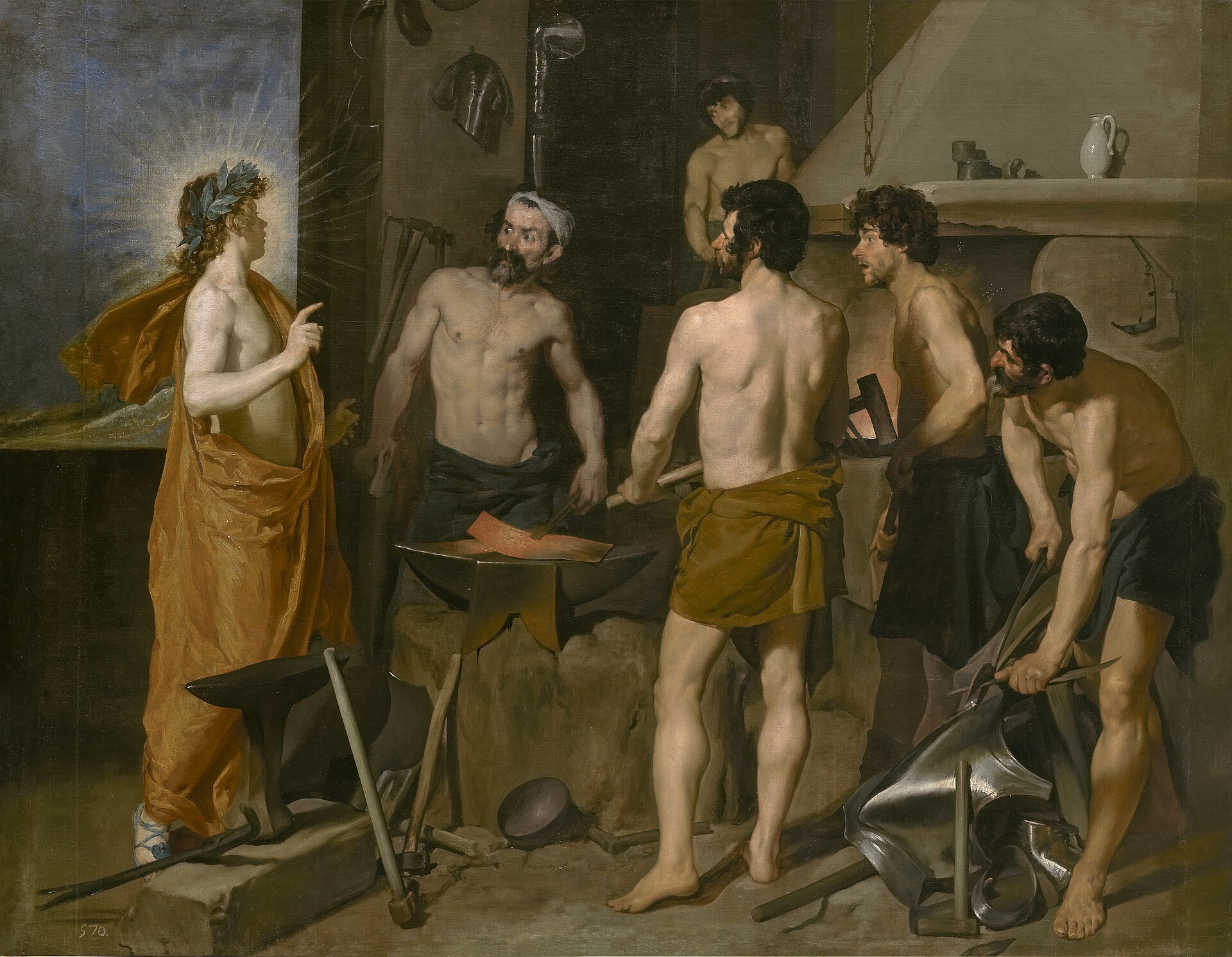
Painters understood the license. The net story offers a nude, a bed, bonds, and a crowd of male onlookers, and then permits the painter to call the result moral instruction. The Odyssey’s goddesses, who stayed home for shame, are rarely invited onto those canvases. The healthier old image is still the mule: a trapped queen, a failed war god, a drunk craftsman, a woman waiting as a prize.
Modern storytelling keeps trying to give the pair an ending the poems withheld. They fall in love. They divorce as friends. She stays with Ares. He finds happiness with Aglaia. The old texts will not help. They were not a series. They were tools picked up for a job and put down.
A retelling that keeps only “ugly husband, beautiful cheat, clever trap” has discarded the two births, the two wives, the bride-price, the goddesses’ absence, Poseidon’s surety, Lemnos, the throne, and the necklace. Those are not decorations. They are the mechanism.
A retelling that makes them a love story has to invent the love.
A retelling that makes Hephaestus only a victim has to ignore the throne, the net, the necklace, and the assault on Athena. He is a maker of bonds. Some of those bonds are justice. Some are revenge that outlives its cause. Some are crimes.
The pairing survives because it is not simple. Reception keeps trying to make it simple.
The slow still catch the swift, when the slow have built the room.