Last updated: 2026-07-23
09 — What “best” means in pieces
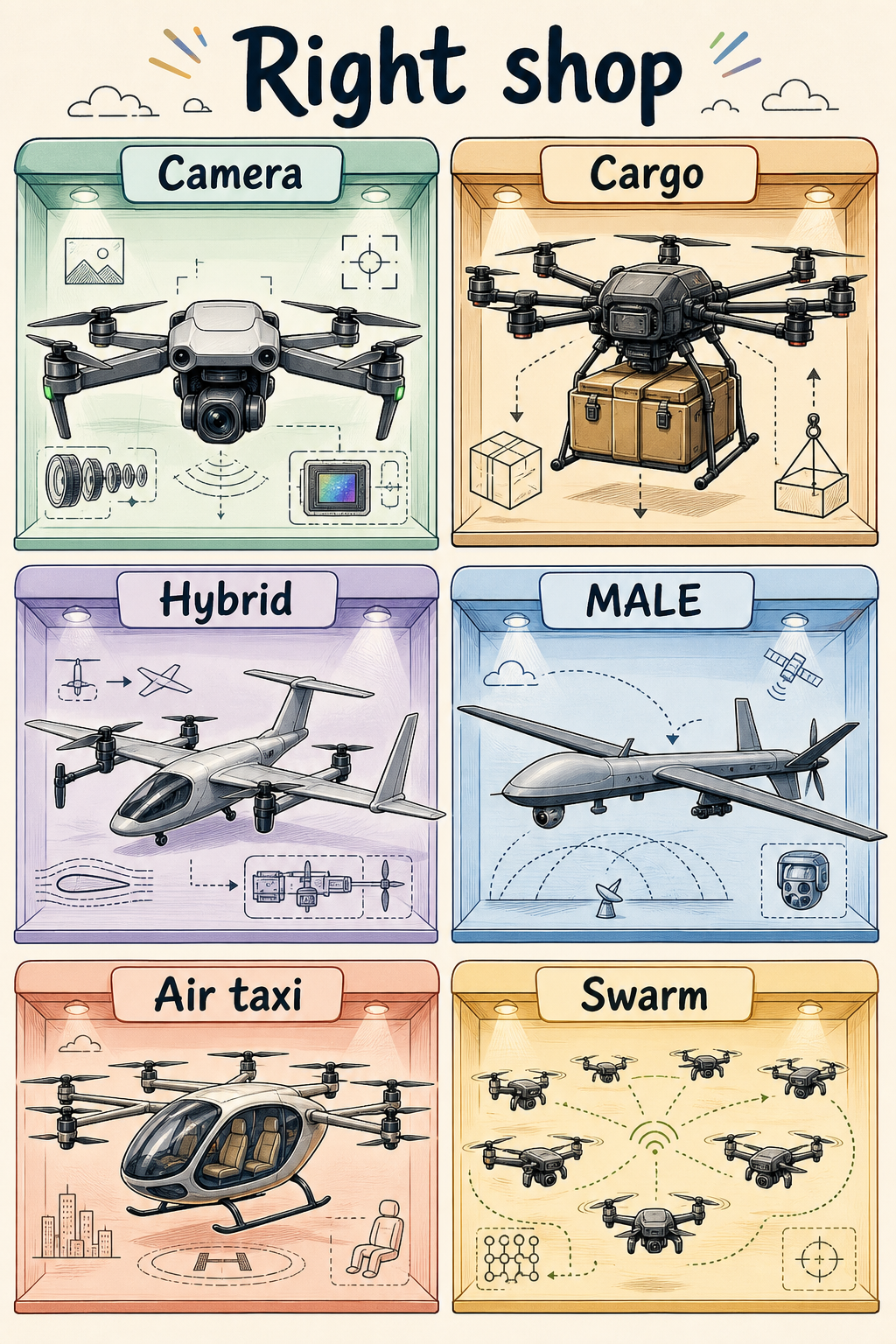
There is no single best drone. There are best tools for jobs that barely share a sky.
Consumer and prosumer imaging. The DJI Mini, Air, and Mavic families—and their rivals—own the cultural default of “drone”: folding arms, gimbal camera, polished app, obstacle sensing that fails gracefully more often than not. Mid-2026 retail spans roughly $200 to $2,200+ depending on kit. What once required a film helicopter and a pilot brief now fits in a backpack. Limits remain honest: tens of minutes of flight, wind, rain, and politics around Chinese OEMs in some markets.
Logistics multirotor. Heavy short-hop craft in the DJI FlyCart 30 conversation lift on the order of 30 kg for brief windows—public figures around ~18 minutes loaded—and make sense where a road is a rumor and the distance is short. They prove multirotor logistics past novelty grams. They do not repeal hover’s tax.
Hybrid VTOL cargo. Platforms in the JOUAV CW-class conversation advertise tens of kilograms of payload, multi-hour endurance, and mission radii measured in hundreds of kilometers of ambition. Vertical access, winged cruise. Architecture as strategy.
Military MALE. Medium-altitude, long-endurance aircraft like the MQ-9 Reaper family remain the reference for persistent armed ISR—intelligence, surveillance, reconnaissance—with satellite control and multi-sensor loads. Cheap drones rewrote the tactical layer; they did not delete the high-end stare.
Passenger eVTOL. Joby Aviation moved conforming hardware into the sharp end of FAA type certification. Company reports describe power-on of the first FAA-conforming TIA—Type Inspection Authorization—aircraft in November 2025 and first flight of that conforming aircraft on March 11, 2026 (tail N547JX), with FAA pilots expected later for for-credit testing. Public performance talk still clusters near ~150 miles range class and ~200 mph cruise class for multi-seat tilt designs. Archer and others press related powered-lift paths with different scoreboard metrics. TIA flight is not a type certificate. A type certificate is not a city network. Noise rules and vertiport politics can still veto a perfect airframe.
EHang and other programs under different national regulators show that “certified somewhere” is not a global passport.
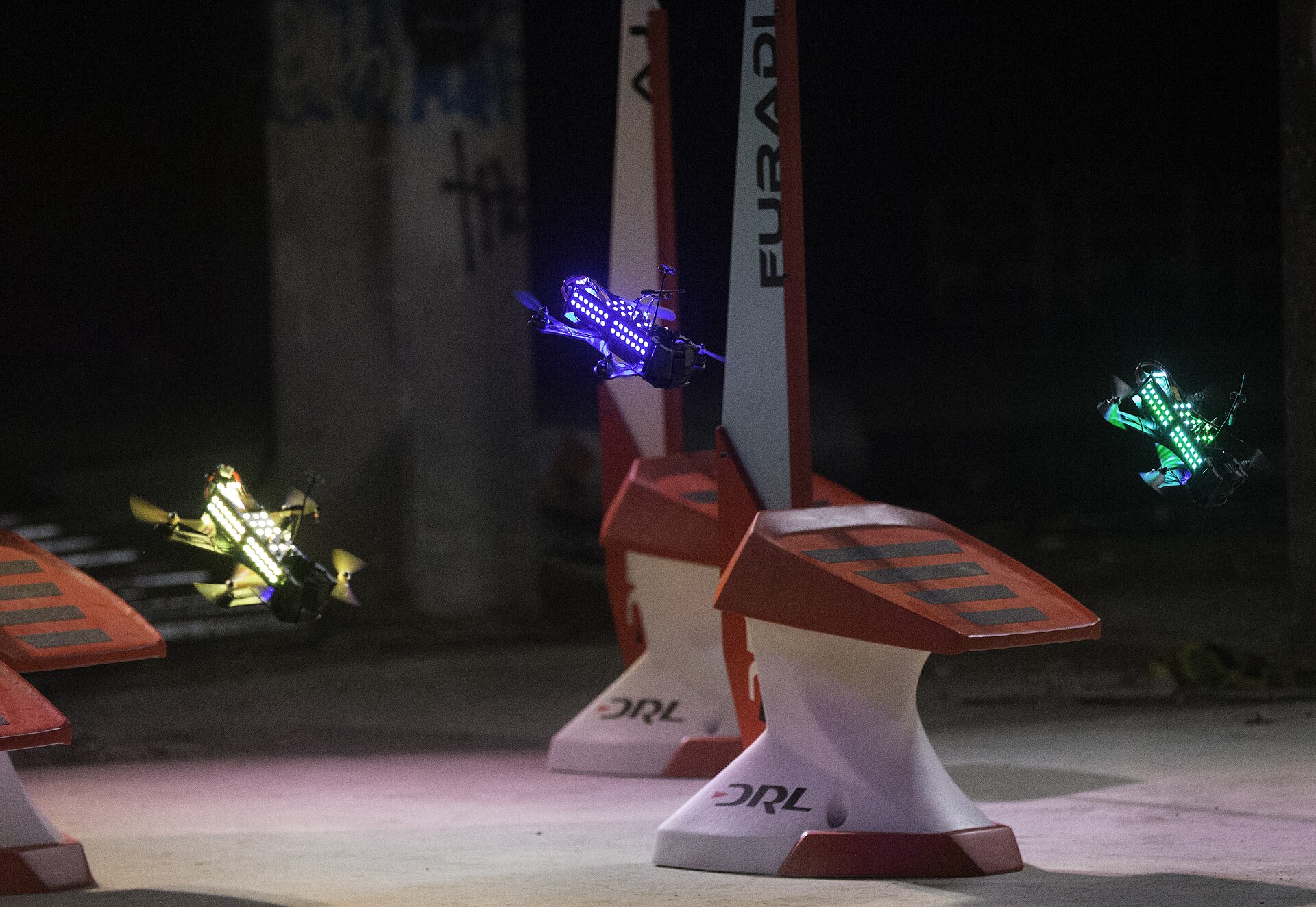
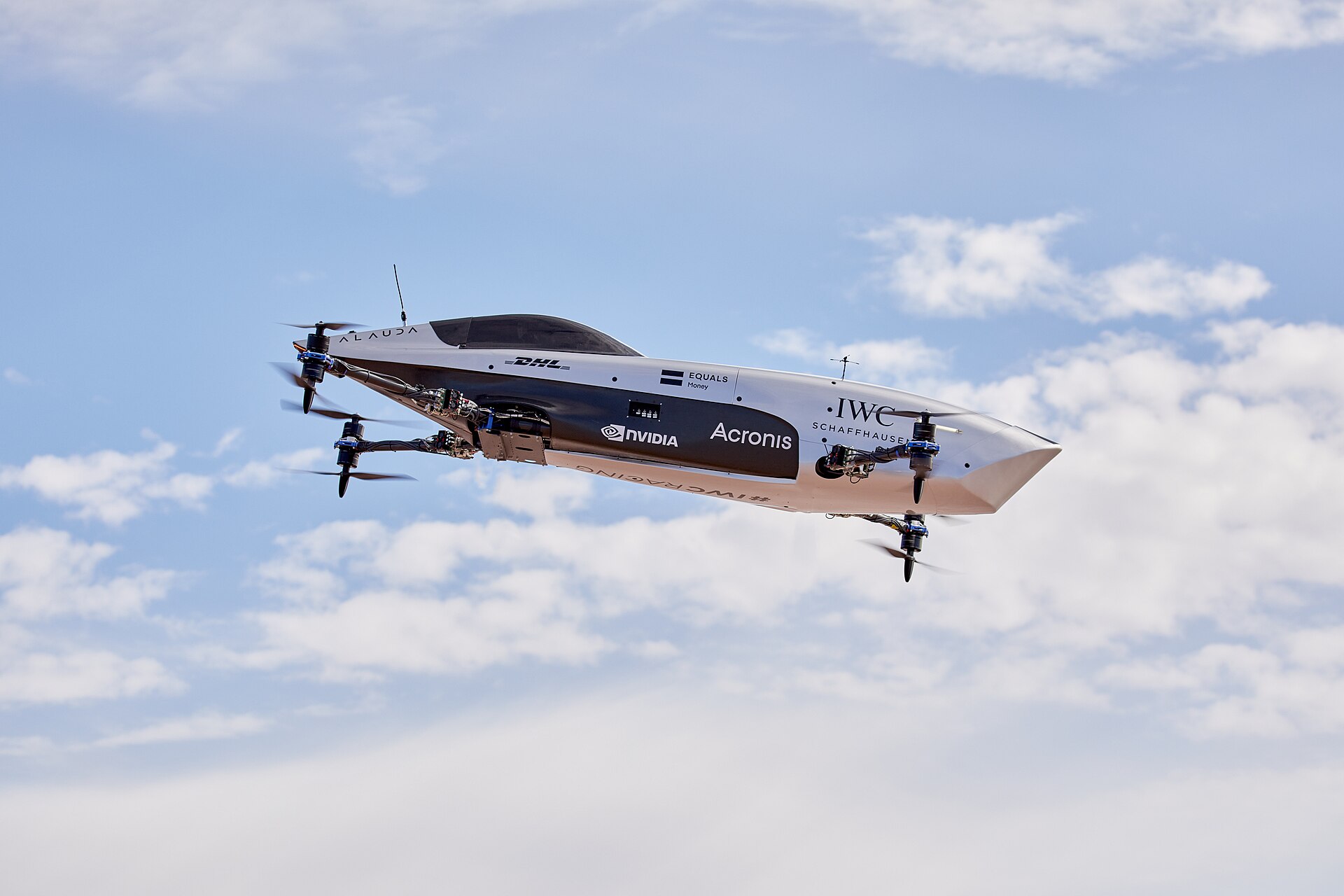
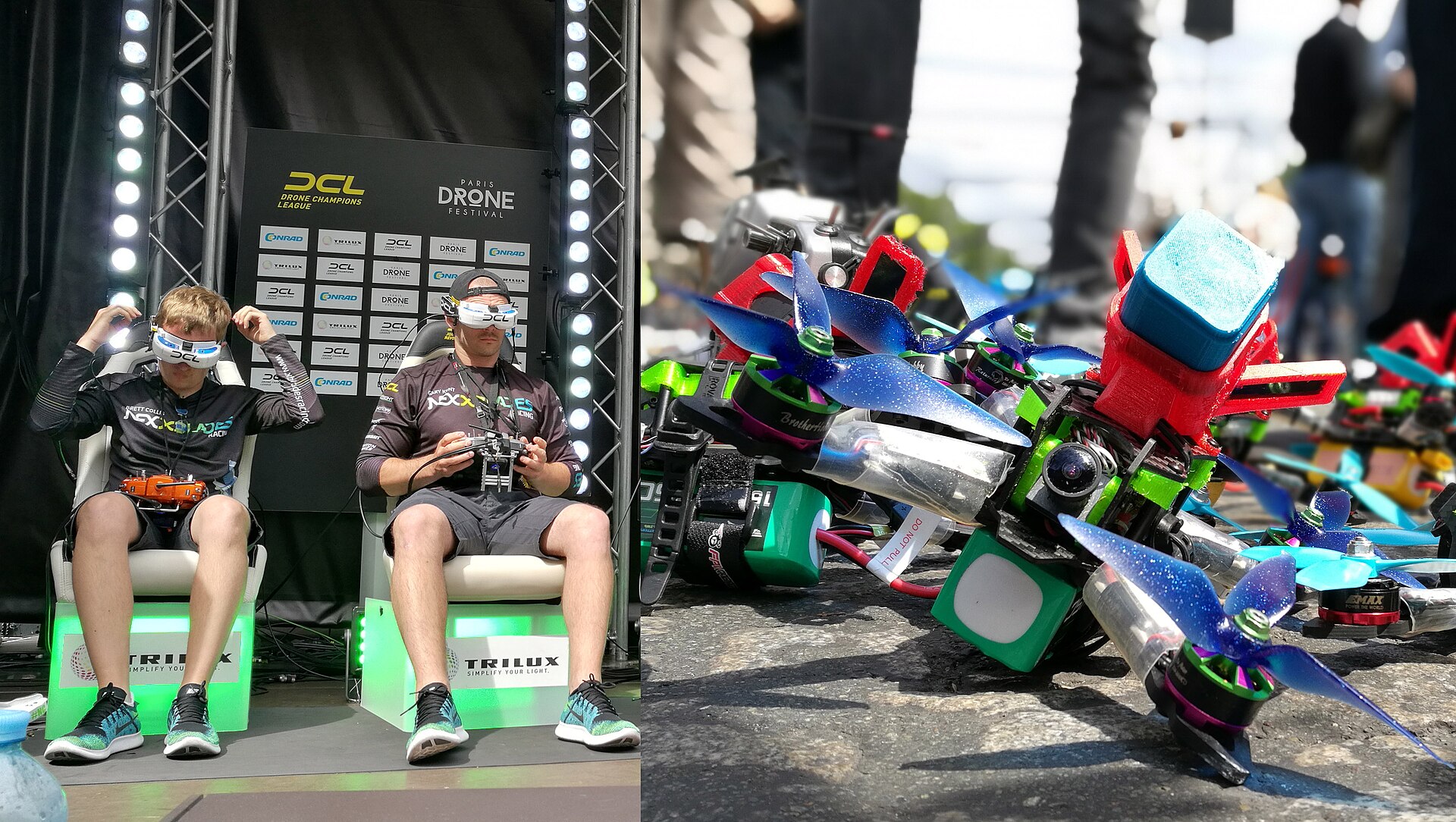
Drone Grand Prix / FPV racing. Formula-1 for small multirotors is not a metaphor only — it is a real sports stack. MultiGP runs chapter leagues and world-level opens (Championship narrative toward Dallas, Oct 2026). The Drone Racing League (DRL) made stadium gates and standardized racers a TV product. The Drone Champions League (DCL) pushes mixed-reality cups (Falcon/Eagle/Hawk + Super Final) and national extensions. FAI sanctions World Cup and World Championship drone racing as air sport. Airspeeder is the sibling story: electric flying-car racers on a Grand Prix path, not a 250 g freestyle quad. Racing is the skill-and-hardware gym that also feeds freestyle culture and, uncomfortably, wartime FPV intuition — while remaining a different product from logistics or air taxis.
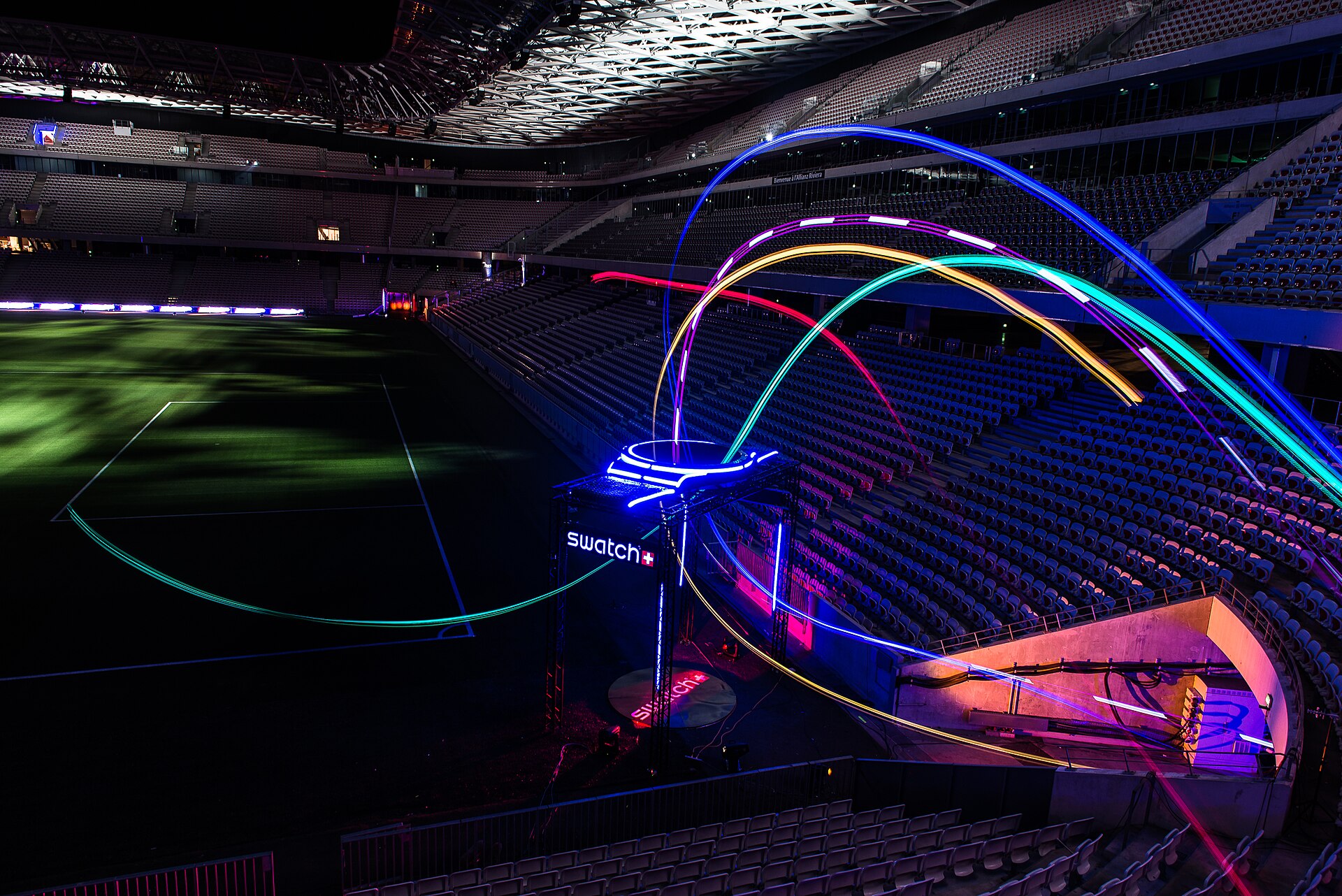
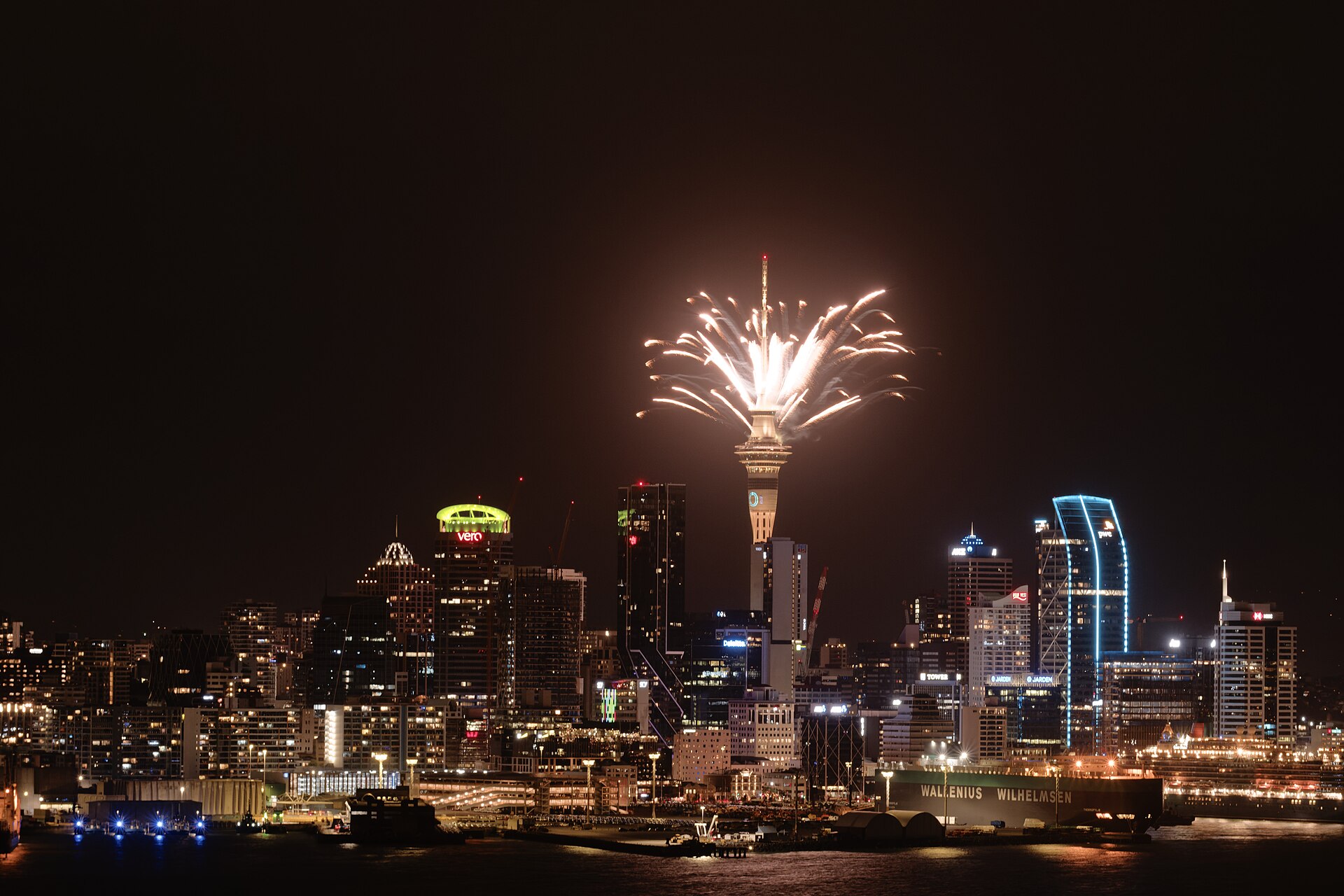
Drone light shows — when “best” means replacing fireworks. New Year’s skies used to mean gunpowder: boom, smoke, ash on the balcony, and a temporary ban on breathing. In city after city, scripted drone light shows now take that entertainment slot — hundreds or thousands of LED multirotors forming logos, animals, and flag animations that can be reprogrammed for the next sponsor night. Cities and venues sell the swap as quieter, cleaner, reusable, and (sometimes) safer for wildfire seasons and dense neighborhoods. The craft of “best” here is not endurance or payload; it is time-synced choreography, radio discipline, launch logistics, and a fail-safe that does not rain carbon fiber on the crowd.

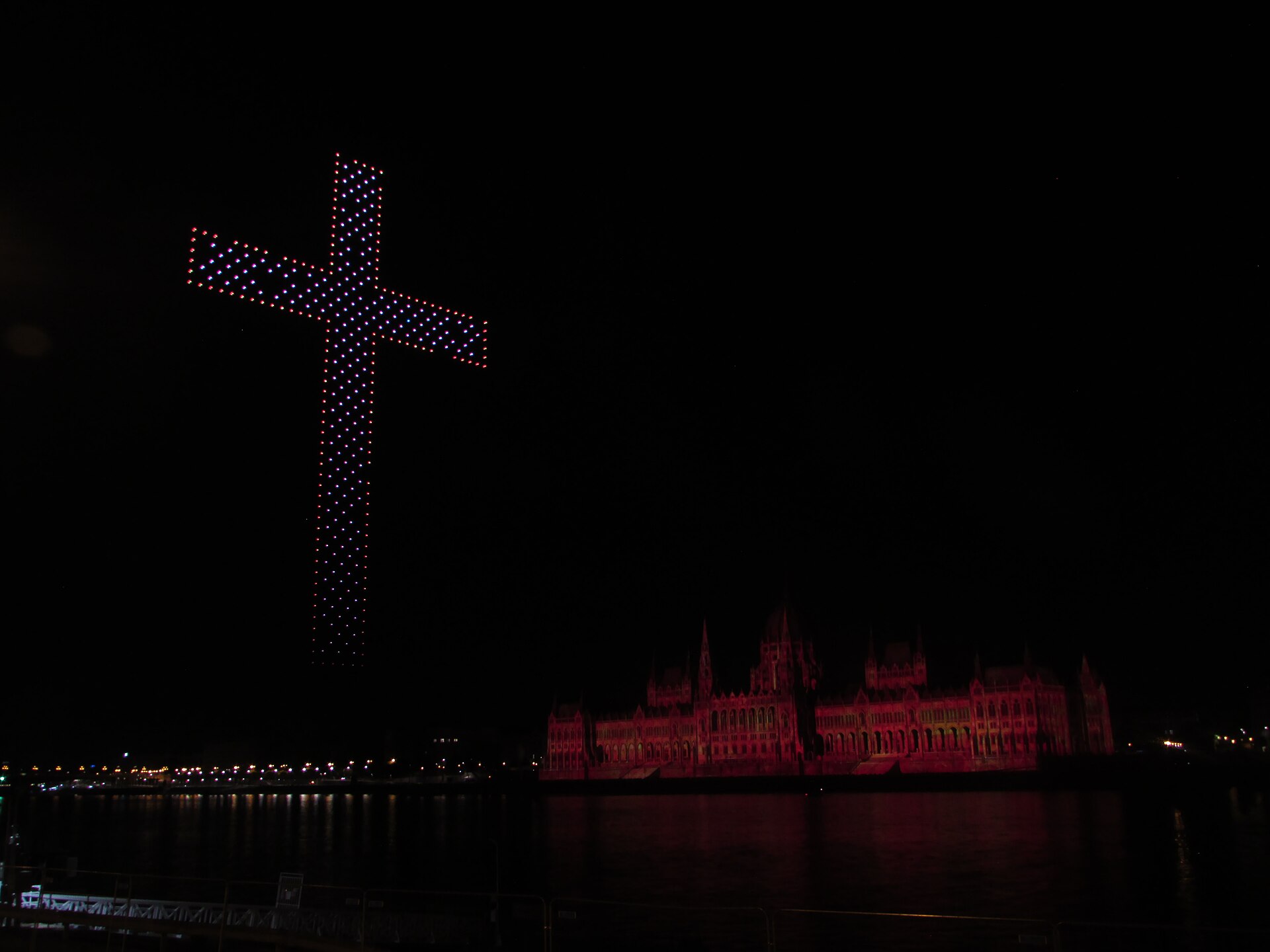
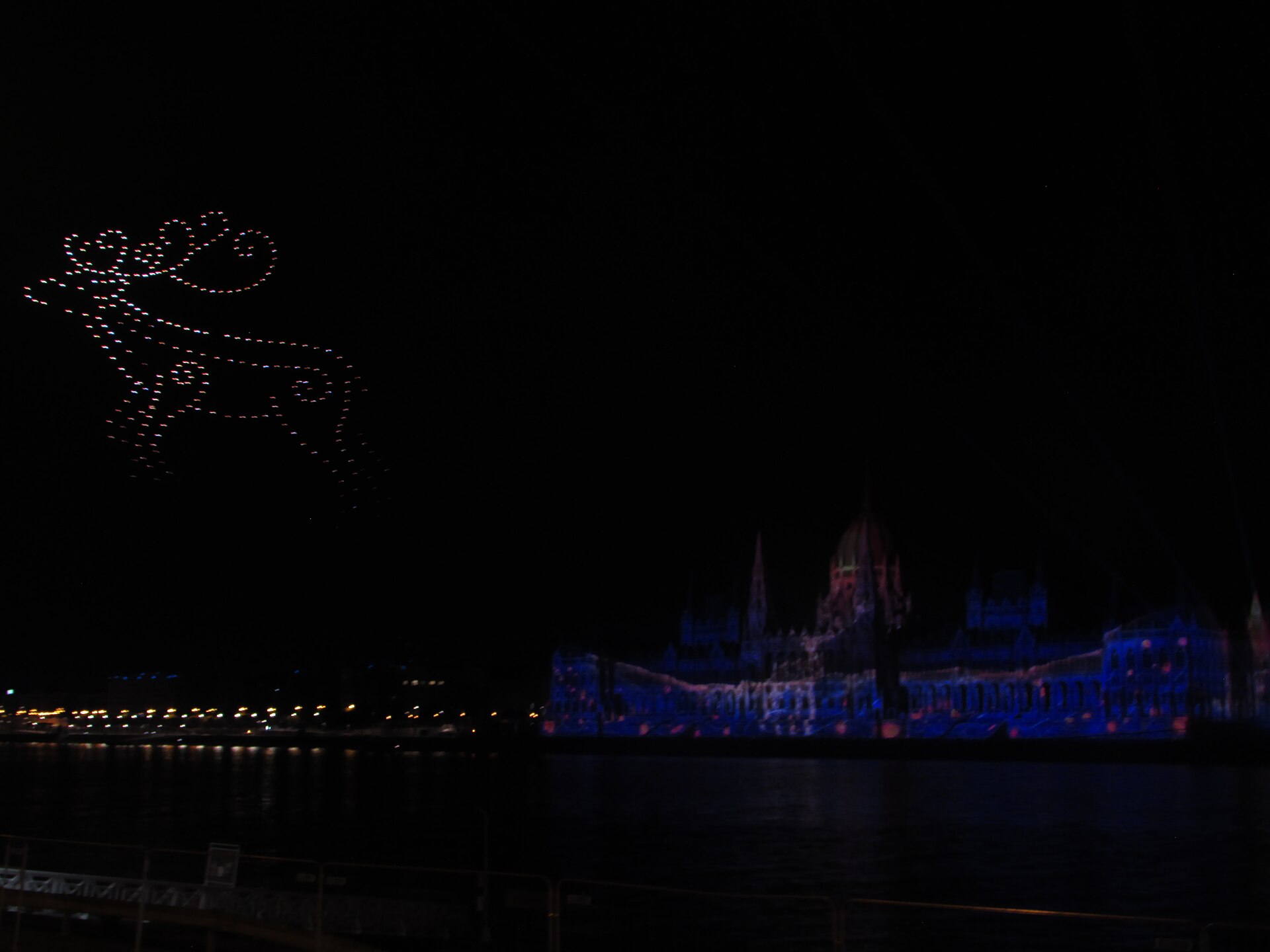
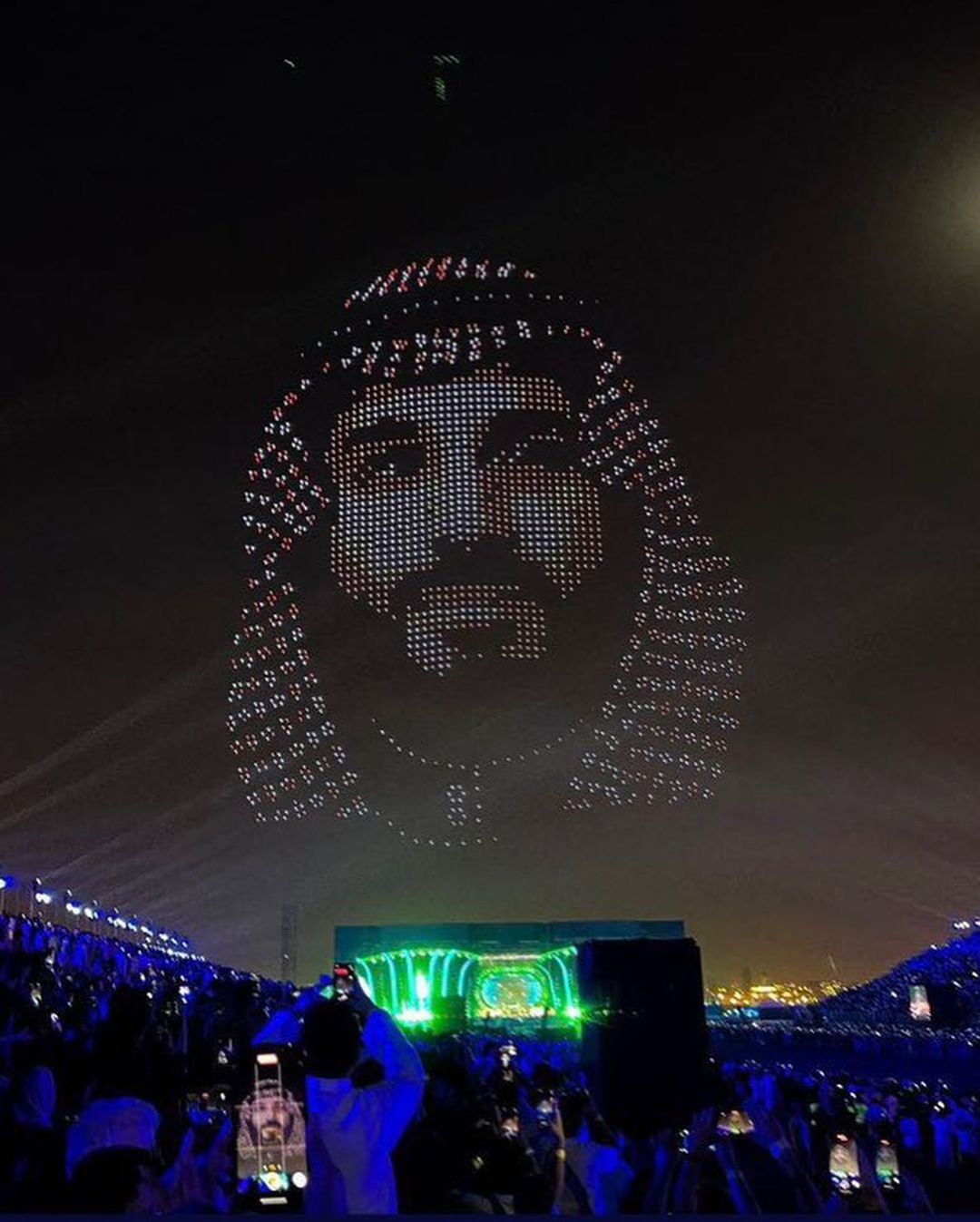
That replacement is not pure progress poetry. A light show is still a dense UAS operation over people: battery fires, flyaways, jammed control links, and pilot-or-computer error are real residual risks. And a light show is not a tactical swarm — the pretty cloud is usually pre-scripted from a show computer, not a self-healing combat formation. Call it best-in-class entertainment mass, not best-in-class multi-agent warfare.
Gunpowder, then drones — the same double life. There is an old rhyme in the history of technology. Gunpowder was developed in China; for centuries it lit festivals and scared spirits as much as it cracked walls. Fireworks came first in the public imagination; military use rode the same chemistry into rockets, bombs, and guns. The molecule did not choose virtue. Institutions did.
Drone swarms rhyme with that story. The same multirotor stack that paints a stag over a parliament building or a giant over a stadium can, with different software, payloads, and rules of engagement, paint a target grid. Entertainment mass trains logistics, radio timing, and public tolerance for many small machines in one sky. Military mass trains attrition, EW, and terminal seekers. Civilians meet the swarm as New Year’s art; soldiers meet cousins of the same airframe as FPV and one-way attack. Pretending those worlds never touch is as naive as pretending fireworks never became ordnance.
So when someone says “drone swarms are the future,” ask which shop on the street: light-show computer, race gate, delivery dock, or magazine. Best is local. The rhyme with gunpowder is the warning label: the crowd-pleasing use case and the force-multiplying use case share a platform generation long before they share a moral script.
Swarm and multi-agent (research sense). Research inheritances from OFFSET, orchestrator prize challenges, scripted light shows at thousand-drone scale, and wartime mass with autonomy assists. Pick your slice before you crown a king — and remember that “swarm” in a press release often means choreography, not decentralized tactics.
State of the art is a street, not a throne. Walk into the right shop — and notice which doors open onto fireworks night, and which open onto a different kind of night entirely.