Last updated: 2026-07-20
Contrarian scan and structural limits

The skeptic’s strongest case (integrate, do not bury)
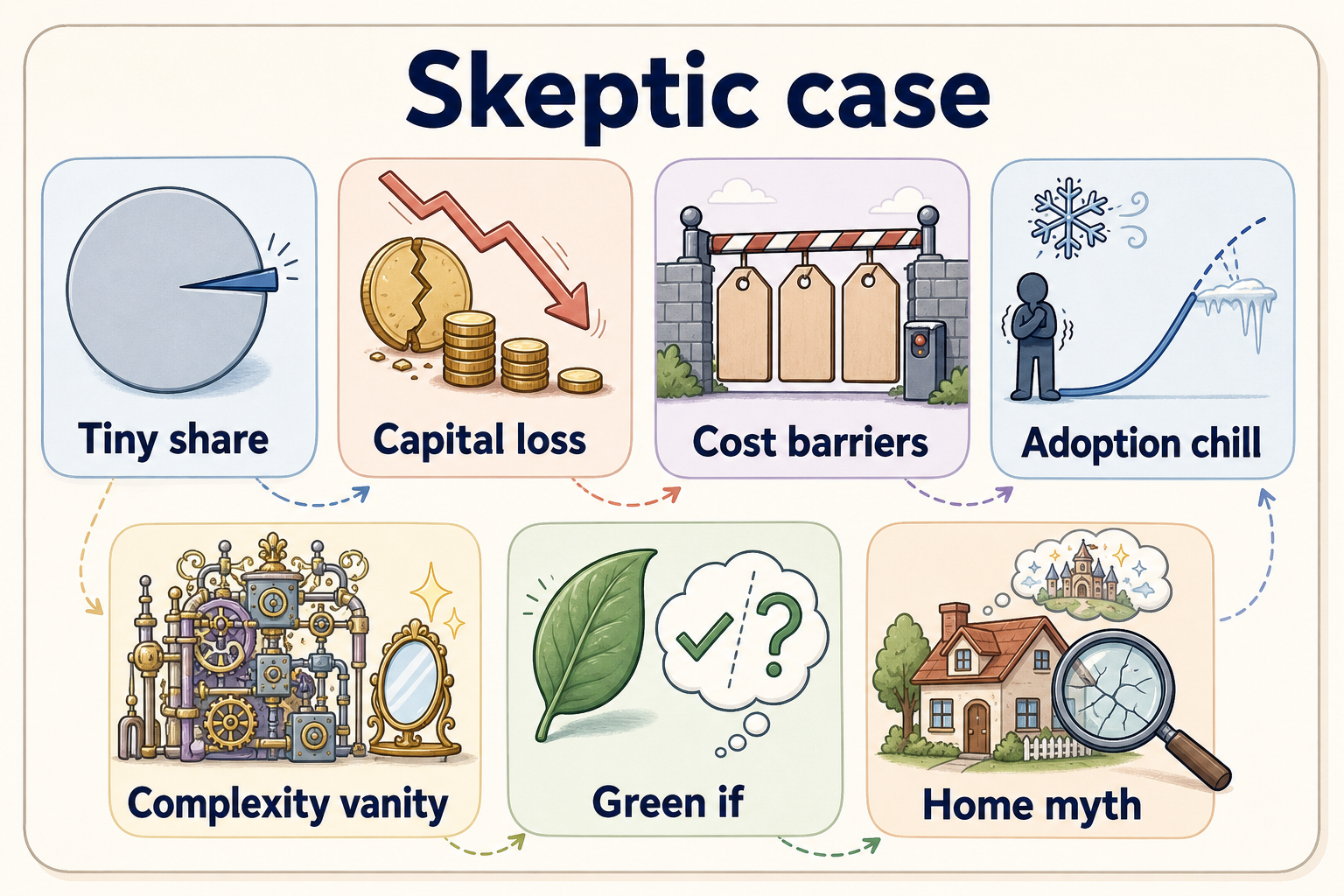
❓ What remains true in the anti-hype critique of 3D printing?
A sophisticated skeptic in 2026 can say all of the following without denying GE nozzles or dental aligners:
- AM is still a tiny slice of manufacturing value-add. It has not “disrupted factories” in the economy-wide sense promised in popular tech media a decade ago.
- Many pure-play AM equities destroyed capital through rollup fantasies, slow enterprise sales cycles, and high cash burn—even when underlying machines worked.
- Cost, materials, post-processing, and standardization remain binding constraints (MarketsandMarkets-style challenge lists in 2026 still lead with equipment cost, material limits, standards/QA, IP for digital files, workforce, and post-processing complexity).
- High interest rates and complex operations cooled marginal industrial adoption in the mid-2020s; not every pilot becomes a production cell (quality journalism and industry year-in-reviews track this chill).
- Complexity for its own sake is a failure mode: printing a part that should have been a bent tube wastes money.
- Environmental virtue is conditional. Lightweighting in flight can save fuel for years; energy-heavy metal lasers with poor utilization and high scrap can be worse than optimized conventional routes on a full LCA.
- Consumer home manufacturing was a category error—confusing a cool fabricator with a supply chain.
If no credible counter-argument existed, AM bulls would only need press releases. The counter-arguments are credible; the bull case must therefore be narrow and mechanistic: specific geometries, spares, medical customization, defence readiness—not universal replacement.
Failed predictions worth remembering
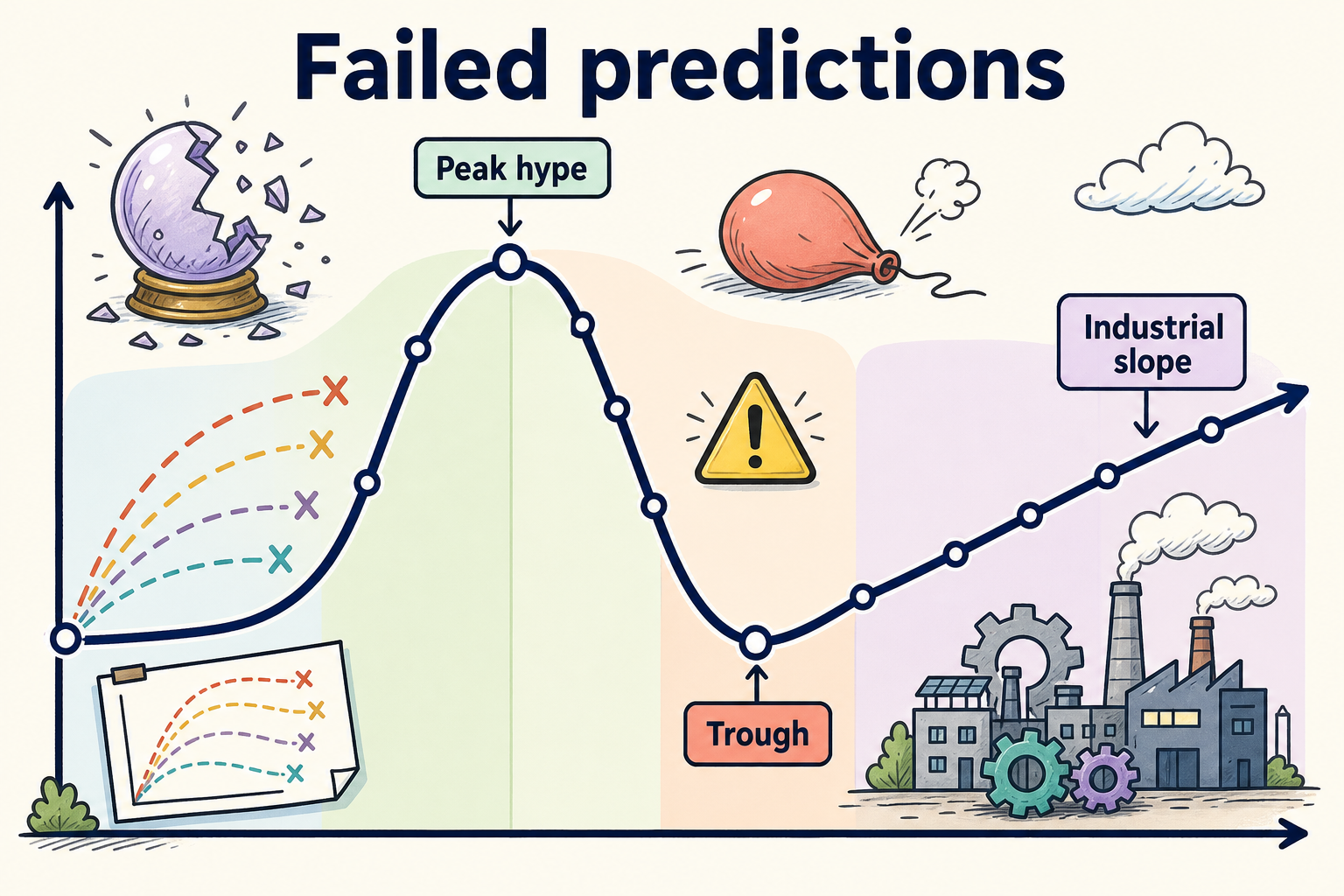
❓ Which famous forecasts aged poorly?
VoxelMatters and others long catalogued Gartner-era misses—e.g., enormous near-term global IP loss figures from 3D printing that did not arrive on the predicted schedule or scale. Hype cycle dynamics are not unique to AM, but AM was a textbook case: media peak → trough of disillusionment → slope of enlightenment in industrial niches.
Recurring operational failure modes
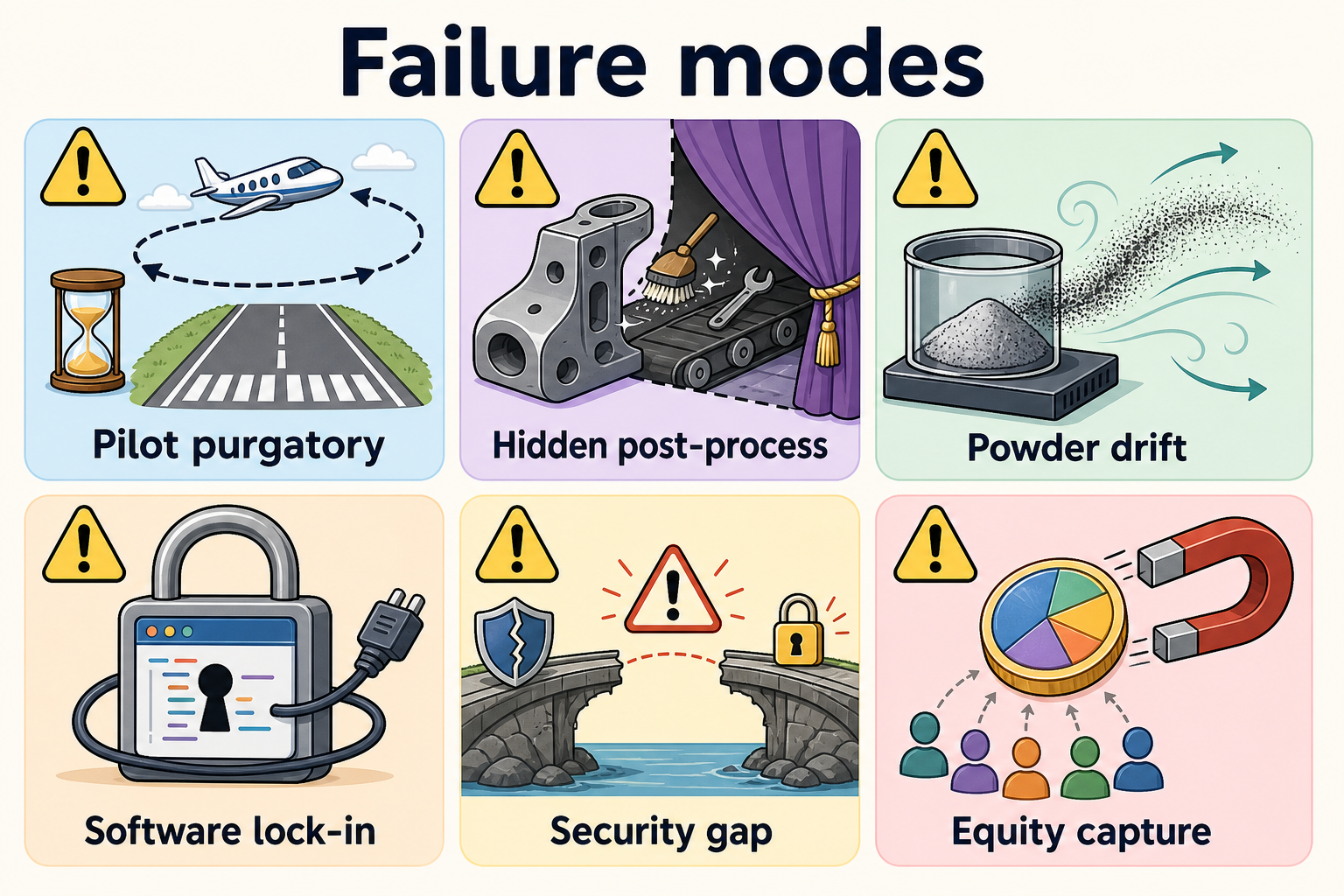
| Failure mode | Mechanism | Tell |
|---|---|---|
| Pilot purgatory | No DfAM redesign; print-as-machined | Pretty prototypes, no cost model win |
| Hidden post-process tax | Quote ignores HIP/machine/inspect | Schedule slips, margin vanishes |
| Powder quality drift | Reuse without controls | Property scatter, scrap spikes |
| Software lock-in surprise | Parameters and MES captive | Switching costs exceed machine price |
| Security afterthought | Cloud-connected shop in regulated program | Failed procurement / ATO |
| Equity narrative capture | Strategy set by stock story | M&A churn, talent exit |
Overhyped vs underhyped in 2026
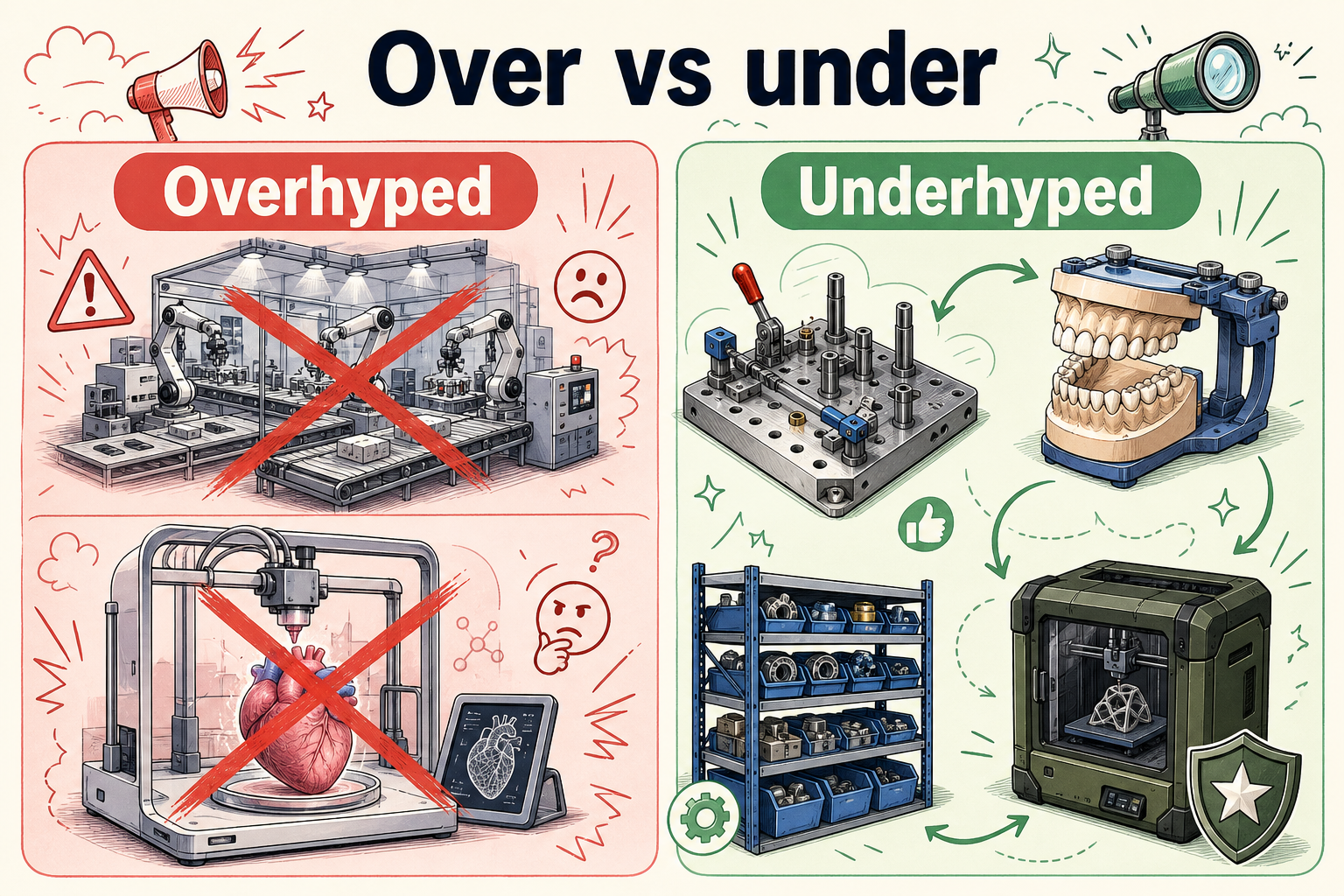
❓ What is over-discussed vs under-discussed?
Overhyped relative to evidence: fully autonomous lights-out metal factories for arbitrary parts; near-term replacement of automotive stamping; bioprinted organs as general AM progress; “AI deletes qualification.”
Underhyped relative to impact: boring tooling and fixtures; dental/medical customization economics; defence-driven trusted capacity; hybrid DED+CNC repair; digital inventory for obsolescent industrial spares; continuous fiber polymer structures for non-flight-critical load paths.