Last updated: 2026-09-24
Honest limits
Reverse osmosis produces fresh water and a concentrated leftover called brine. Brine is saltier than the source water. It must be discharged, diluted, reused, or otherwise managed in a way that protects nearby ecosystems. A plant also needs intake protection, maintenance, trained operators, replacement parts, and water-quality testing.
Solar electricity is variable. Clouds, seasons, and night reduce output. Water tanks can help the town store treated water, but they do not solve every power, maintenance, or demand problem. The plant must have a plan for cloudy periods and emergencies.
A solar field alone does not provide a safe drink. The panels, wiring, pumps, membranes, tanks, permits, monitoring, and trained people all have to work together.
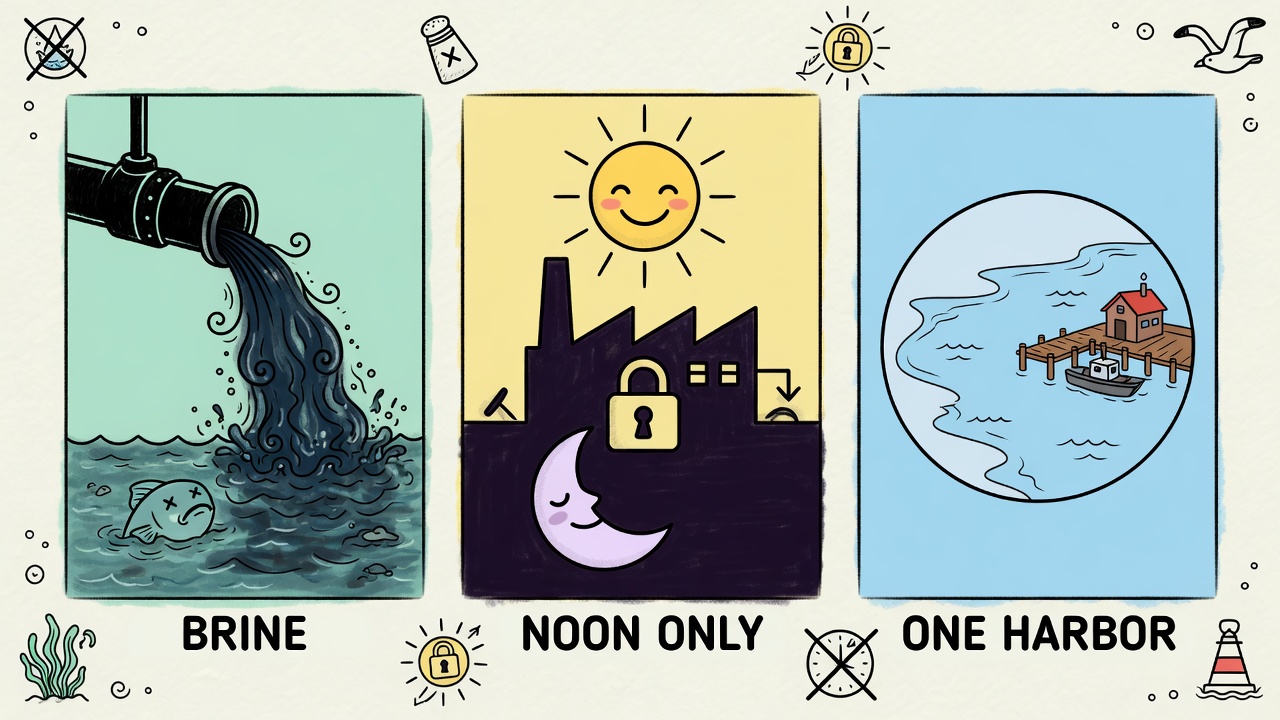
The goal is not to claim that solar desalination has no trade-offs. The goal is to decide whether its trade-offs are manageable for Duneport.
A common mistake is to stop the analysis when fresh water leaves the membrane. The brine and the operating plan are part of the project.
Use these constraints to design a realistic local pilot.