Last updated: 2026-09-24
Cheap power can make a drink
Desalination removes dissolved salts from water. The most common large-scale method is reverse osmosis: pumps push seawater or brackish water against a membrane, a thin material that lets more fresh water pass through while holding back much of the salt.
The pumps use substantial electricity, so the price and timing of power affect the cost of water. A cubic metre is 1,000 litres. Modern seawater reverse-osmosis plants often use roughly 2.5 to 4 kilowatt-hours of electricity for each cubic metre, depending on the source water, equipment, and operating conditions. Energy-recovery equipment can reduce that demand, but no plant can remove salt with zero energy.
When solar electricity is available in the middle of the day, a plant can make water then and store the water in tanks for later use. This avoids treating batteries as the only way to use daytime solar power.
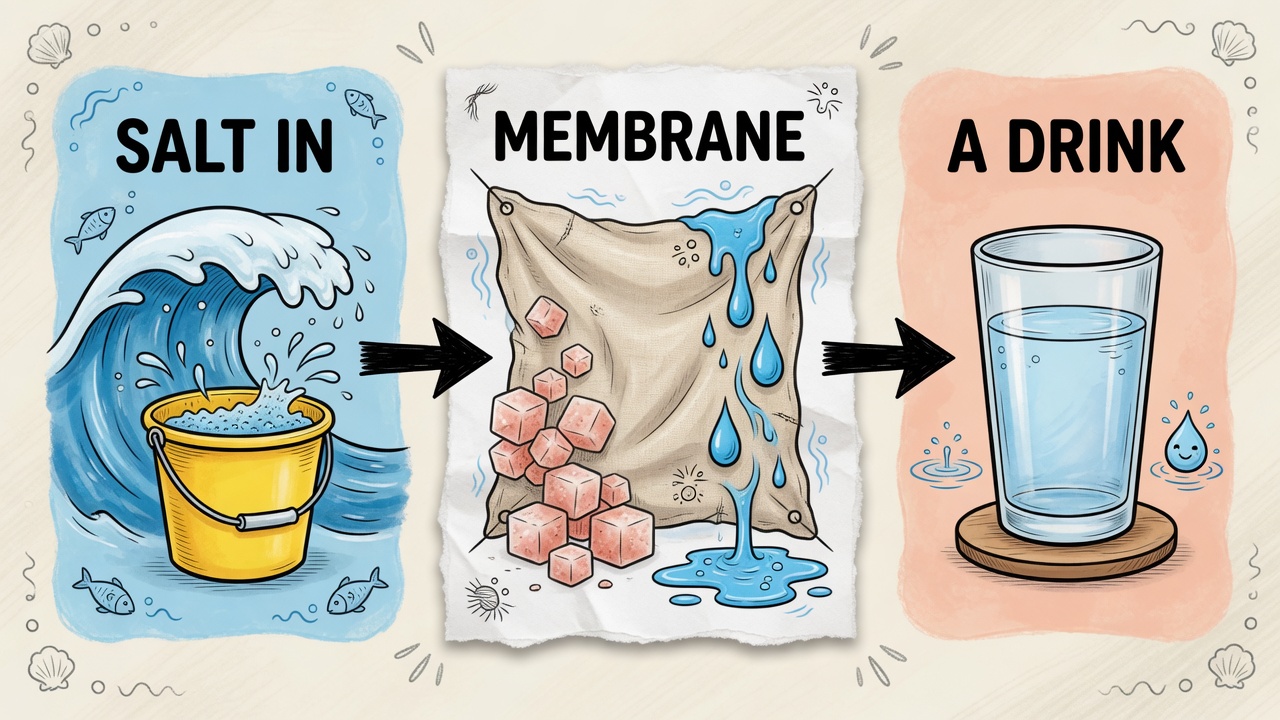
The system turns daytime electricity into a stored public service: treated water.
A common mistake is to assume that solar power is useful only when people need electricity at the same moment.
Next, consider the limits of this approach.