Last updated: 2026-09-25
Honest limits
A replacement part must survive its actual job, not merely resemble the original. Material, geometry, temperature, chemical exposure, rotation speed, pressure, and load can all affect whether a printed part holds together.
Some parts should not be printed as a quick local substitute. Pressure vessels, many bearings, and parts with critical safety or reliability requirements may need conventional manufacturing, formal qualification, or both. Metal printing can add further requirements for machine control, post-processing, and inspection.
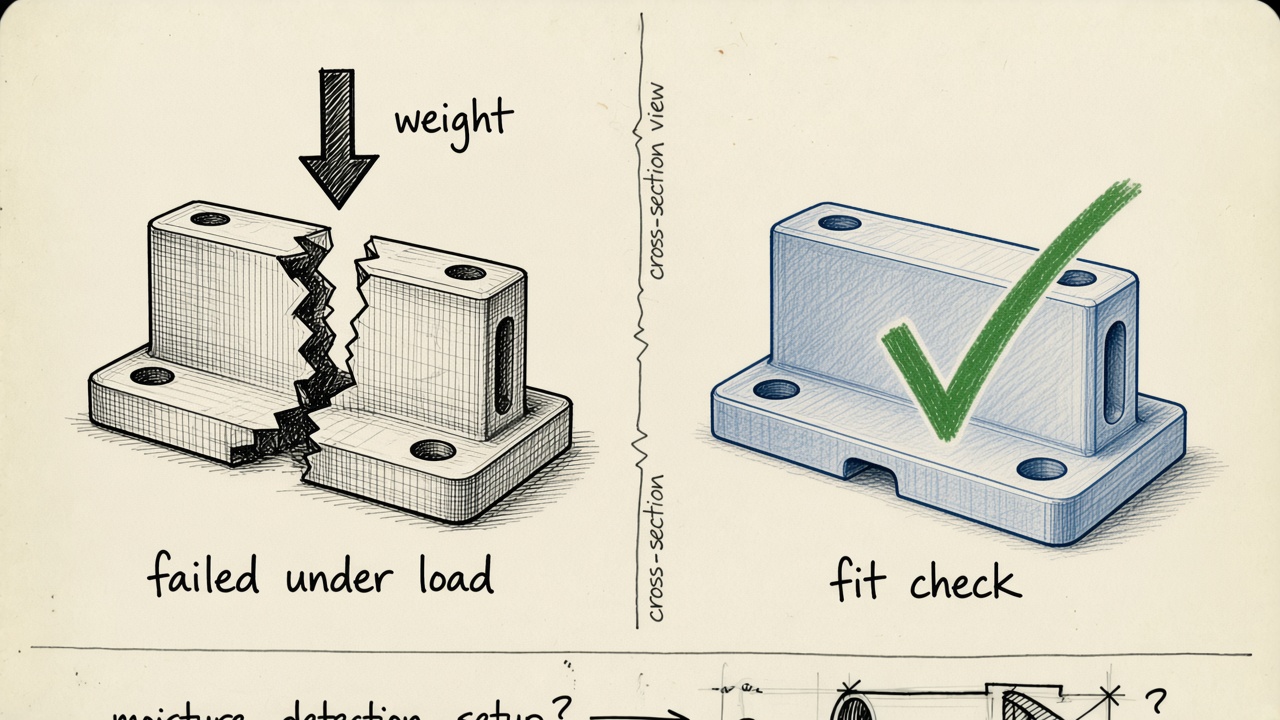
Quality control is part of making the part. At minimum, a responsible pilot identifies the approved file version, material, maker, measurements for fit, and the person authorized to decide whether the part can be installed. If the first print fails inspection, do not install it; use the result to revise the design or return to the supplier route.
A workshop that prints “anything” without material choices, documentation, or checks can create a second failure after the first one.
Common mistake: promising any material, any load, and same-day service.
Use these constraints to design one proposal that can be tested safely.