Last updated: 2026-09-25
Additive, not subtractive
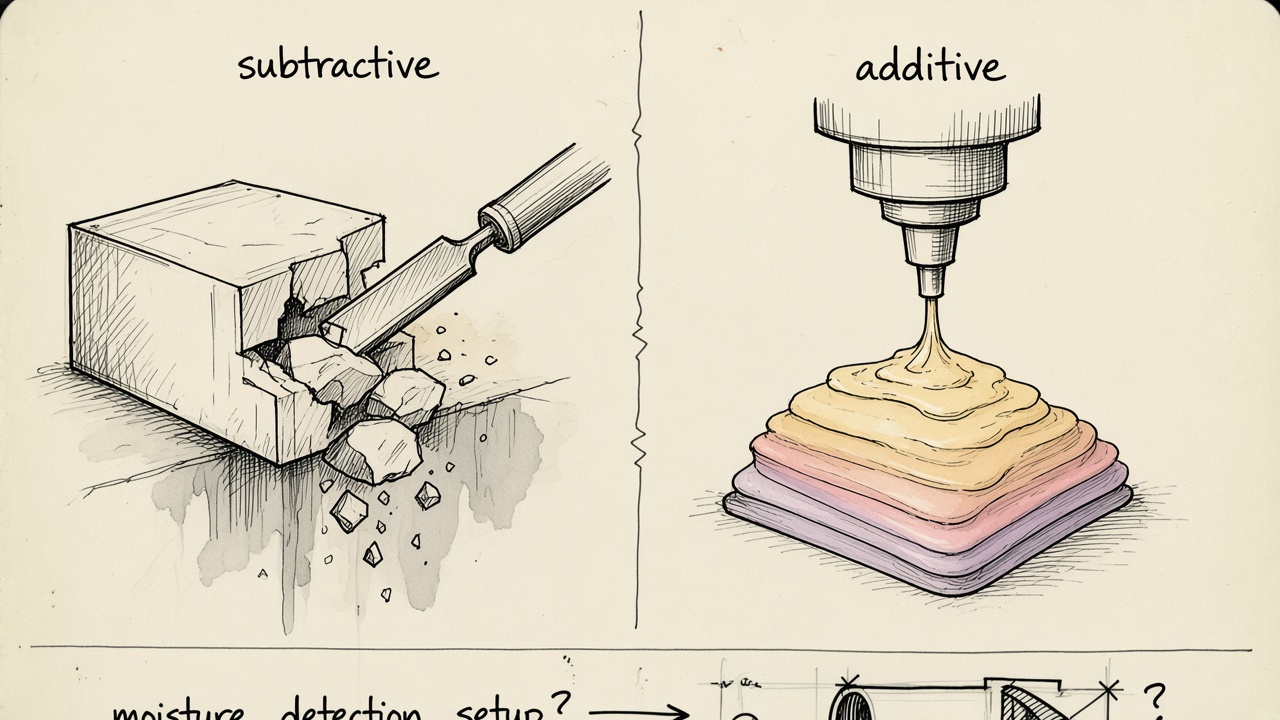
Many manufacturing processes begin with a block, sheet, or rod and remove material by cutting, drilling, or milling. That is subtractive manufacturing. Additive manufacturing builds an object from a digital design by adding material in thin layers. It is often called 3D printing.
Layer-by-layer production can make internal channels and other shapes that are difficult to cut from a solid block. It can also make a small number of replacement parts without paying for dedicated molds or tooling intended for thousands of copies.
Different machines use different materials and processes. A desktop printer may melt common plastic filament. Industrial systems can use engineering plastics, light-cured resins, or metal powders, often with controlled settings and inspection. Material choice and process control determine what a part can safely do.
In 2014, astronauts on the International Space Station printed a wrench from a transmitted design file when resupply was not practical. That demonstrated the value of sending a design instead of a finished object. It does not mean every local replacement part should be printed without testing.
A usable design must include dimensions, material requirements, and machine settings that a qualified maker can follow. A picture of a part is not enough.
Common mistake: assuming that “3D printing” means only hobby objects or, at the other extreme, that every printed object is industrial-grade.
Next, look at the limited cases where plants use this approach today.