Last updated: 2026-09-24
The curb is the city
Nia’s flour van cannot stop at the bakery because several empty cars are waiting at the curb. The problem is not only the vehicles. It is the allocation of a small, heavily used piece of street.
The curb is the strip next to the sidewalk where buses pull in, delivery vans unload, passengers get in and out, and people cross the street. For decades, most cars spent much of the day in parking spaces elsewhere. A self-driving car may instead drop off a rider, wait for another request, or drive away empty. Each option needs street space.
That makes curb rules more important, not less. A vehicle that waits at a bakery may block a delivery. A vehicle that circles to avoid waiting may add traffic. A passenger pickup can conflict with a bus stop or an accessible loading area.
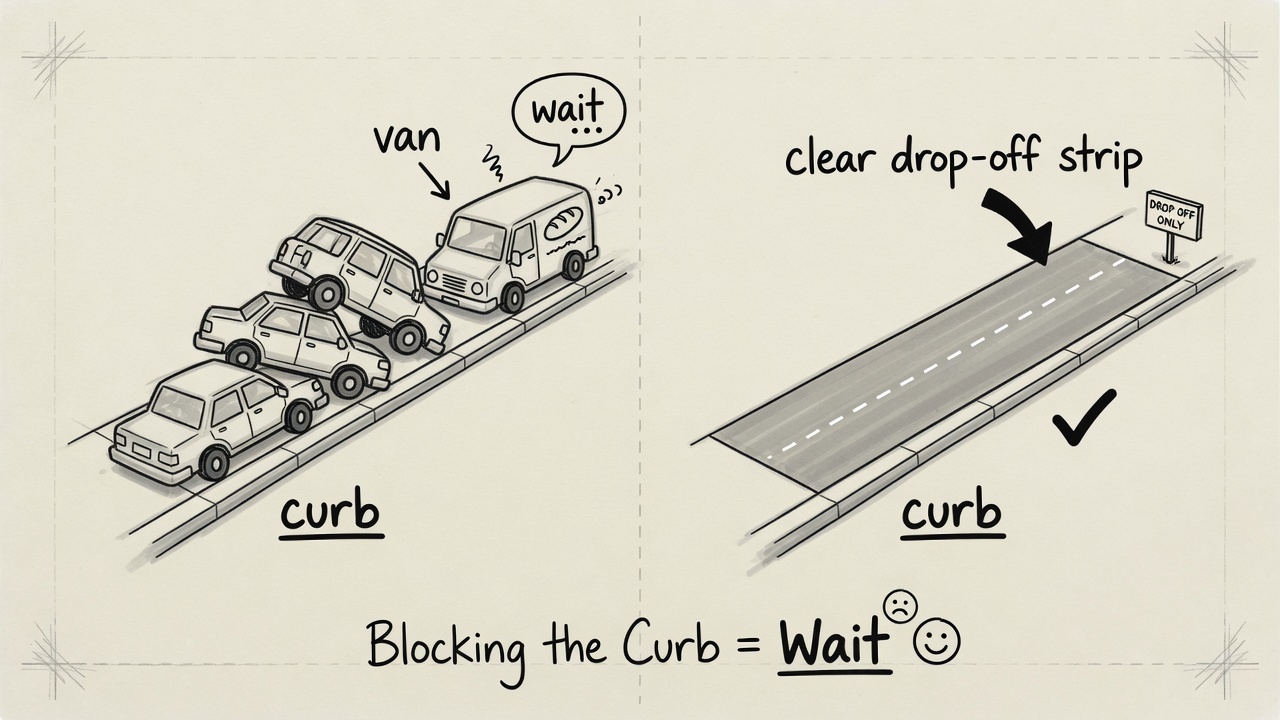
Millspan has tested driverless rides on a waterfront loop, but Quay Street has no assigned pickup area, no waiting rule, and no practical way to keep the loading space clear. The city must decide which uses have priority at each part of the curb. A vehicle service cannot make that decision on its own.