Last updated: 2026-09-24
Not the default body
Walking is difficult. A legged machine must keep its balance, sense the ground, place each foot safely, and recover from small errors. Those requirements add power use, hardware, and software complexity.
Specialists avoid unnecessary complexity
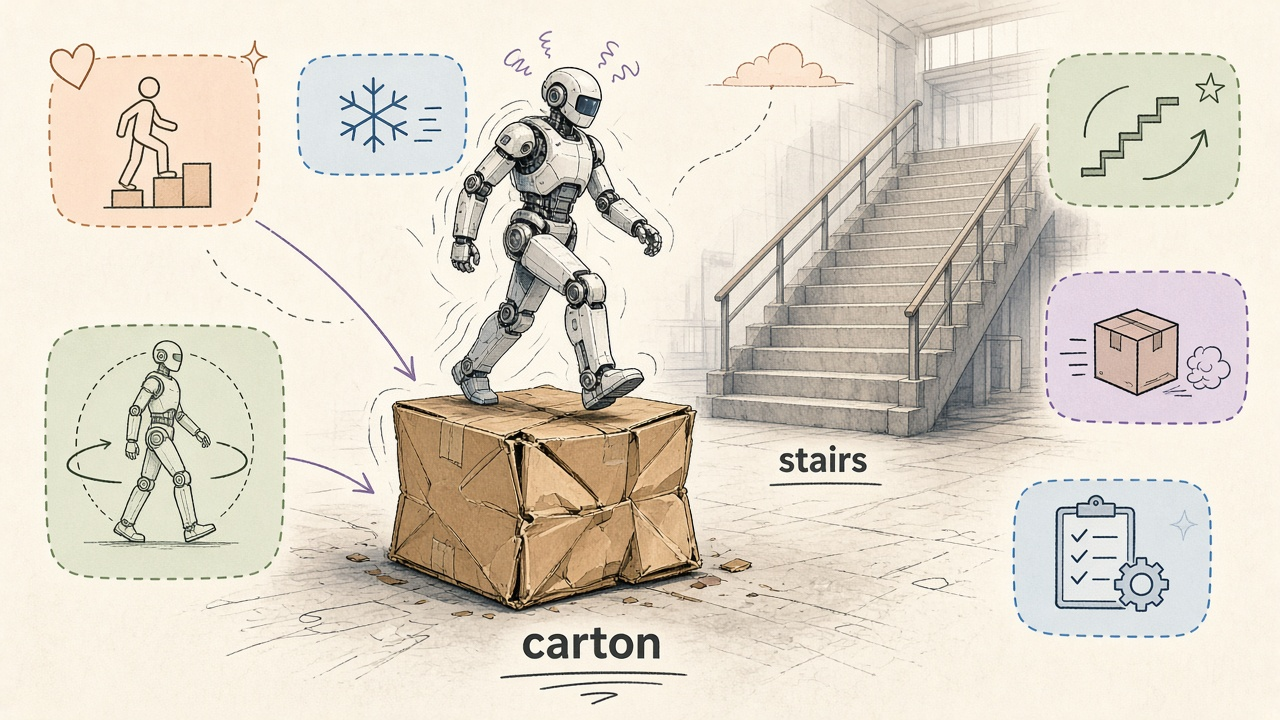
A crushed carton on a level floor does not require that complexity. A rolling base can move heavy loads efficiently without balancing on legs. A fixed industrial arm can repeat a task inside a defined working area with fewer moving parts.
The difference shows up in deployment. Factory arms are installed in the hundreds of thousands each year, while full walking, person-shaped machines are still shipped in much smaller numbers. These are different kinds of counts, so they should not be combined. They do show that specialist machines already handle a large share of real industrial work.
Set a clear test
Use a human-shaped machine only when the job truly requires legs, human-scale reach, or access through spaces no specialist can use. If the work can be redesigned for a cart, conveyor, lift, or arm, compare those options first.
For Rookery, the question is not whether a humanoid robot will someday be common. It is whether the stair route has a problem that this body can solve better than the alternatives.