Last updated: 2026-09-24
After the draft, a body
Lesson 4 focused on software that drafts, summarizes, or suggests. Those systems work with information. This lesson turns to machines that act on physical objects: boxes, shelves, doors, tools, and stairs.
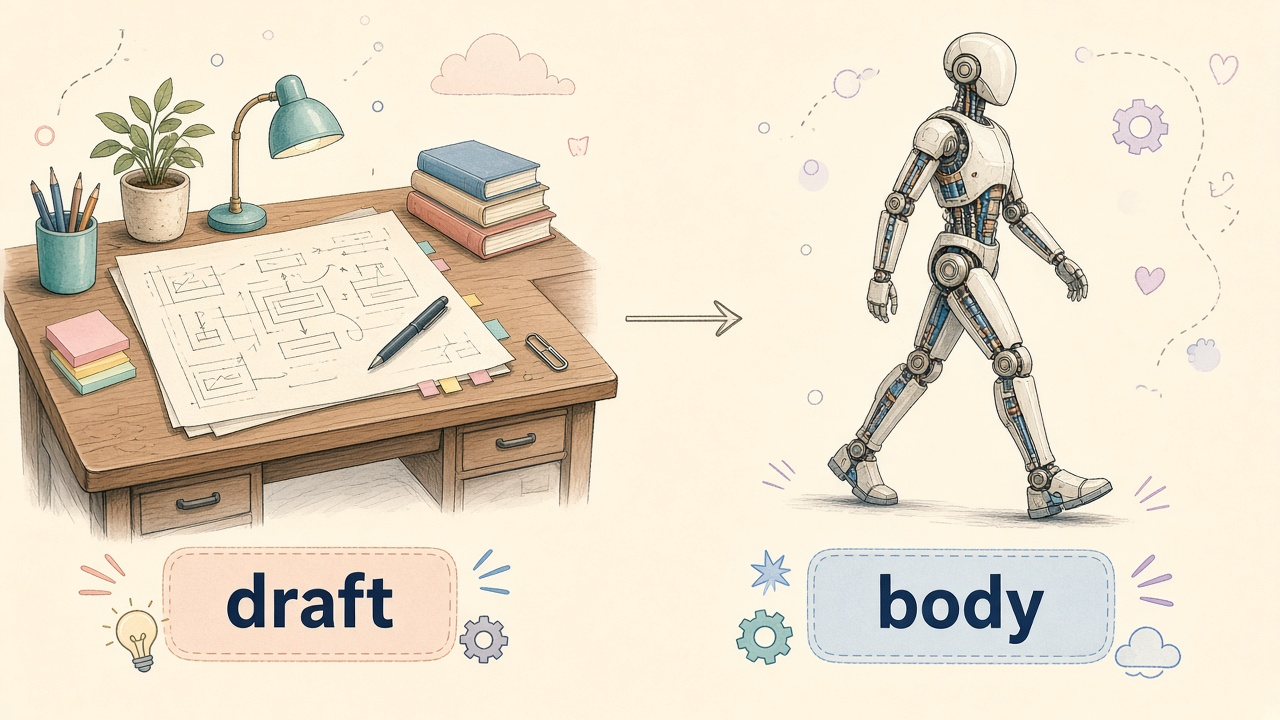
A form factor is a physical design choice
A robot's form factor is its physical layout: its base, joints, reach, grippers, and way of moving. That layout should fit the job. A rolling machine is designed for stable, flat floors. A walking, two-armed machine is designed for places built around human movement.
At Rookery Hub, the box-folding station on flat concrete is a good match for a specialist machine. The mezzanine stairs are different. They were built for people carrying stock, and a machine that must use them needs a different body.
Do not let a demo choose the job
A person-shaped machine can be useful when it must use stairs, doors, hand tools, or storage designed for people. It is not automatically the best choice for every task. The practical question is simple: what must the machine move through, reach, and carry at this station?
A good answer starts with the work, then selects the body. The next page explains why human-shaped machines sometimes make sense.