Last updated: 2026-09-24
Why a human shape
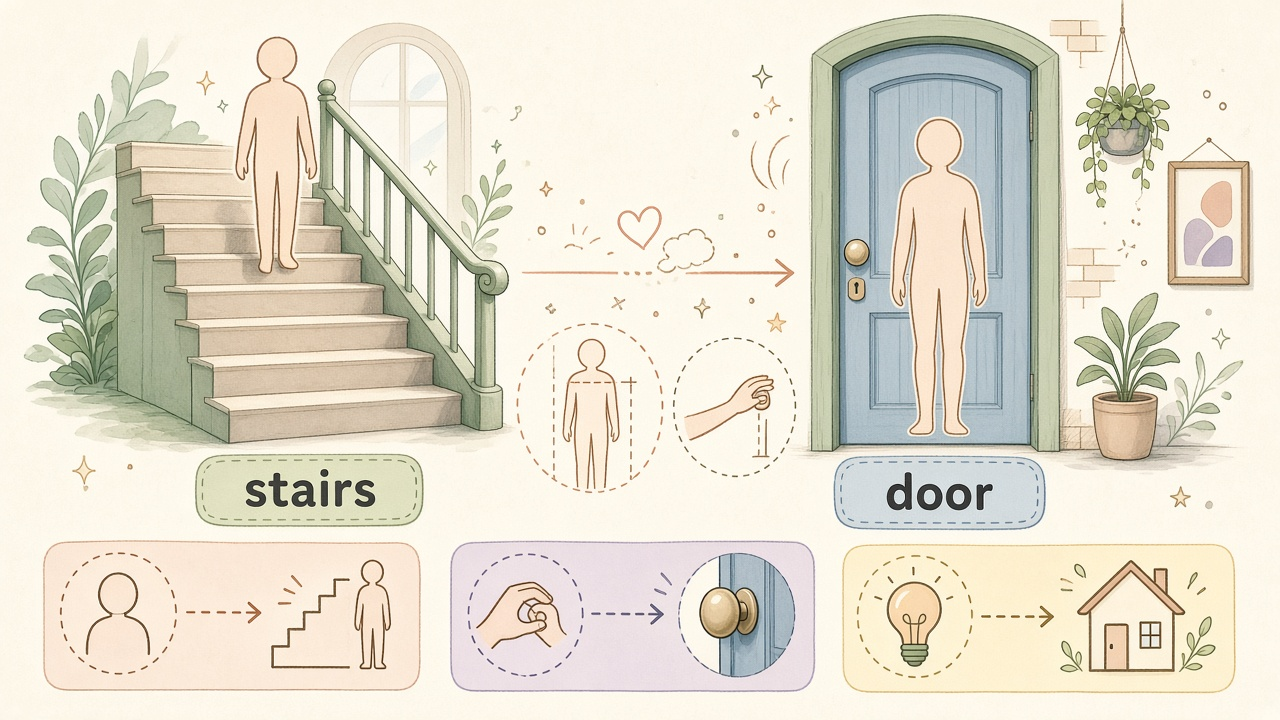
Most workplaces were designed around human bodies. Door handles are at hand height. Stairs fit a human stride. Shelves, ladders, railings, and tools assume that a person can stand, reach, bend, and carry.
Fit the existing workplace
A walking, two-armed machine can be a reasonable choice when changing the building would be harder than making a machine use it. That is the case for Rookery Hub's mezzanine: stock still goes up the stairs at night because a wheeled cart cannot use them.
This is the real case for a human-shaped machine. It is not about making a robot look familiar, and it is not about making a better video. The shape matters only if it allows the machine to work in a human-built space that a simpler machine cannot reach.
Use the shape where it earns its cost
The flat aisle of cartons does not need legs. A rolling base can do that work more simply and reliably. The stairs, narrow access points, and mixed storage are the places where the human-shaped design may be justified.
So the decision is not “Should the warehouse have a humanoid robot?” It is “Which specific task requires a body that can use this building as it is?”