Last updated: 2026-08-26
Human cells, new bodies
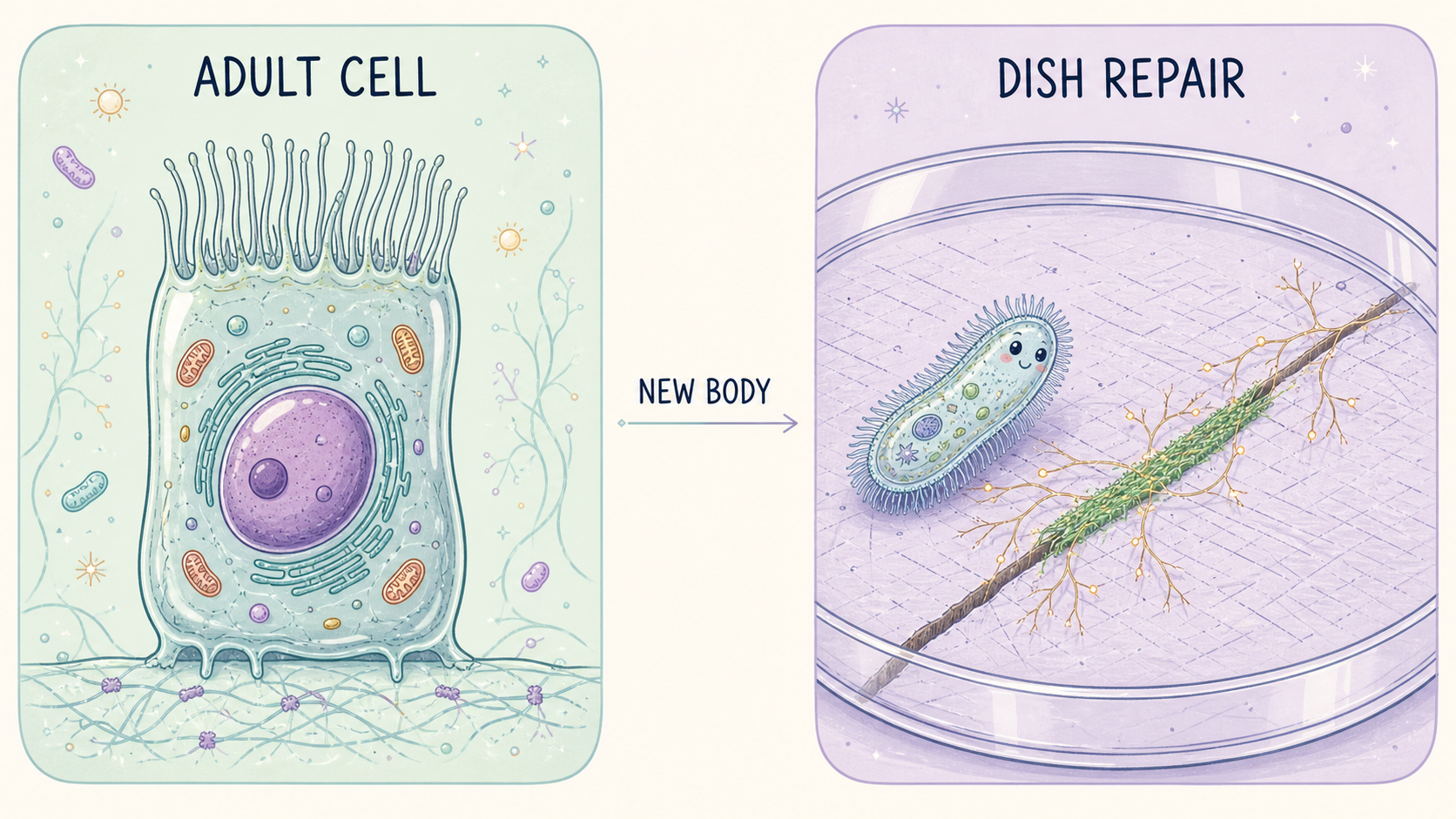
People said the frog result was a party trick: embryos are plastic; amphibians are plastic. Gizem Gumuskaya asked for the farthest test. She started with one adult human cell from the lining of a windpipe — including cells from older donors — and let it build.
The result is an Anthrobot: a tiny swimmer, about the width of a few human hairs, covered in cilia, no gene edit, no scaffold. In a dish, clusters parked on a scratched sheet of human nerve cells. A bridge of neurons grew across in days. She had not designed a bandage. She had designed a mover.
A later paper found the new life rewrites thousands of genes, including old embryonic ones, and can read younger on a chemical age clock than the cells it came from. That is a clock in a construct, not a longevity drug. In 2026, frog versions given nerve-cell starters grew simple networks and more complex motion. Still a dish. Still not a person.
The human jump is why the category is not “frog toys.” Patient-own-cell living repair becomes a thinkable kind of future tool. It is not a clinic product today.
The tempting mistake is to keep the idea in the amphibian ghetto — or to sell the clock as a pill.
That is what lets you hear the copy headlines with a sober ear.