Last updated: 2026-08-26
The product is a living cellular machine
“Synbio” is a family name. So is “robots.” A family name is too wide to invent with. You cannot host a family. You can host a kind of product.
The product category here is a self-constructing cellular biobot: a living, motile clump of ordinary cells that takes a new body and a job without a rewritten genome and without a plastic skeleton. Xenobots are one instance (frog embryo). Anthrobots are another (adult human airway). Neurobots add a starter nervous system to the frog instance. The category is the inventable unit. The instance is evidence.
What the category can do now is small and real: move in a dish, heal a cut in itself, pile specks, in some papers sit on a scratched sheet of neurons while a bridge grows, host a primitive net of nerve cells. What the family name pretends to do — grow you an organ this year, clean an ocean, scrape an artery — is not the category.
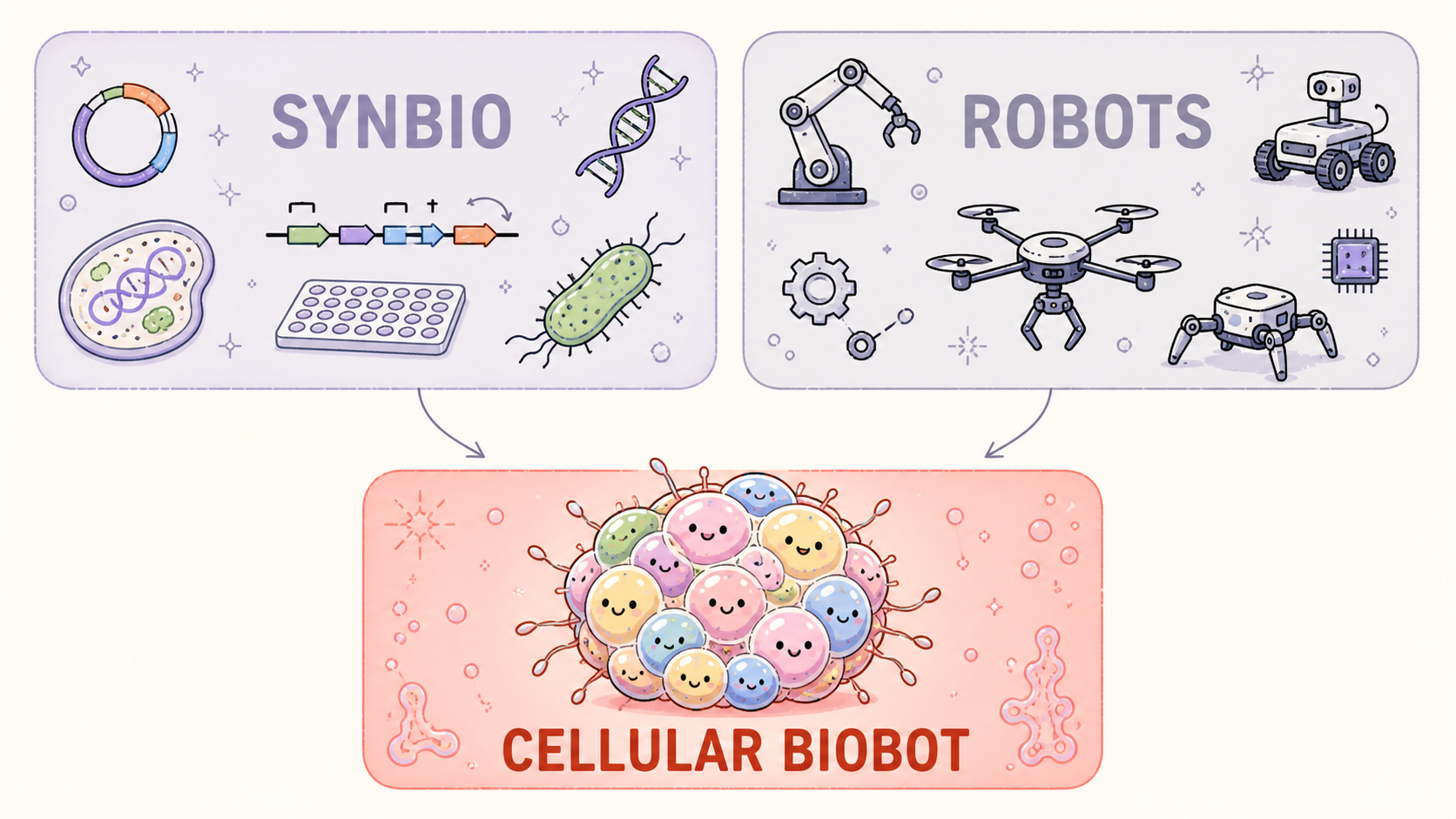
Invent from the category. Otherwise the brief becomes “use synbio,” which is not a design.
The tempting mistake is to treat the tray sticker as the unlock. The sticker does not say what you can host, what still fails, or what a pilot may claim.
That is what lets you ask whether adult human cells can join the same category.