Last updated: 2026-08-26
Cells already know how to build
In 1998 a young researcher named Michael Levin filmed loose frog-embryo cells scooting around a dish. He put the tape away. Years later the same kind of cells slipped free during a transplant and swam again. He did not see debris. He saw workers between jobs.
A cell collective is a group of living cells that act together toward a goal — grow a hand, heal a cut, stop at the right size. Each cell has a genome, the long DNA text that equips it. The group still has to solve the body. If cells were only printers, taking them out of a frog would give you a broken frog. It does not. It gives you something else that can still move and mend.
That is the surprise this book is for. Repair is not only “replace the part.” Repair is “restore the target the parts were serving” — or, sometimes, watch them pick a new target when the old bosses are gone.
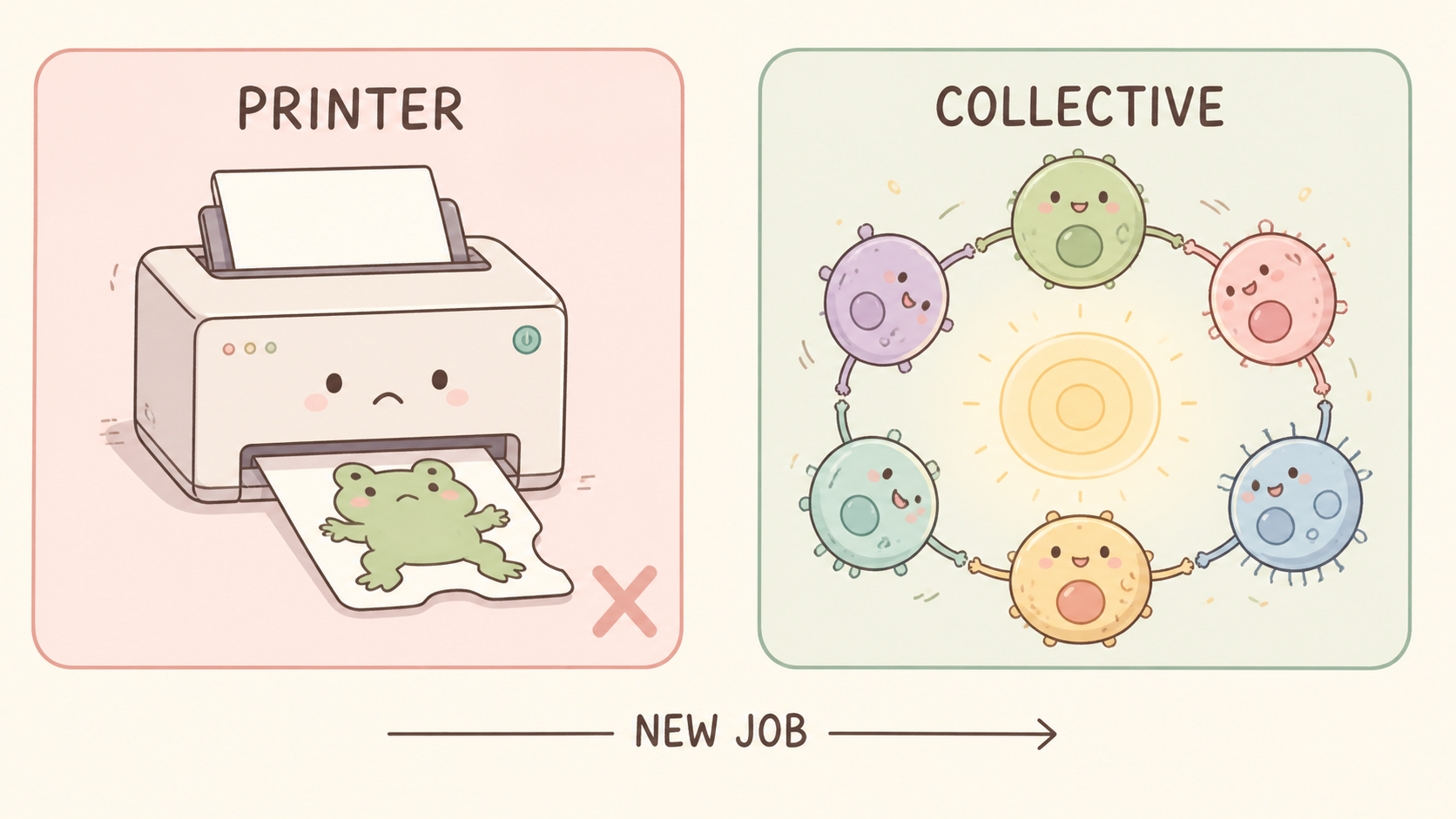
Once you can see the collective as a solver, “synbio” stops meaning “rewrite the letter list” and starts meaning “ask what the group already knows how to build.”
The tempting mistake is to treat a cell like a 3D printer waiting for a file. Printers do not invent a second object when you unplug the first one.
That is what lets you ask where the target lives, if it does not live only in the DNA.