Last updated: 2026-08-26
What a Xenobot is
Douglas Blackiston once pointed at a speck just wider than a hair. Under the microscope it was racing up and to the left. He started to name it like an animal, then stopped. It was frog, and it was not a frog.
A Xenobot is a tiny living construct — usually well under a millimeter — made from embryonic cells of the African clawed frog Xenopus laevis. The DNA is ordinary frog DNA. The body is not a tadpole and not a frog. Skin cells that would have sat still on a tadpole, moving mucus with little hairs called cilia, instead form a small swimmer that rows itself through a dish. Some early designs used heart-muscle twitches and were shaped by hand after a computer searched thousands of bodies. Later ones assembled themselves.
They can move, push specks, and zip a cut shut. They live days to about two weeks on stored food. They are not a disease, not a pond species, and not something you order as a medicine.
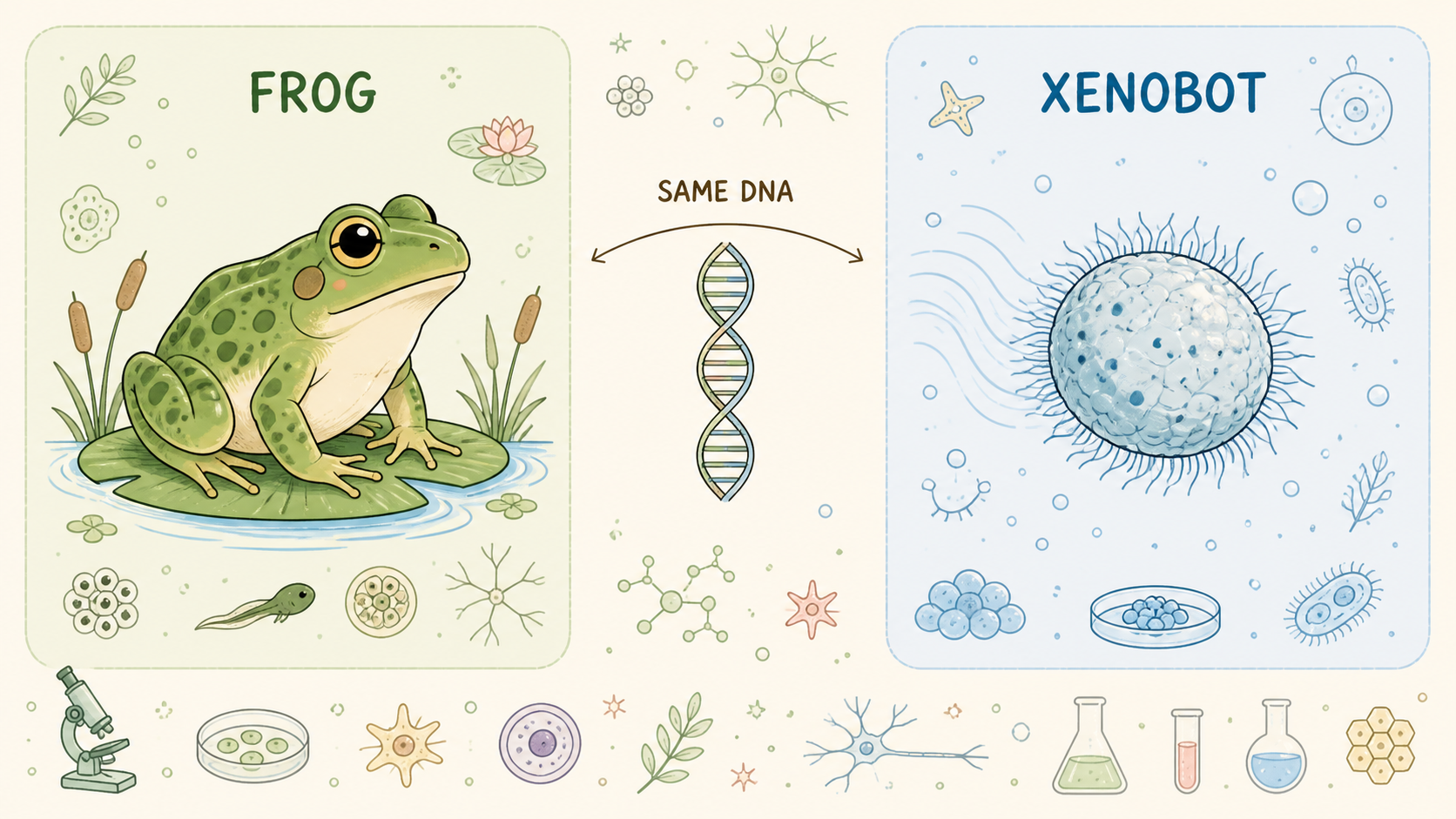
The name does double work: Xenopus the frog, xenos for strange, bot because the thing is treated as a designed platform. Both “organism” and “robot” are allowed. The fight over the noun is not the idea.
The tempting mistake is to hear “living robot” and picture either a CRISPR frog or a chip with legs. It is wild-type cells, a new job.
That is what lets you name the product category they belong to.