← Back to Warmer Sun
Inventing practice Free to self-host

The missing subject — practice, not a feed

Future Forge
You invent. You lead.

Future Forge mark: Hephaestus at the anvil with a hammer, Aphrodite beside him holding a golden gear
The mascot is Hephaestus, smith of the gods — shown with Aphrodite. Craft and care, struck together.

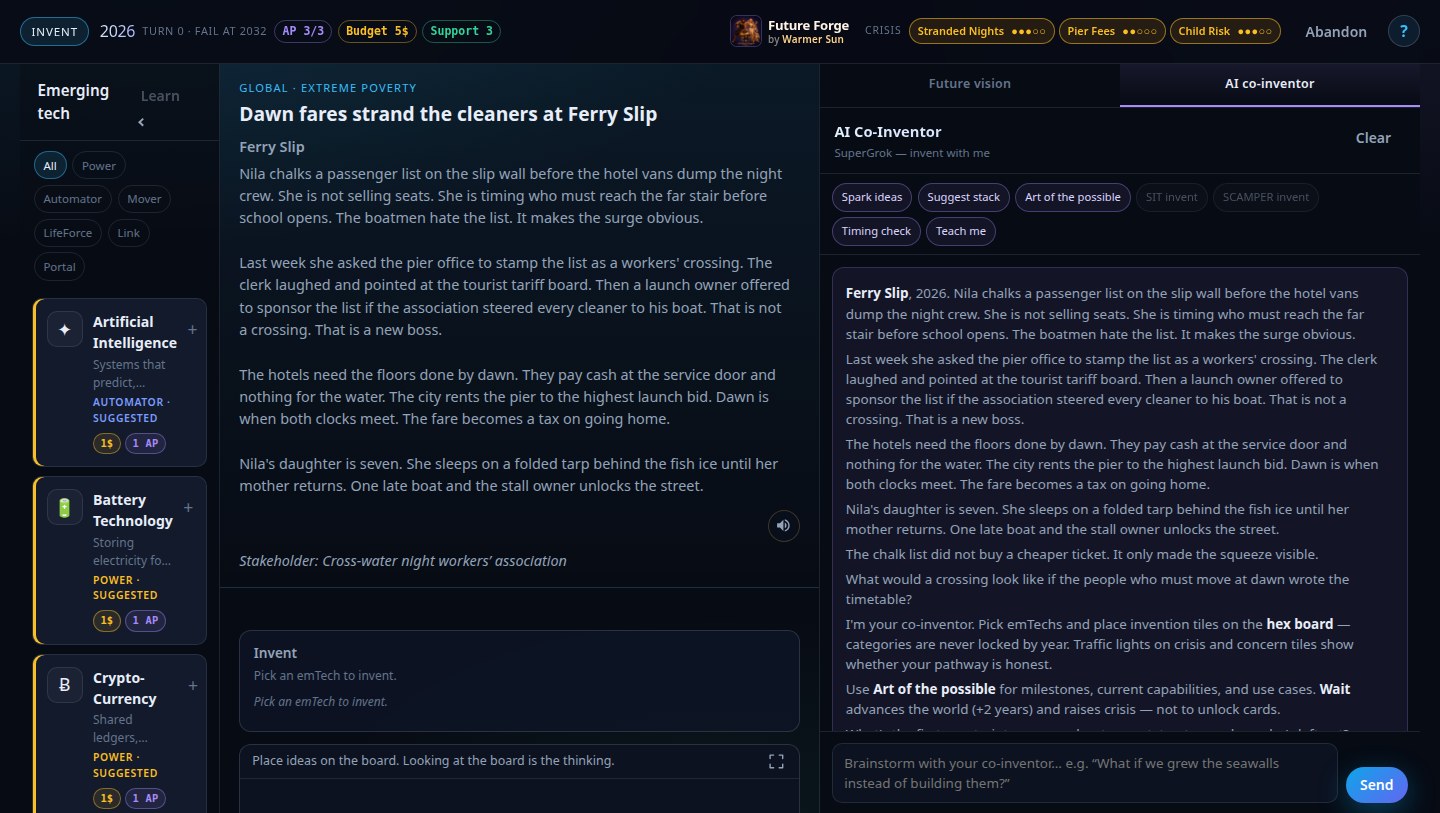
Future Forge is inventing practice — turn emerging-tech progress into solutions for real problems. Invent · Challenge · Field. An AI co-inventor advises; you lead. Honest timing — not too early, not too late. Quests make the problem concrete.

How it works

Invent · Challenge · Field

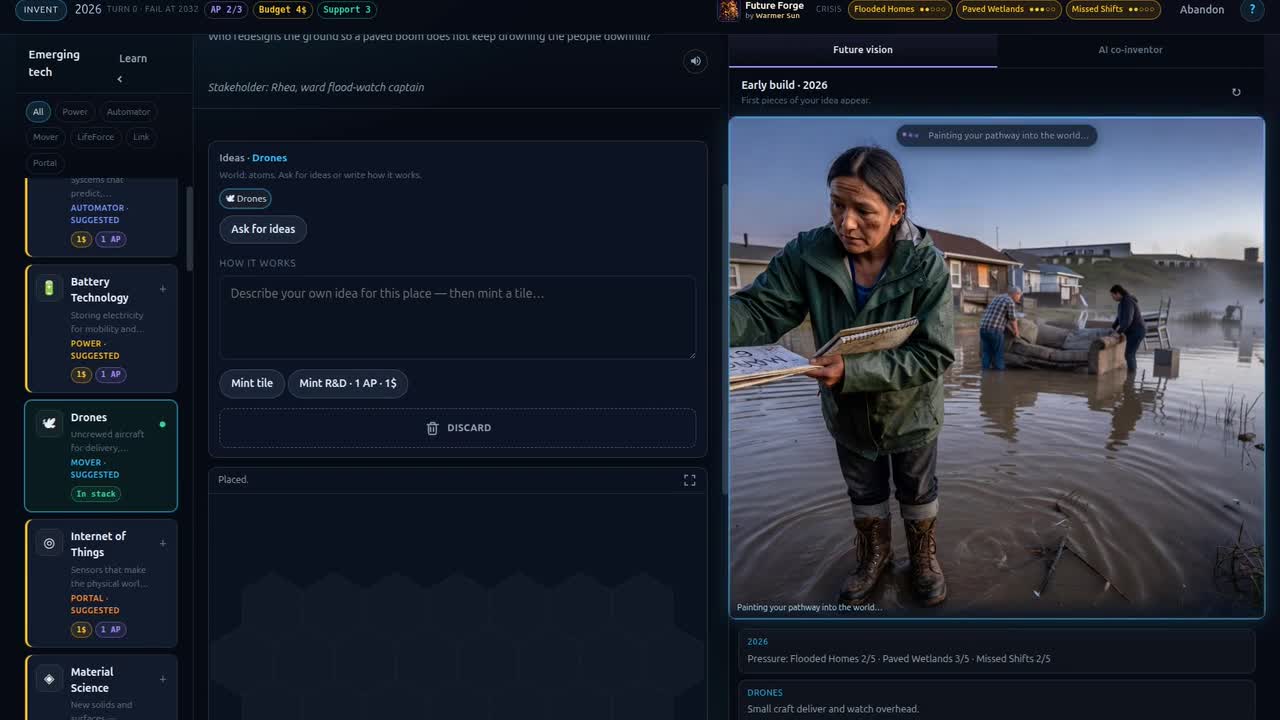
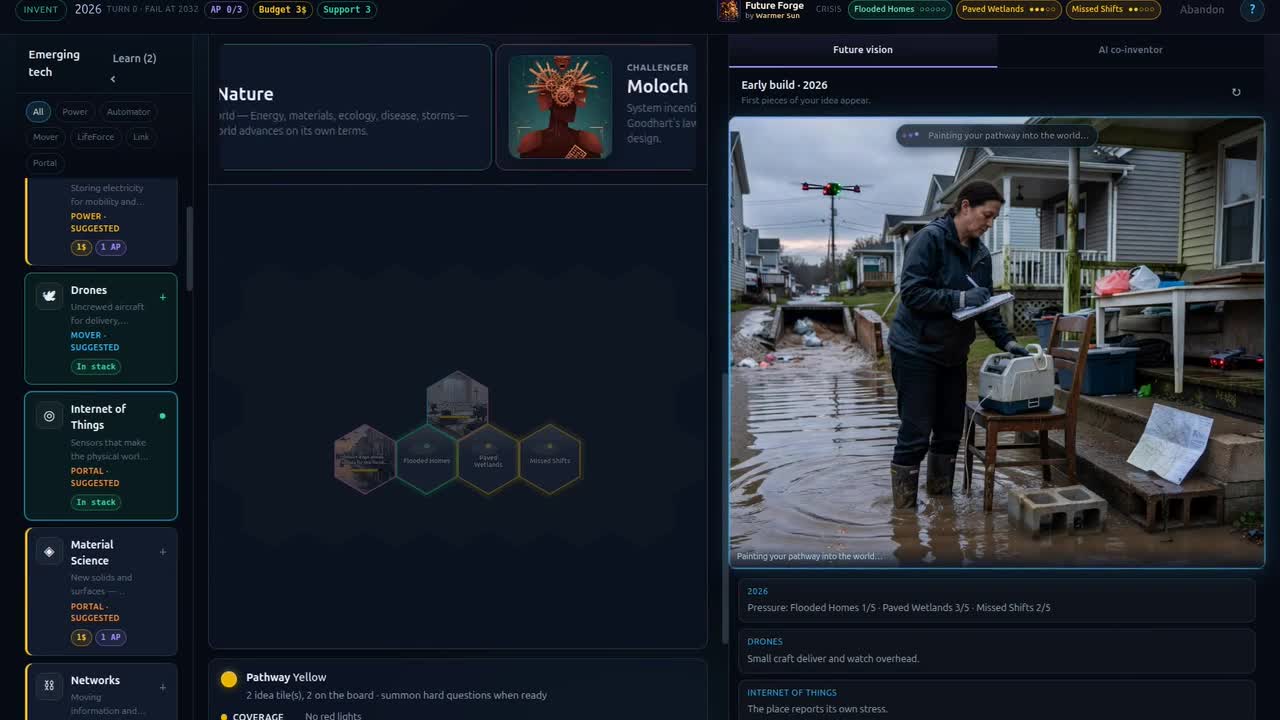
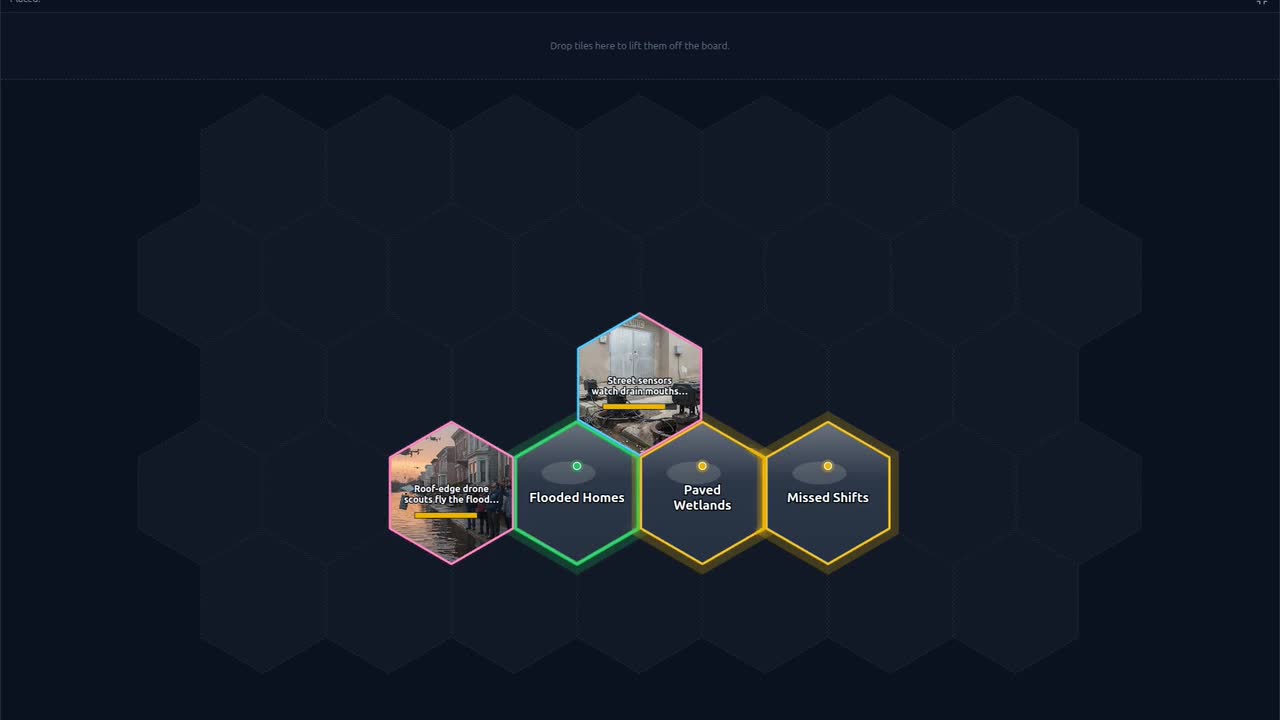
  1. Invent — Stack emerging tech and write how the solution works for a real problem.
  2. Challenge — Answer one hard question about your idea.
  3. Field — Put it into the world before the crisis wins.

Start with the tutorial — a quieter first invent win. Workshop is the full cockpit when you’re ready.

Future Forge core loop: Invent, Challenge, Field
The three-step loop every round runs through.

Philosophy

Honest timing

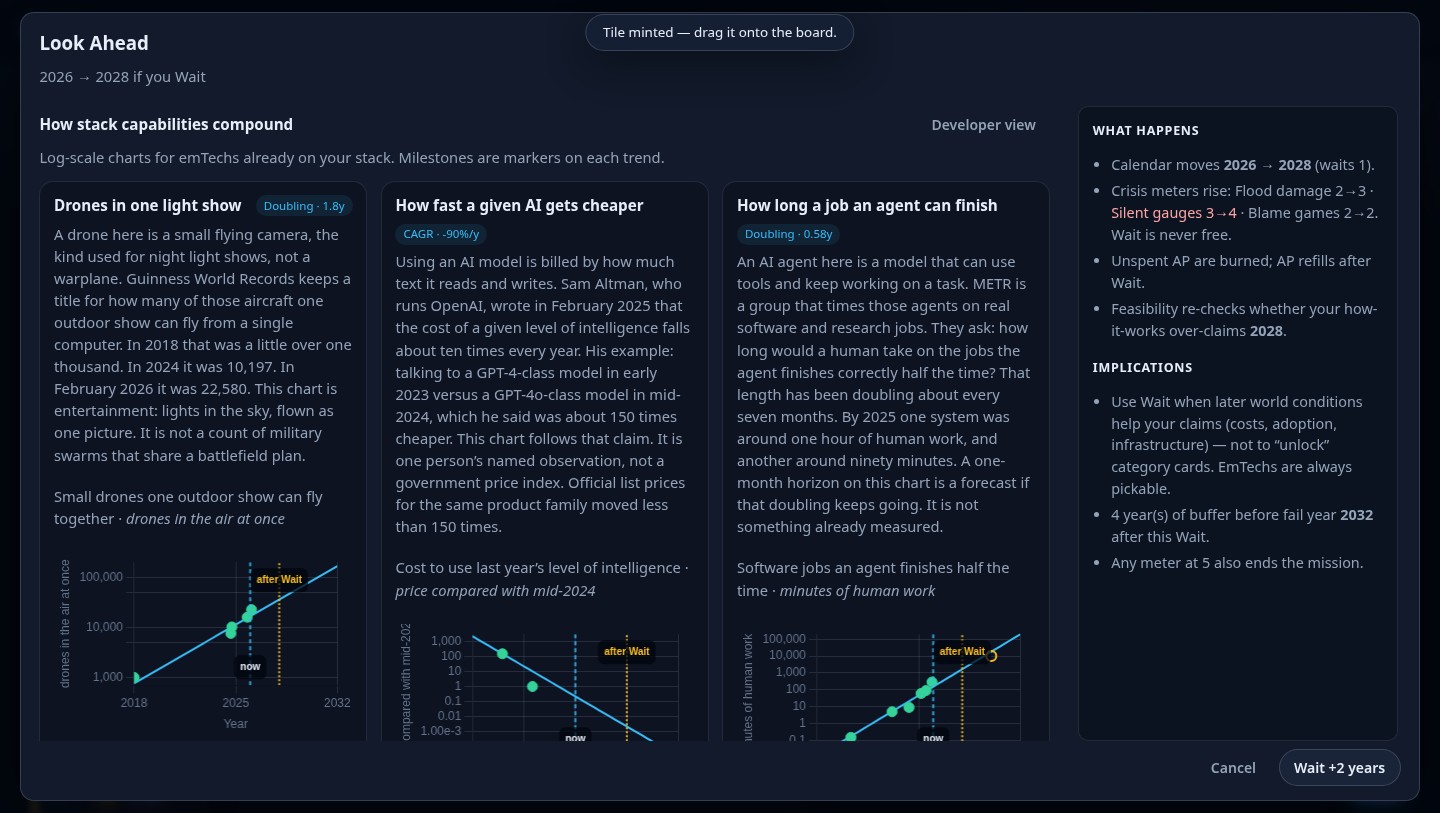
Emerging tech rises on a steep curve. Your job is to catch that curve at the right height — early enough to help the problem, late enough that the tools can actually do the work. Jump in too soon and you are selling vapor. Wait too long and the crisis has already won.

The practice is not only about today’s gadgets. It teaches you to read trends, forecasts, and warnings — what is arriving next, what it might be good for, and when a claim stops being honest.

Honest timing: catch the tech curve at the right moment for a real problem
Catch the curve — not too early, not too late — for a real problem.

Quests

A place that can’t wait

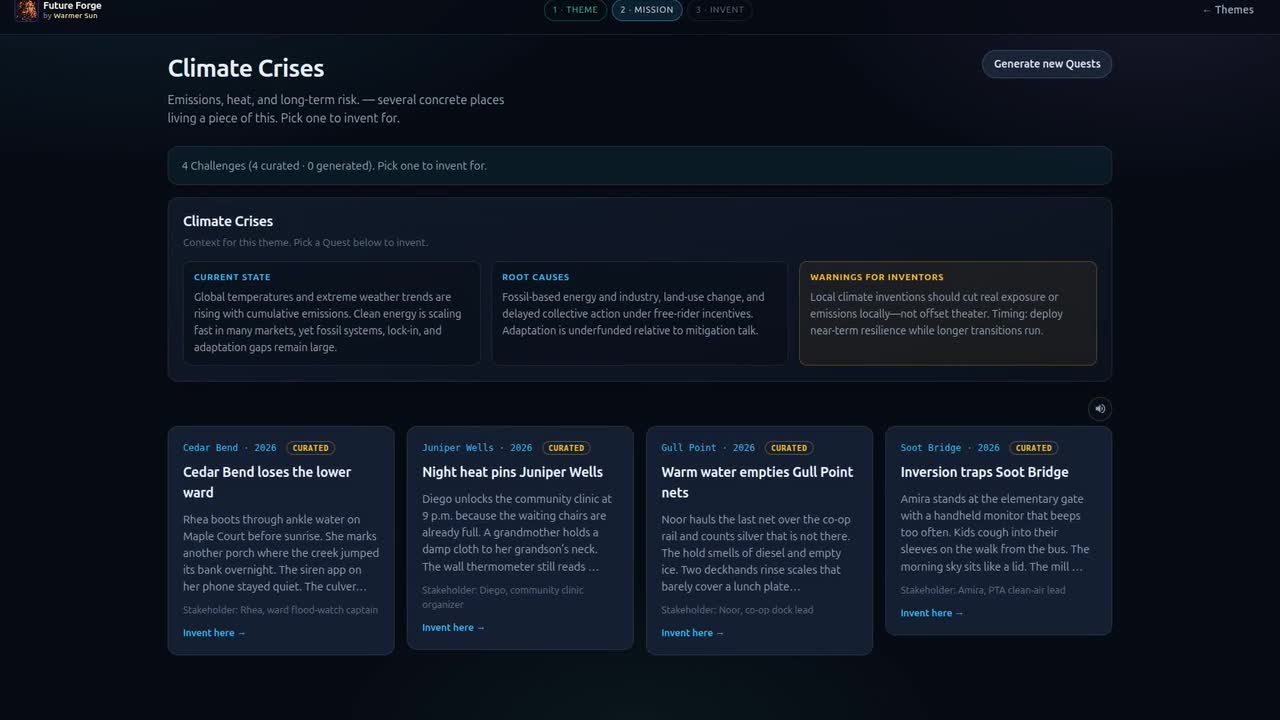
Quests make inventing concrete. You don’t invent for “the planet” in the abstract — you pick a quest: a real problem in a named place, living a slice of a global theme.

Portside Ward floods. A clinic dies at dusk. A food desert block loses its last greengrocer. Refugee winter arrivals. Smog corridor schools. Dementia day-center queues. Dozens of themes, grounded so emerging tech has somewhere real to land.

Global theme becomes a concrete quest in a named place
Quests make inventing concrete — theme → place → apply emTech.

Agency rule

You lead. The AI co-inventor advises.

Powered by xAI / Grok when configured (local fallback without keys). The co-inventor can brainstorm stacks, draft story faces, pose challenges, and sketch future visions — but every AI ask costs attention, and you still choose what ships.

Never “AI invents for you.” Your agency is the product.

You lead; the AI co-inventor advises
Partner under cost. Not an autopilot.

Claims check

Feasibility light

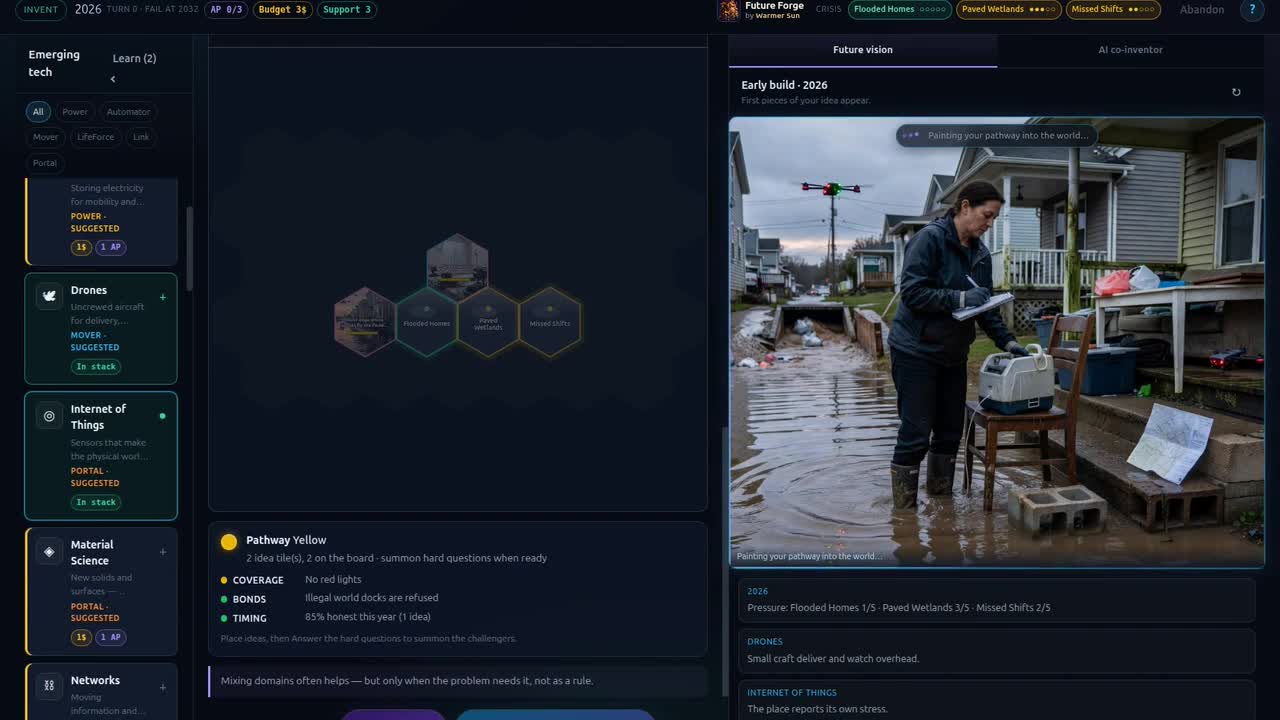
Emerging-tech families stay pickable. What goes red isn’t a locked card — it’s over-claiming. The traffic light judges whether your story is honest for the place and for where the tech curve sits when you field it — including what’s already here and what’s just arriving.

  • Green — claims match readiness; fielding odds favor you.
  • Yellow — stretch, but defensible with pilot language.
  • Red — hype. You can still try; the world is less kind.
Feasibility light: cards stay open; claims are judged honest
Honesty is the gate — not a year unlock tree.

Scrutiny

One hard question

Between idea and impact sits one serious challenger. Survive the question, then you’re allowed to field.

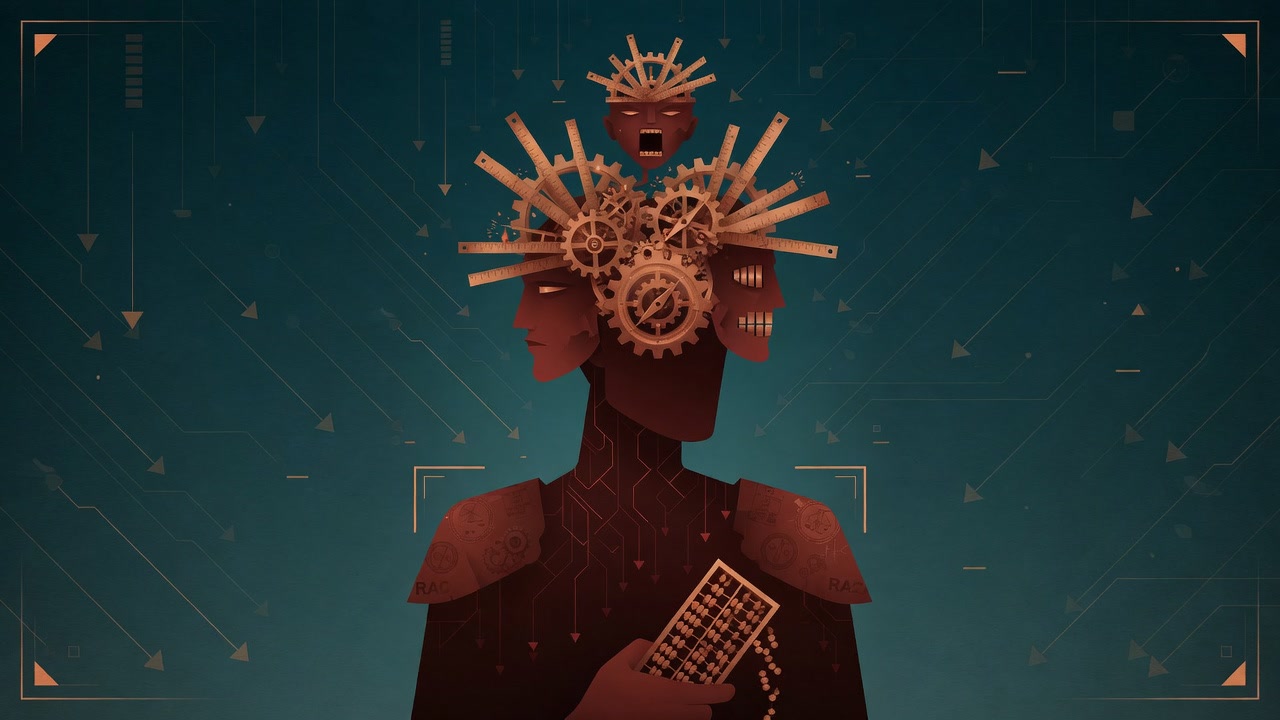
  • Moloch — system traps: freeriding, races to the bottom, Goodhart.
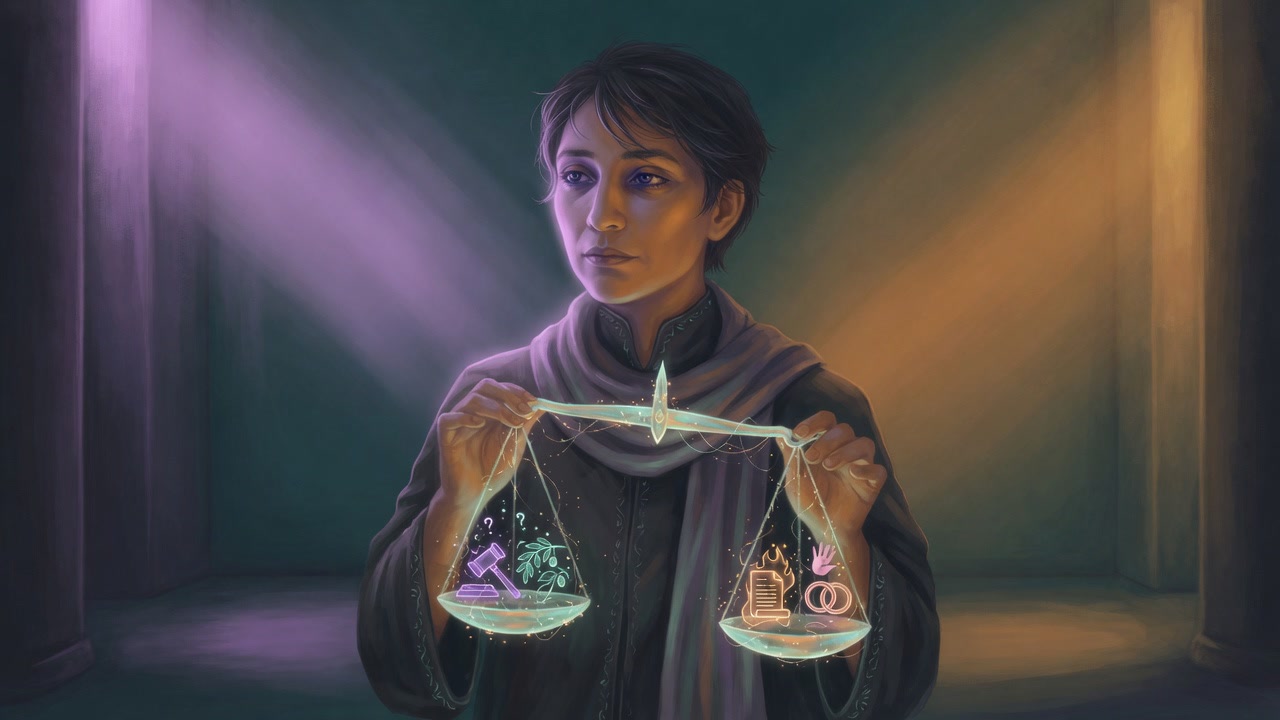
  • Ethicist — dignity, bias, dual-use, hard tradeoffs.
  • Stakeholder — funding, permits, public support.
  • Mother Nature — physics, ecology, materials, storms.
Four challengers: Moloch, Ethicist, Stakeholder, Mother Nature
Four archetypes. One hard question per invention.

Pressure

Three crisis meters

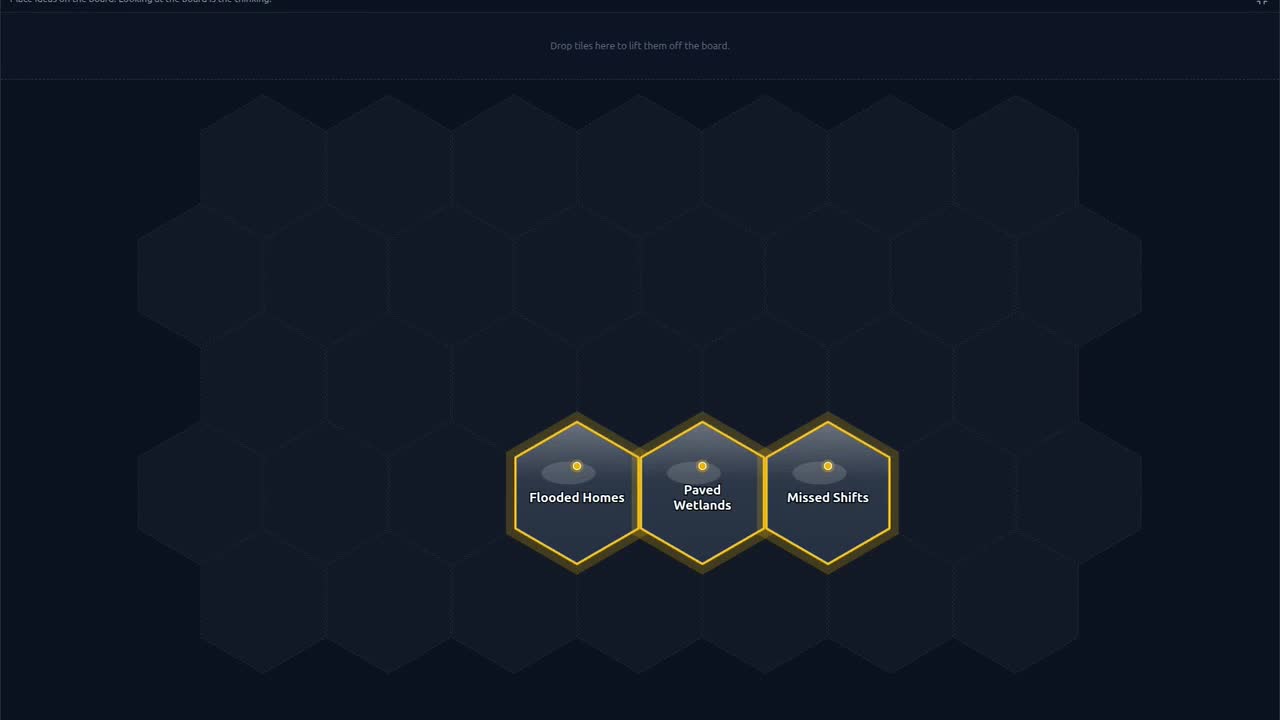
Quests track pressure across three jobs (per-quest names vary; the jobs don’t):

  1. Local situation — address the immediate problem on the ground.
  2. Global root cause — move the needle on the deeper drivers.
  3. Public support — earn the people you need to field the fix.

Waiting matures the world and the tech — and raises the meters. Trade readiness for pressure wisely.

Three crisis meters: local situation, global root cause, public support
Lower all three to win. Field the fix before any maxes out.

Deployment

Field the fix — three steps

Once the hard question is cleared, inventions enter the world in stages:

  1. Pilot — first local try.
  2. Scale — wider rollout.
  3. New normal — it sticks. Outcome can be a full or partial solution.
Fielding stages: Pilot, Scale, New normal — full or partial solution
Pilot → Scale → New normal. Success can be full or partial.

Visual tool

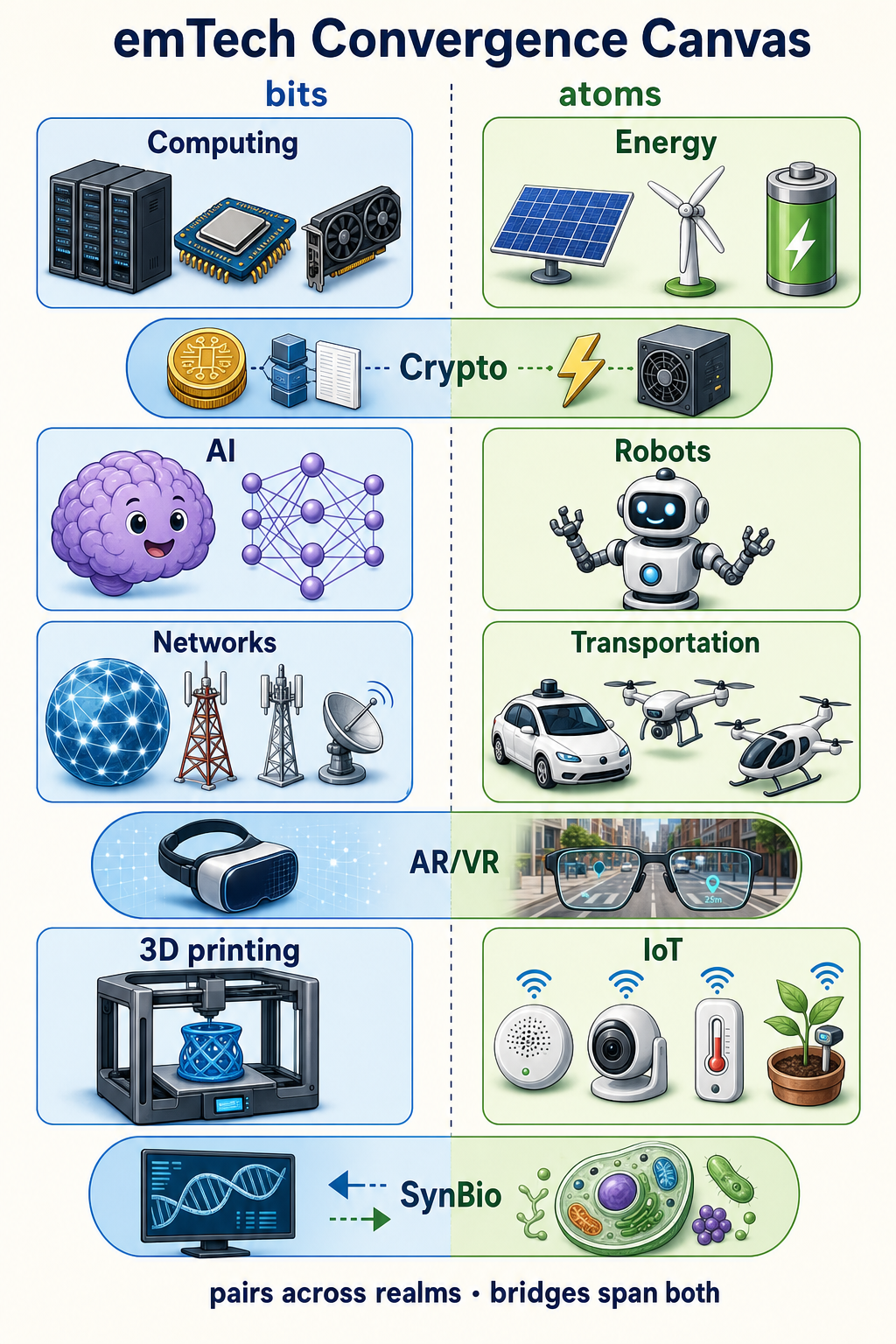
emTech Convergence Canvas

The Convergence Canvas is a picture you can hold in your headeleven emerging-tech families laid out so cross-domain inventing feels natural.

Bits on the left (information-side tools). Atoms on the right (physical-world tools). A few bridges in the middle span both — Crypto, AR/VR, SynBio. Stacks are rewarded when they fit the problem, not when they mix everything.

In a session you can drill into finer subtypes when you want detail. Start with the eleven on the canvas.

emTech Convergence Canvas: eleven families — bits left, atoms right, bridges in between
Eleven families to remember. Bits ↔ atoms, with bridges in between.

Inside inventing practice

Start quiet. Open full later.

Two real product modes — not a stripped “student edition.” Both teach inventing practice; Workshop just turns the cockpit on.

The tutorial (Spark) is a quiet first invent win — guided Portside Ward, fewer systems on screen, one story box, one Field it button.

Workshop is the full cockpit when you’re ready: dual story faces, resources, Lobby, End turn vs Wait, Defend / Fix / Sidestep, Pilot → Scale → New normal, full catalog.

Spark tutorial versus full Workshop mode
Tutorial first. Workshop when you’re ready.

Ready when you are

Invent now — or host your own

Open the table in the browser. Start with the tutorial, open Workshop when ready. Practice inventing: stack emerging tech for a real problem, face one hard question, field it. Part of Warmer Sun — the missing subject.