Last updated: 2026-09-24
A dish versus a phone
Two different satellite services can help after a flood. They solve different problems and have different limits.
A dish, often supplied as a portable kit, is placed outdoors with an open view of the sky and connected to power. It can give a clinic, shelter, or emergency office a broader internet connection for forms, maps, messages, and calls. Rosa’s locked closet kit is this kind of equipment. Its password, cables, location, and power source are all part of making it usable.
Direct-to-phone service works differently. A compatible ordinary phone connects to a satellite much as it would connect to a cell tower, without a separate dish. In 2026, these services mainly support texts, location sharing, and a limited set of data features. They do not yet provide the capacity or dependable voice coverage of a normal cell tower.
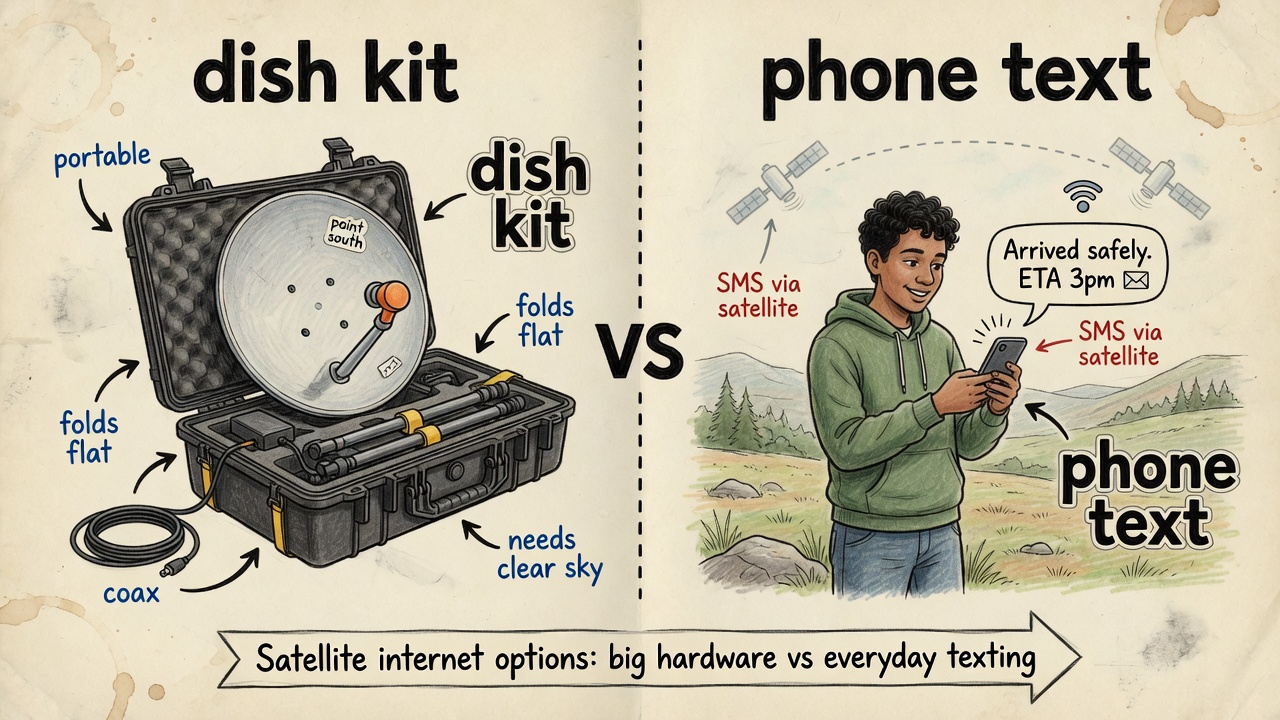
A dish can support a shared operations site, but it is useless without power and someone who can set it up. A phone can send a brief update from outside, but it cannot carry every task the clinic normally performs online. Reedford should plan for both roles rather than treating either as a complete replacement.