Last updated: 2026-09-24
A move nobody scripted
In 2016, during a Go match against Lee Sedol, AlphaGo played a move now known as Move 37. Expert commentators initially found it hard to explain because it did not resemble the move they expected. Later systems such as AlphaGo Zero improved through self-play: they played many games against themselves rather than relying only on human game records.
That history matters because a system can sometimes produce a useful option that is not a simple copy of a past example. It does not show that every unexpected output is correct. In Go, the rules are fixed, the board state is visible, and the result can be scored. A housing file has incomplete evidence, local policy, and consequences for a specific family.
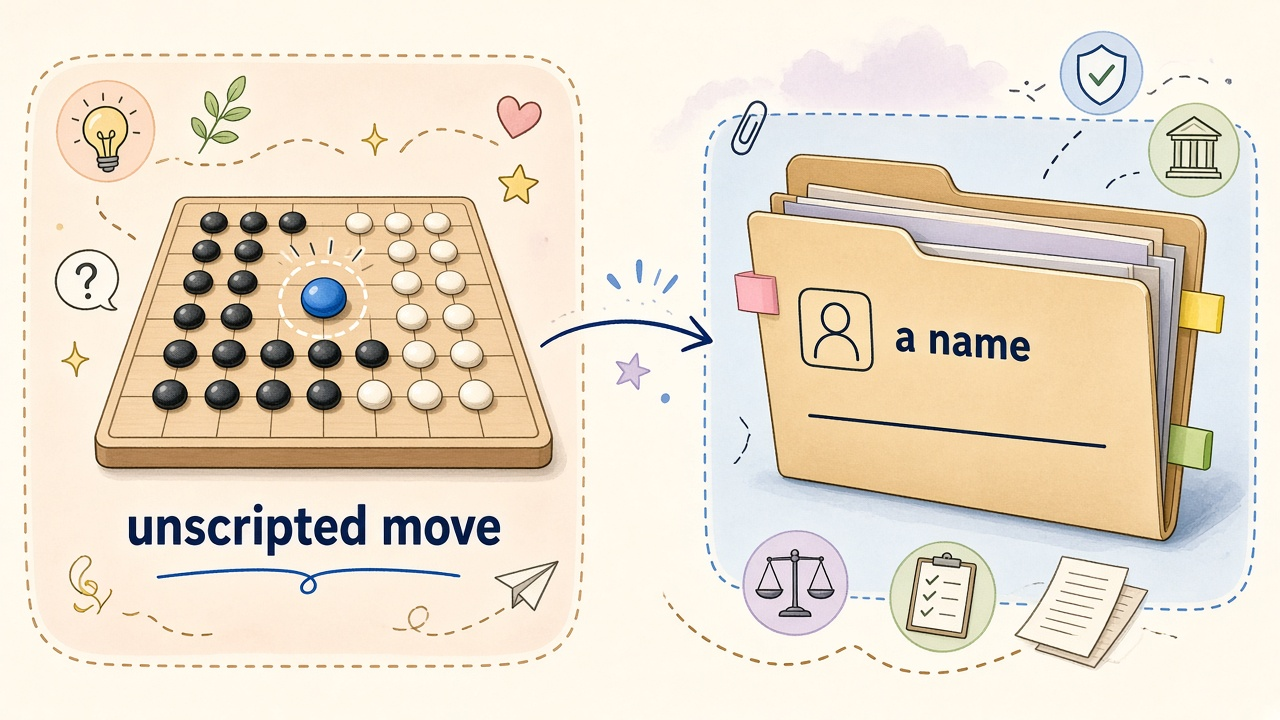
When Harborline’s software offers an unusual reason for a denial, Yara should treat it as a suggestion to investigate. She can trace it to the records, check it against policy, ask for a second review, or remove it. An output becomes part of a decision only after a named person has tested and accepted the reason.
This is the boundary: use software to expand the options a worker can consider; keep people responsible for evidence, reasons, and final action.
The final page asks for a local proposal that puts that boundary into daily practice.