Last updated: 2026-08-16
Locks that no longer fit
Adamala later said the sentence that turned her around was not about politics. It was about immunology: she had not realized how handed the immune system is.
Your defenses do not “notice germs” in the abstract. Antibodies, complement, and many receptors are locks. They grab specific three-dimensional patches on a microbe. Those patches, on Earth, are made of our hand of sugars and proteins. A mirror bacterium would present the other hand. Many of those grabs would miss.
The same geometry sits outdoors. A bacteriophage is a lock that docks on a surface. Many tiny predators recognize prey by contact. If the contact fails, a population that would normally be eaten can keep growing. Growth is births minus deaths. Take away deaths and even a slow birth rate can still expand.
This is a claim about binding, not invisibility to a microscope. And binding failure is not automatically disease — a cell that cannot eat or invade might just sit there. The fear is the other balance: hidden, still able to grow on unhanded foods, later able to evolve a wider diet.
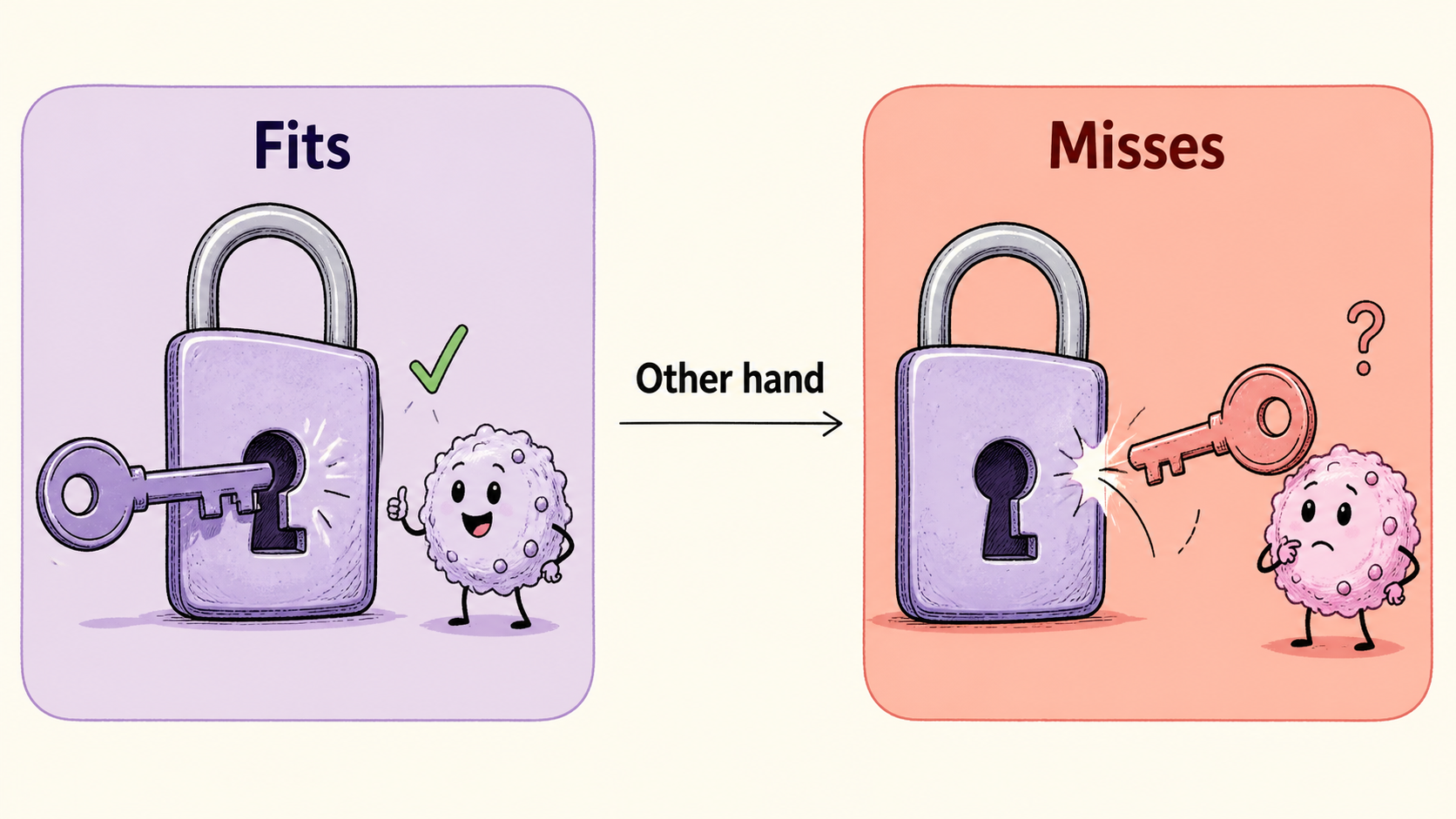
You can now see the mechanism without a movie villain. The next hard question is what you would do after such a cell already existed.
The tempting mistake is “life finds a way, so immunity will too.” Immunity finds this way — these locks. Rebuilding them on the other hand is not a weekend upgrade.
That is what lets you ask whether cleanup after the fact is a plan.