Last updated: 2026-09-16
Leftover heat can make drinking water
Desalination is taking the salt out of seawater so it becomes fresh. It usually costs its own energy bill. Waste heat is leftover warmth from a machine that already ran.
If you use the electrolyzer’s leftover heat to warm seawater enough to evaporate it — gently, at a low temperature — the steam that condenses is fresh water. That water can go back into the fuel machine. Extra can leave as drinking water.
Instead of paying twice — once to cool the fuel machine, again to desalinate — the leftover heat does the water job.
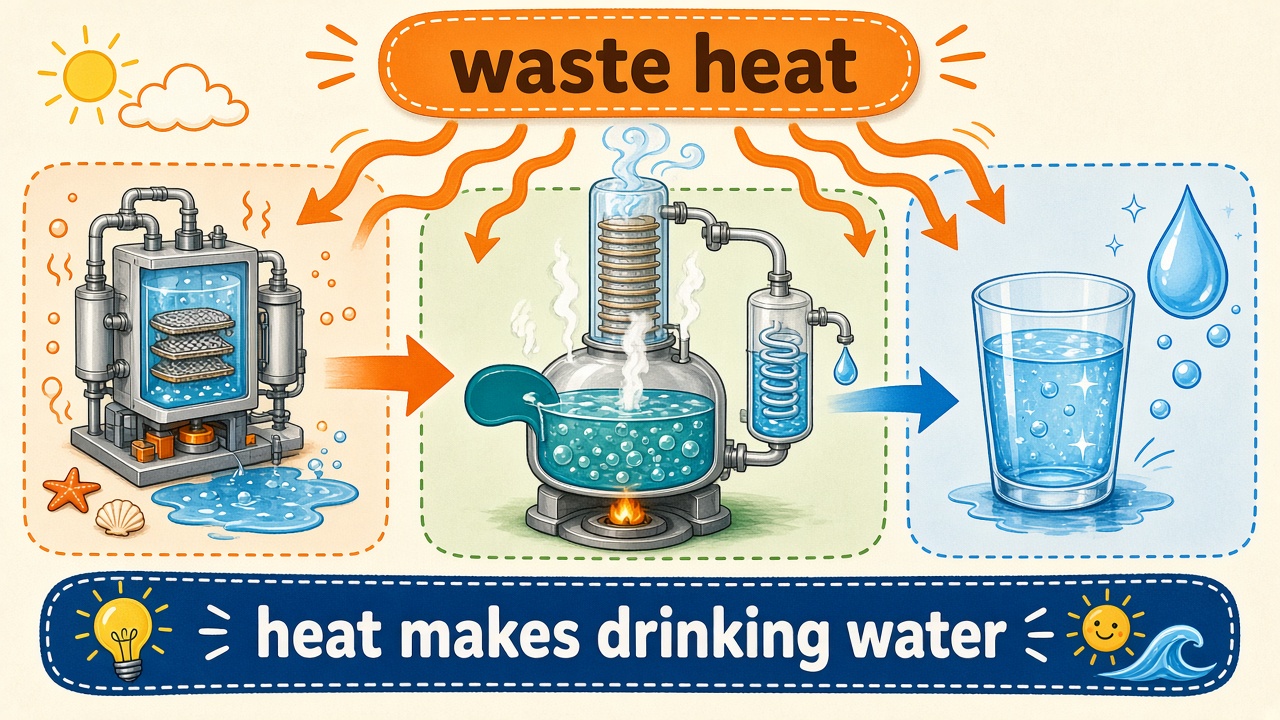
The tempting mistake is to keep two plants and throw the heat away. The coupling is the point: heat that used to be dumped becomes the energy for making water.
That is what lets you see one machine with two products.