Last updated: 2026-09-16
Salt makes seawater the wrong kind of water
A coastal crew looks at the ocean and thinks: free water for clean hydrogen fuel. The ocean is full of water. Why run a separate drinking-water plant and a separate fuel plant?
Electrolysis splits water into hydrogen fuel and oxygen with electricity. The usual machine wants fresh water. Seawater is full of salt. Salt attacks the metal parts that do the splitting, starts unwanted chemistry, and makes long, stable runs fail. Raw seawater isn’t ready for that job.
That is why towns often pay twice: one plant to make drinking water, another plant to make clean fuel — and they still fight over scarce fresh water in a dry month.
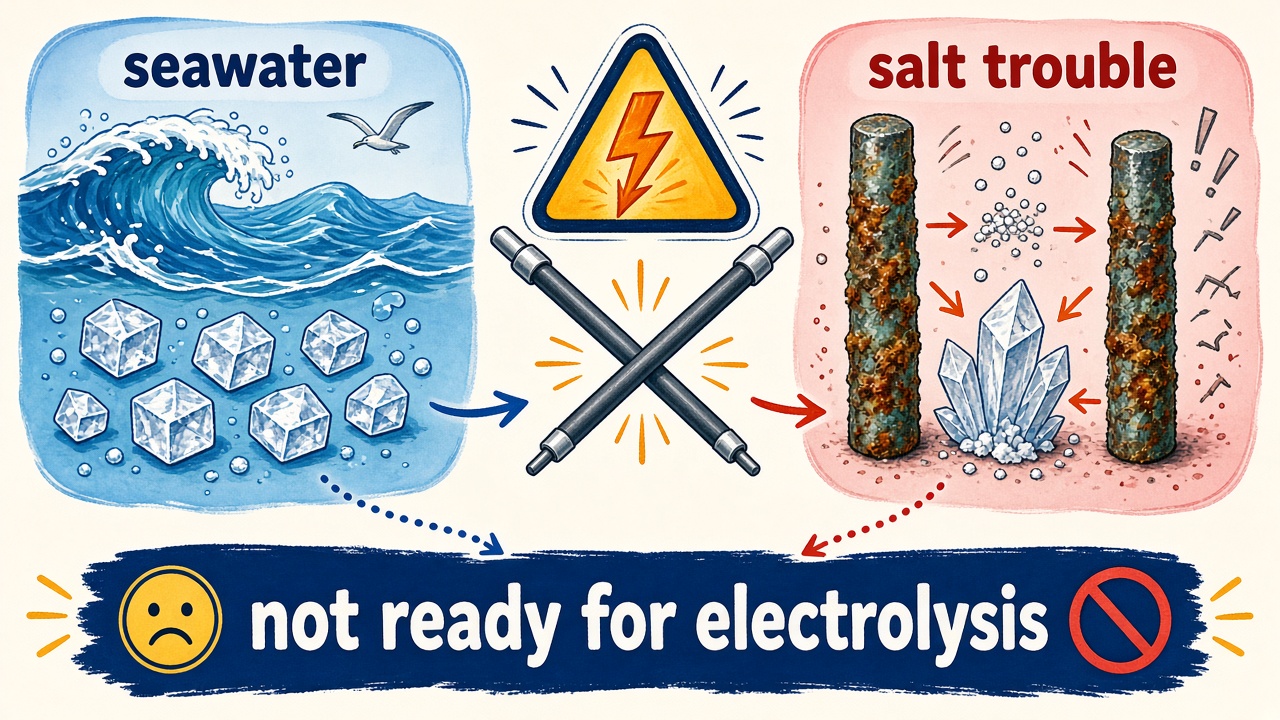
The tempting mistake is to dunk the fuel machine straight into the ocean and call it done. Salt is the trouble. Pretending it isn’t is why the two plants stay separate.
That is what lets you ask what leftover heat from making fuel might be good for.