Last updated: 2026-09-24
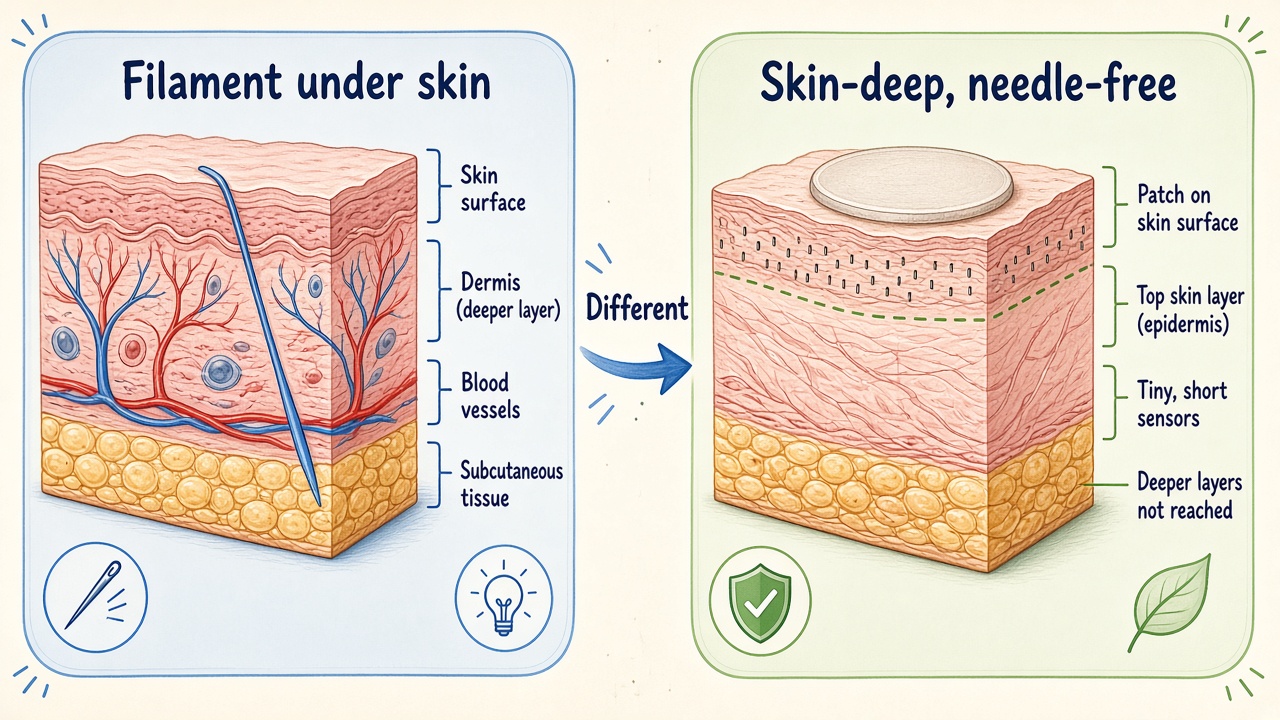
The patch measures glucose in interstitial fluid — the thin fluid between cells in skin — not a fresh blood draw on every blink. An array of tiny electrodes sits in the upper dermis after the applicator places the patch on the inner forearm.
Chemistry in plain words: an enzyme reacts with glucose and hands electrons to an electrode, making a current. Electronics turn that current into a semi-quantitative range shown as colored lights on the wearable — range monitoring, not a claim of lab-grade milligrams-per-deciliter printed on the patch face.
After you place it, the device starts on its own. Continuous range readings begin after about a two-hour warm-up, without a fingerstick calibration step. Wear is on the order of about five days — not forever, and not every patch lasts the full stretch in studies.