Last updated: 2026-09-24
Most continuous glucose sensors place a filament under the skin with an inserter that drives a hypodermic-style needle (then retracts). For people who take insulin, that trade-off is often worth it. For adults who are not on insulin, the pain, stigma, training, and “medical device” feel of a needle ritual can be enough to keep them on occasional fingersticks — or on almost no objective glucose story between clinic visits.
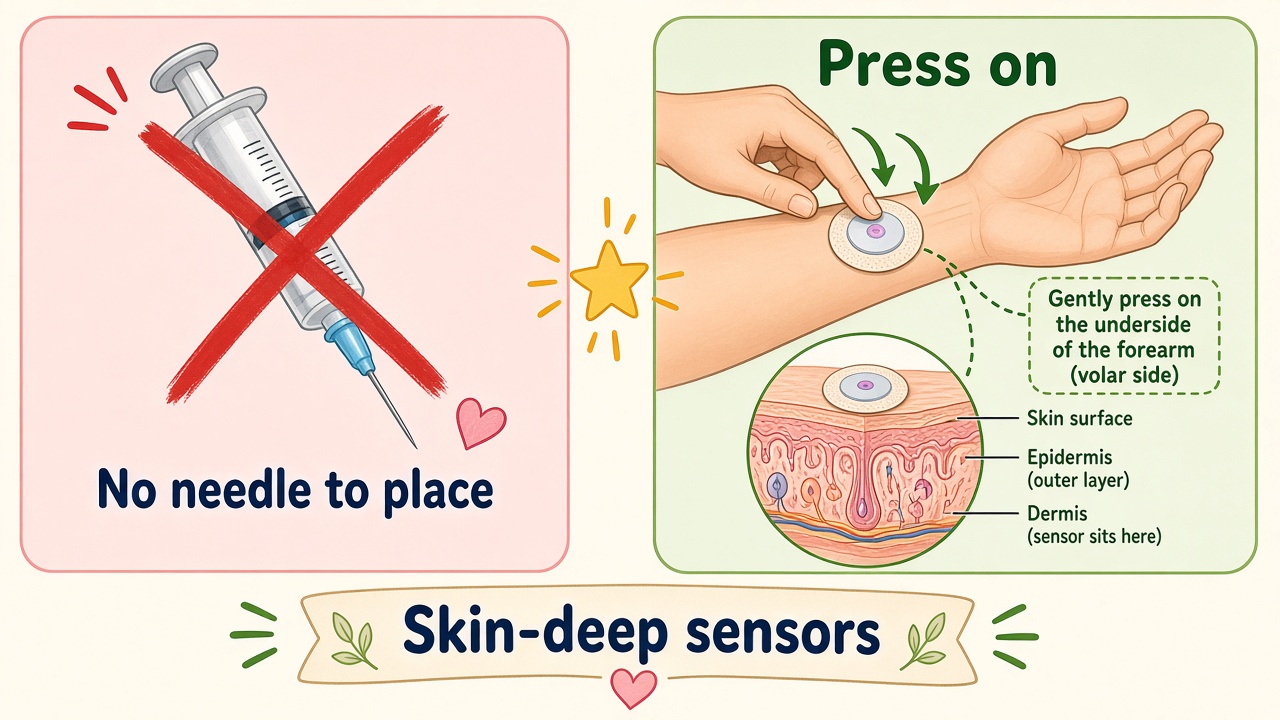
A needle-free path changes the first minute: a single-use applicator places an array of tiny sensors shallowly in the upper skin on the inner forearm — no hypodermic needle for insertion. The invent question is not “another sensor brand.” It is: what becomes possible when placing a range sensor feels closer to a stamp than to a shot?
This lesson is also not a retell of an earlier filament dual glucose–ketone sensor story. Teach spine here: needle-free + on-patch light + meal/move/sleep.