Last updated: 2026-09-25
Honest limits
Digital tokens and shared ledgers can fail in ordinary ways and in new ones. Scams, fraudulent records, lost access keys, software errors, weak identity checks, and failed redemptions can all harm users. A shared ledger does not make a bad entry true.
Before Harbor Co-op uses any system, it must answer practical questions. Who may add an entry? Who may approve a payment? Who can read the record? How are mistakes corrected? What happens when someone loses a phone, password, or access key?
The co-op also needs to follow the payment, privacy, tax, and consumer-protection rules that apply where it operates. For a small local pilot, a conventional account and a shared record may be more appropriate than a crypto system.
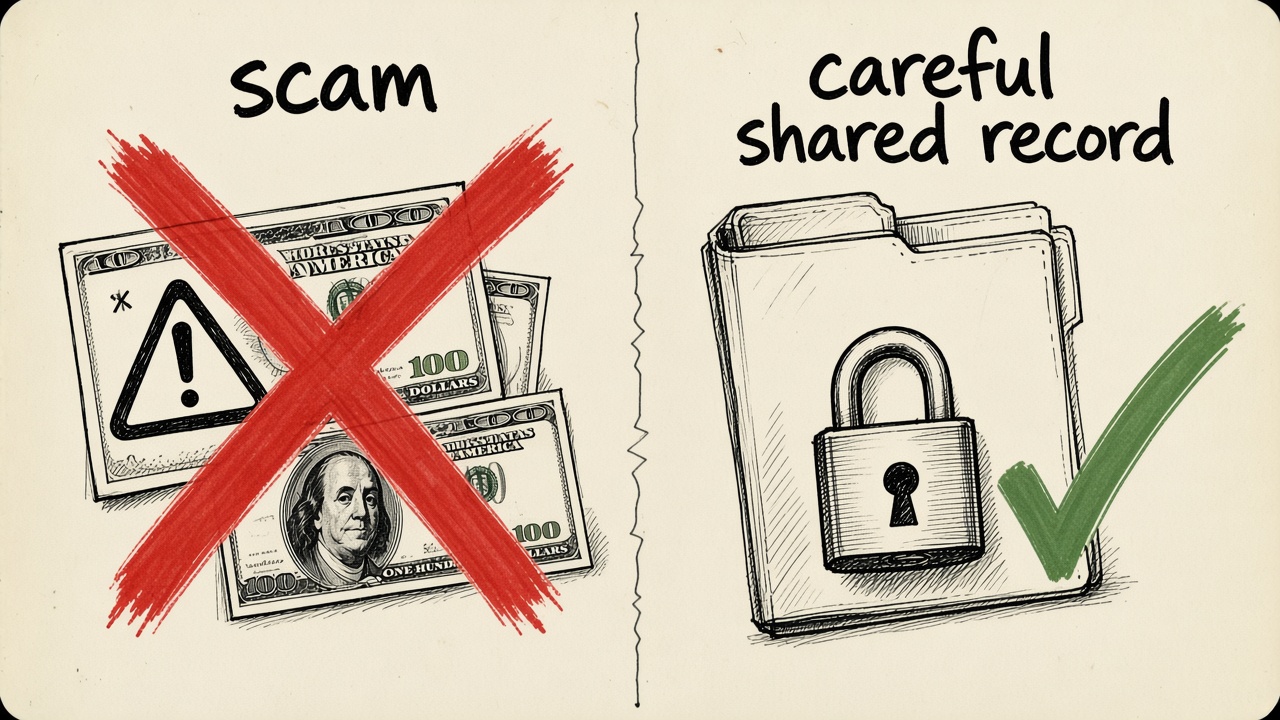
The useful test is simple: does the system make a real payment easier to verify without creating risks the co-op cannot manage?
A common mistake is to treat volatility or lost access as someone else’s problem. The people waiting for fuel carry those consequences.
Use these limits to design a small, accountable settlement process.