Last updated: 2026-08-16
Two jobs, in that order
The strategy is two jobs that can overlap in time, but not in logic.
Job one is among the capable, especially the United States and China. Do more research on the risk that does not build the last machines. Fund safer ways to make useful opposite-handed medicines so no one thinks restraint means surrendering an industry. Publish shared ethics. Say, out loud and together, that a living mirror cell will not be a national prize. A country that tells others to stop while keeping a secret option teaches everyone to hedge.
Job two turns that shared picture into cost and light. Agreements not to pursue. Monitoring that looks for enabling programs, not for a finished bomb. A scientific oversight group. Funding limits, insurance that will not cover unbounded harm, rules on the special ingredients, journals that will not publish a finished organism, and laws that make creating one a crime — including for the government that writes the law.
What stays on the shelf: sabotage, exclusive clubs, and a crash “defense” program that looks like an offense. Those tools can wait until a legitimate common framework exists. They are not how you start.
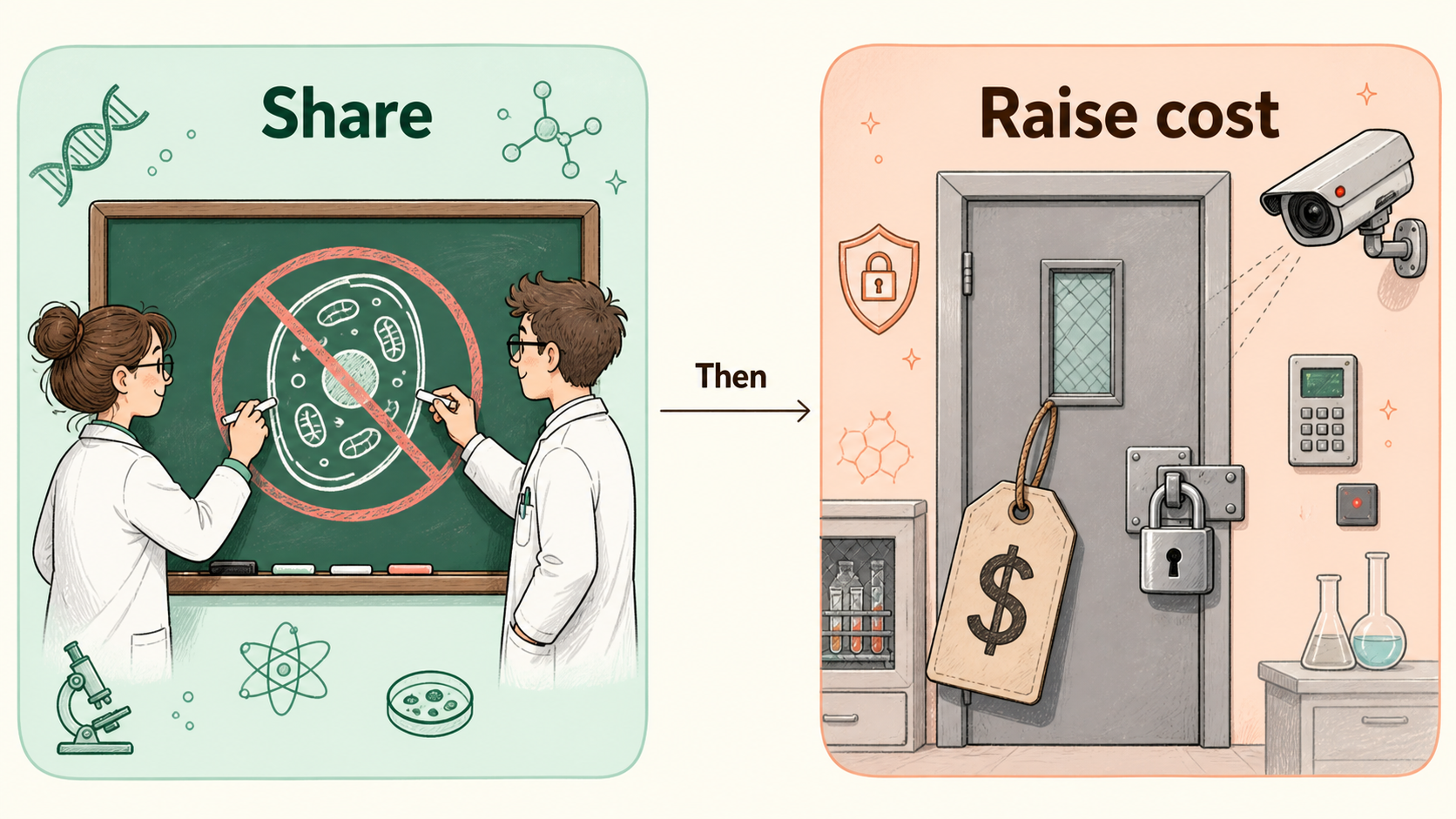
You can now sequence action without confusing toughness with a race. The last page asks you to write a local cut that respects both jobs.
The tempting mistake is to skip job one and reach for a treaty or a bunker. Paper without shared belief is fragile. A bunker looks like a plan to survive what you claim no one should build.
That is what lets you invent a rule you could actually post on a lab door.