Last updated: 2026-09-18
Cells use enzymes as tiny tools that break specific molecules into safer pieces.
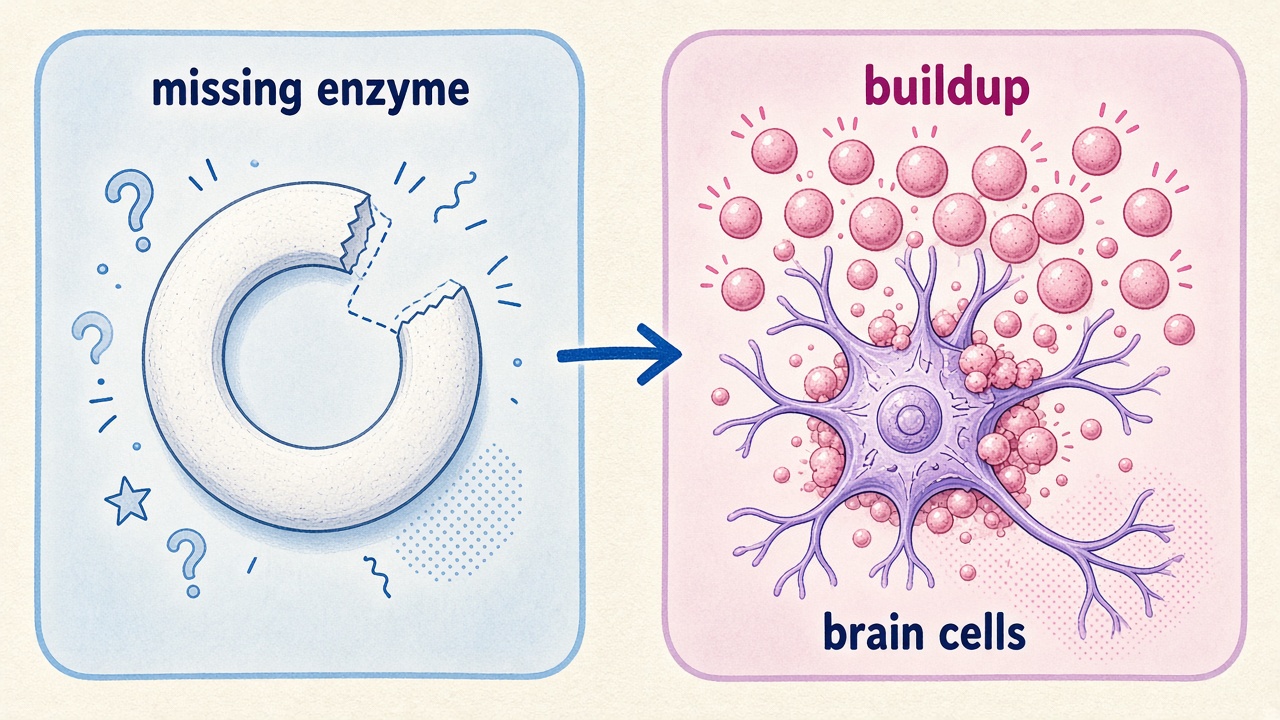
In one class of ultra-rare inherited diseases that mainly hit the brain, a child is born without enough of one enzyme. Without that tool, a complex sugar builds up inside the cell’s recycling centers. Over years the buildup hurts brain and nerve cells.
Early development can look typical. Then skills can plateau and be lost — thinking, language, movement. Families often hear that care is supportive: manage the day, ease symptoms — because until a disease-modifying option was approved for this lane, there was no approved treatment designed to change the underlying course.
The everyday problem is not “mystery.” It is a missing cellular tool and a clock that keeps moving.