Last updated: 2026-09-23
A blood culture is a hospital lab test that grows microbes from a blood sample in a monitored bottle. When the bottle flags positive, the lab knows something is growing. That matters: bloodstream infection is a life-threatening class of problem.
Positivity alone still leaves the next clinical question open: which drug will this bug actually respond to?
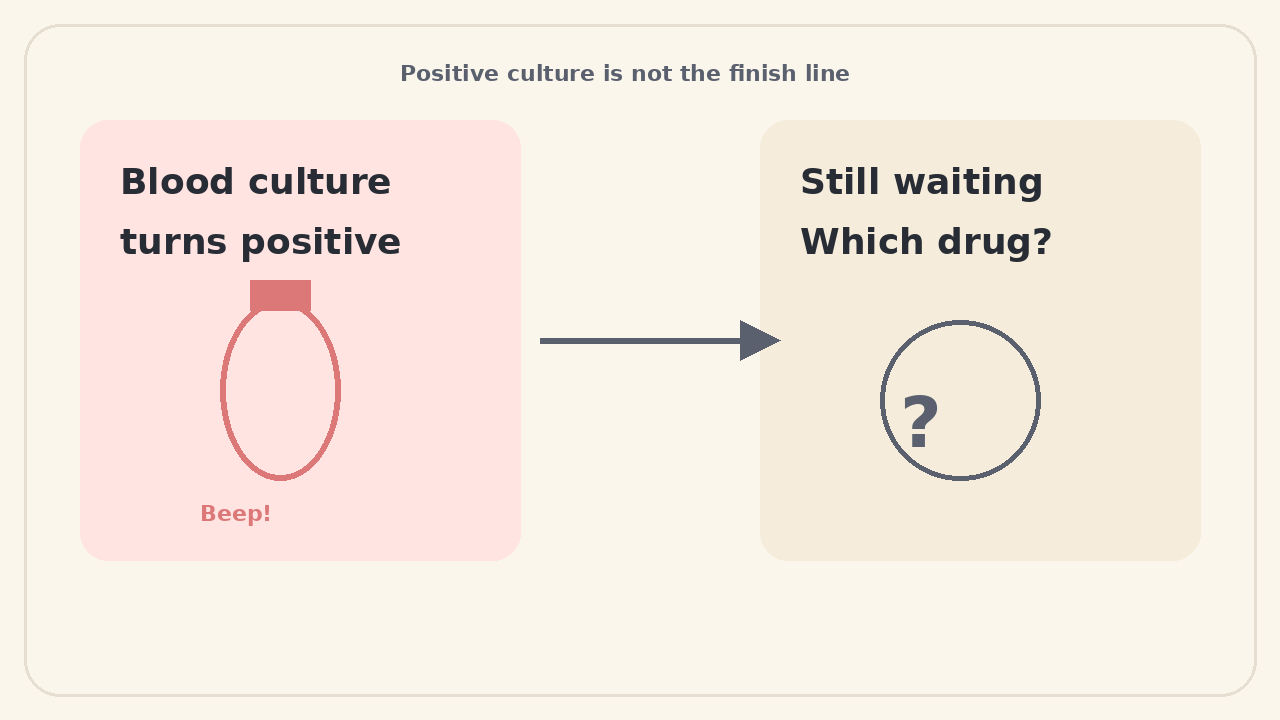
That second answer is antimicrobial susceptibility testing — checking whether a microbe looks Susceptible, Intermediate, or Resistant to named antibiotics. Classic paths often need more culture steps after the bottle flags. Hours stretch into days while patients may sit on broad empiric antibiotics, or wait through switches.
The friction is not “blood cultures don’t exist.” The friction is: after the bottle beeps, the right-drug map can still take days.