Last updated: 2026-09-21
Standing and walking are not only about moving the legs. The body continually corrects small leans so it does not tip. When legs, trunk, or sensory feedback cannot do that job well enough, people often add external balance aids: crutches, canes, or walkers.
Those aids work. They also occupy the hands. A hand on a crutch is a hand that cannot easily carry a plate, open a door, hug someone at eye level, or steady a child.
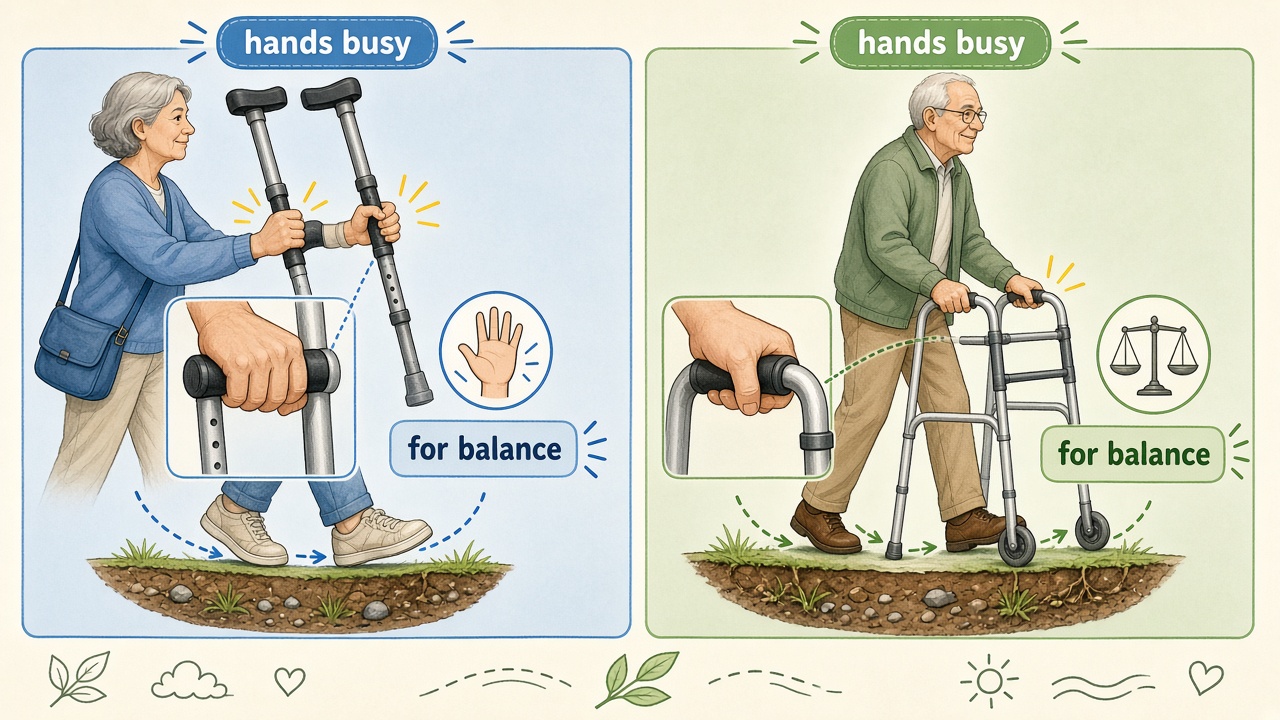
Many powered walking machines still expect crutches or a walker as a balance aid. That choice is honest about fall risk — and it leaves the hand-busy tradeoff in place.
The friction is not “walking machines don’t exist.” The friction is: upright mobility that still taxes the hands limits everyday life even when someone can take steps.