Research · Nested liabilities
Banking & claims
Last updated: 2026-07-30
What banking was for
❓ What problem did banks solve before they became money printers?
Banking let commerce move faster and safer than shipping metal for every trade. Hawala-style netting, bills of exchange, and later double-entry bookkeeping allowed trusted intermediaries to clear multilateral obligations. Transactions (frequent trade) separated from settlements (less frequent metal movement).
Double-entry bookkeeping made the bank’s own books a disciplined map of assets and liabilities—necessary for scale, not sufficient for honesty.
Fractional reserve
❓ How does fractional reserve create both credit and fragility?
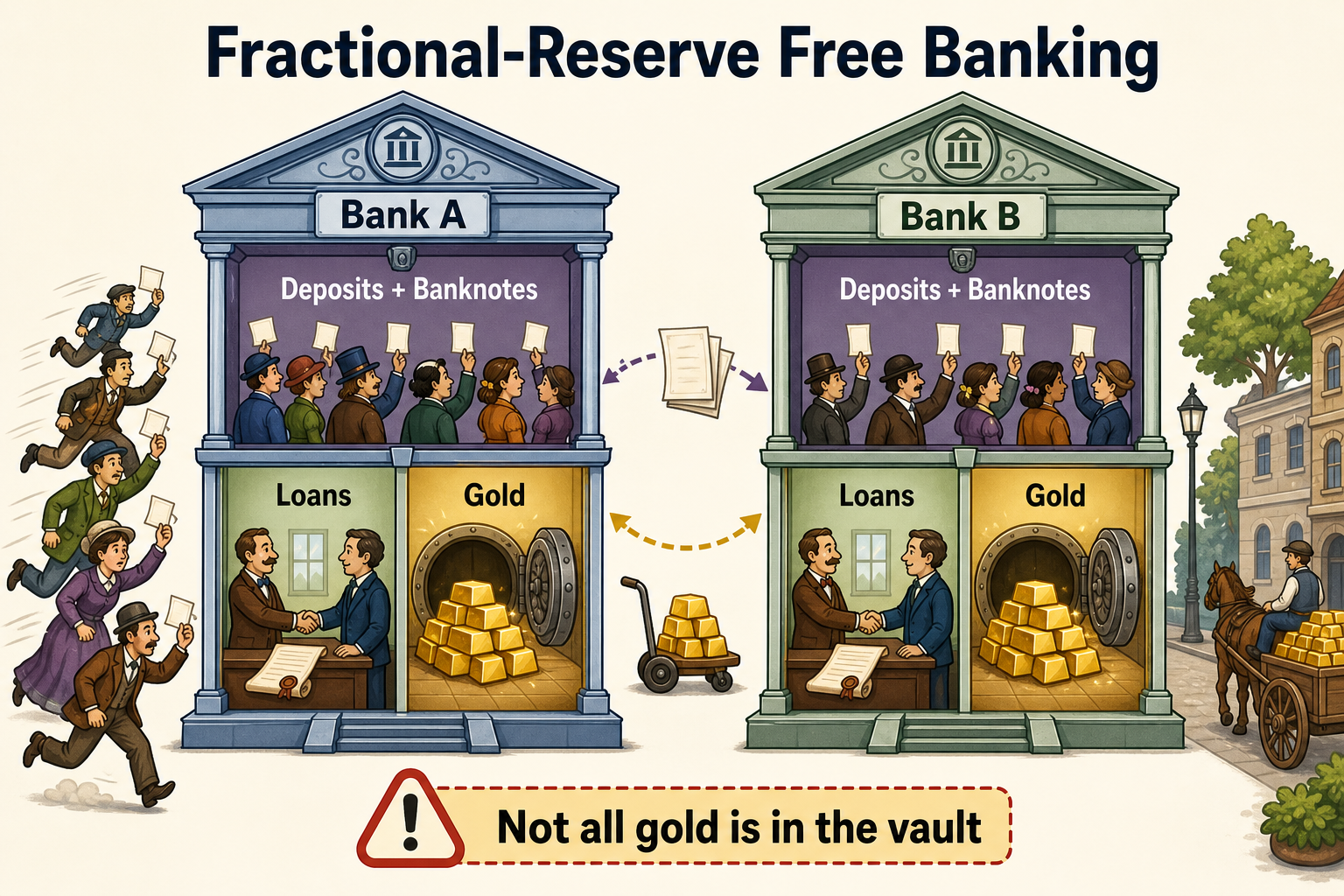
A full-reserve bank holds roughly one unit of base asset per unit of demand claim. A fractional-reserve bank holds a fraction and lends the rest, creating additional deposit claims. Efficiency and credit expansion rise; run risk rises because claims exceed immediately deliverable base assets. Free banking traditions tried market discipline; central banking socialized the backstop and standardized the unit—at the cost of political money.
Nested claims
❓ What does “liabilities all the way down” mean?
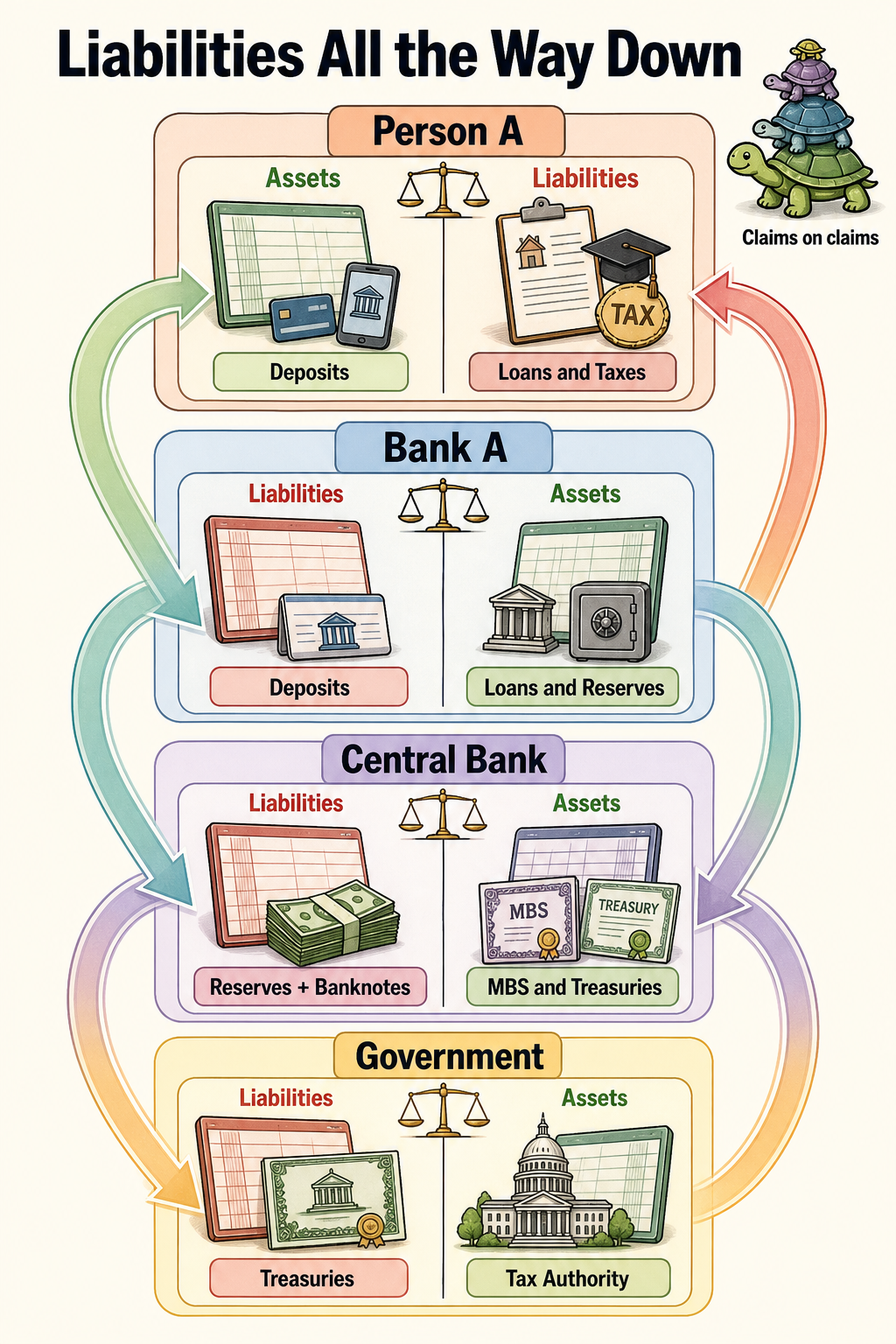
Your deposit is the bank’s liability. The bank’s reserve is a claim on the central bank. In pure fiat, the base is a liability of the central bank backed by government securities and policy credibility—not gold. Household “cash” is a chain of IOUs. That chain is why freezes and bailouts operate at the institutional layer rather than on metal in your pocket.
Modern echoes
❓ Where do old banking problems reappear today?
Money market funds, stablecoin issuers, and shadow-credit vehicles recreate claim layers. Convenience layers without clear base asset and without credible redemption are the recurring failure mode (see Terra algorithmic designs; FTX custodial fraud is a pure custody break, not fractional reserve per se).
Criticism
Efficient credit allocation is real. The book’s critique targets systemic soft-money leverage and bailout asymmetry, not the existence of loans.