Last updated: 2026-08-25
A trial kidney is not a kidney tomorrow
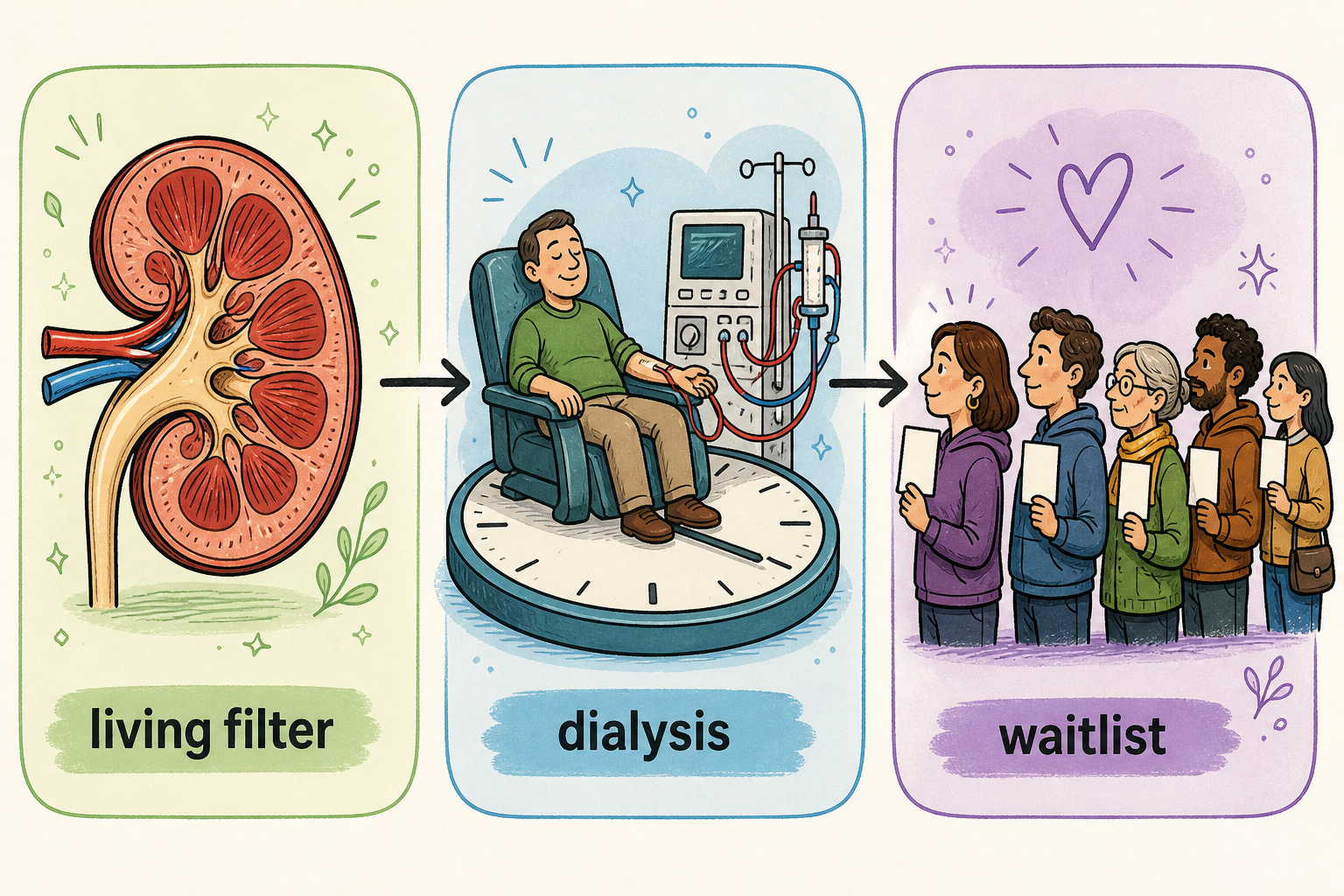
A kidney is a living filter. Dialysis takes over some of that work on a schedule; it does not create a new organ. On 3 November 2025, a surgical team transplanted a pig kidney with ten gene changes — six human genes added, four pig genes switched off — into a person whose own kidneys had failed. Those ten changes try three jobs: hide pig sugar tags that human blood already attacks, keep blood from clotting on pig vessel walls, and keep the organ from growing too large. That is a first inside a trial meant to support a later license — not the first pig kidney ever, and not a product on a shelf. A successful operation is not a kidney you can get tomorrow. That was November 2025. About ten months later it is still a trial, not this week's news. The class is now possible. It is not a product on a shelf.
What happened
On 3 November 2025, United Therapeutics announced the first transplant in EXPAND, a clinical study of an investigational pig kidney (UKidney) in people with end-stage kidney failure. The operation was performed at NYU Langone Health. Robert Montgomery, M.D., D.Phil., led the transplant team.
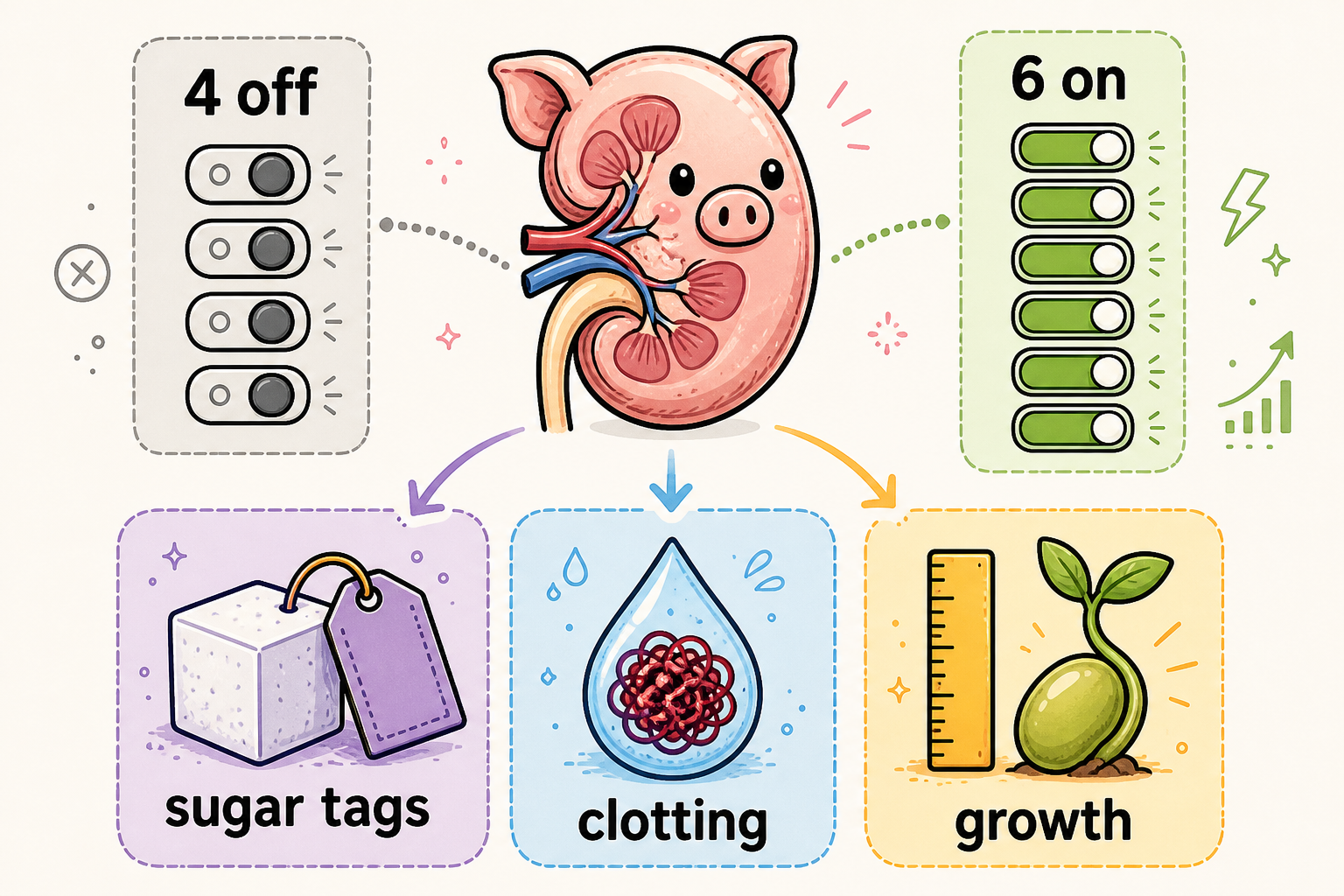
The kidney came from a pig with ten gene edits: six human genes added so a human immune system might accept the organ, and four pig genes turned off — three that help a human body reject a pig organ, and one that can make the organ keep growing. Those ten changes aim at three jobs: hide the pig sugar tags that human blood already attacks, keep blood from clotting on pig vessel walls, and keep the organ from growing too large.
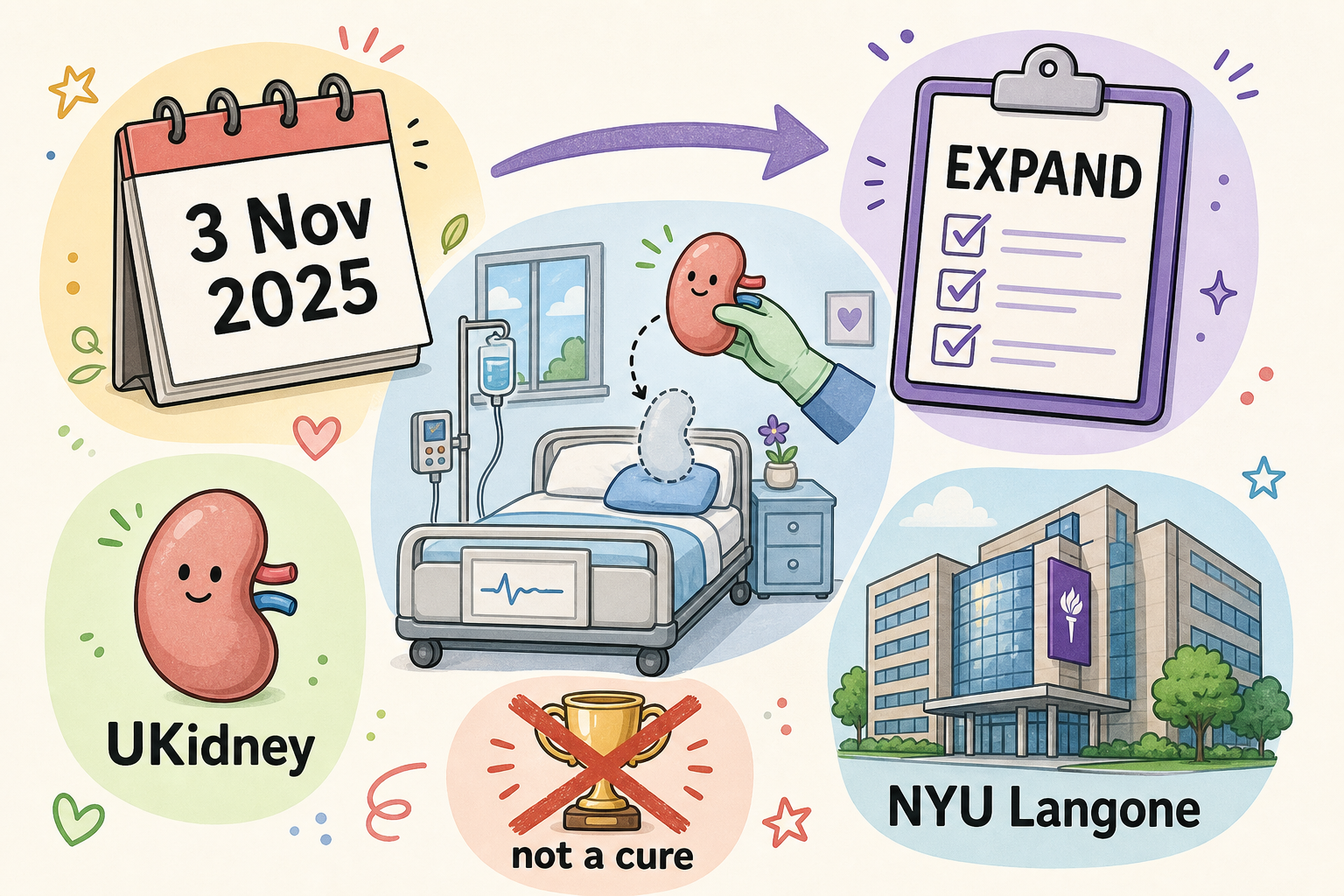
EXPAND (NCT06878560) is the first clinical trial built to study this kind of transplant in end-stage kidney failure in a way that could later support a license. It is multicenter, open-label, and meant to study safety and how well the organ works. The company says it is designed as a combined phase 1/2/3 study to support a later license application with the U.S. Food and Drug Administration. That application has not happened. The kidney is not approved. It is not for sale.
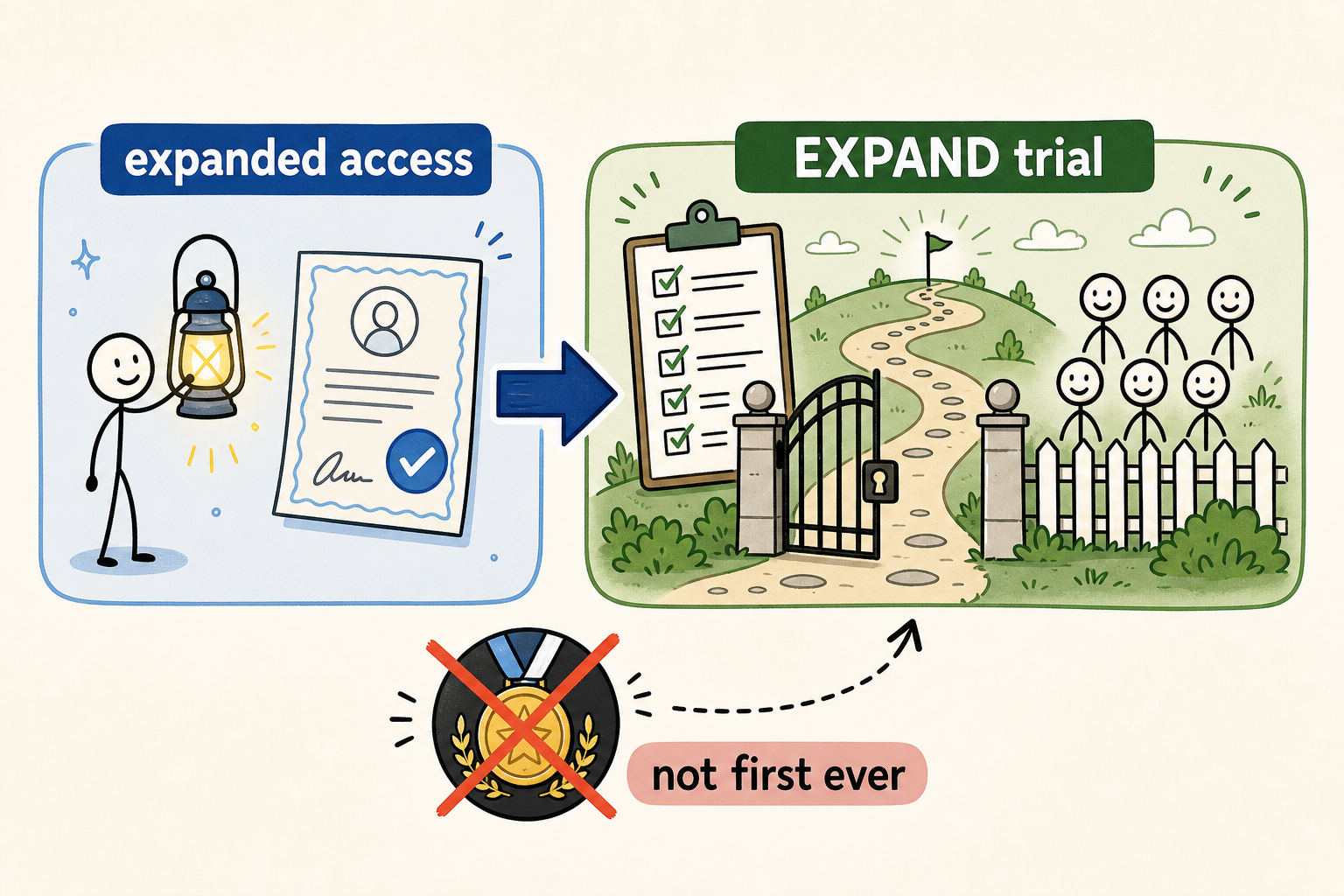
This is not the first pig kidney sewn into a living person. Earlier living cases used FDA expanded access — a one-off path outside a regular trial. Some of those grafts were later removed and some recipients died. What is new on 3 November 2025 is the path: a first case inside a prospective, multicenter, registration-intended protocol.
The first group is six transplants at two centers. There is a 12-week wait between the first and second transplant. After that first group reaches at least 12 weeks, an independent committee reviews the data. Only then might the study grow. As of 25 August 2026, the public record does not say the second transplant has happened, and it does not publish an independent-committee decision.
People in the study get the transplant, 24 weeks of close follow-up, then follow-up for the rest of their lives — including how the kidney works and whether any animal-to-human infection appears. As of 25 August 2026 the public record still does not publish how the first EXPAND recipient is doing.
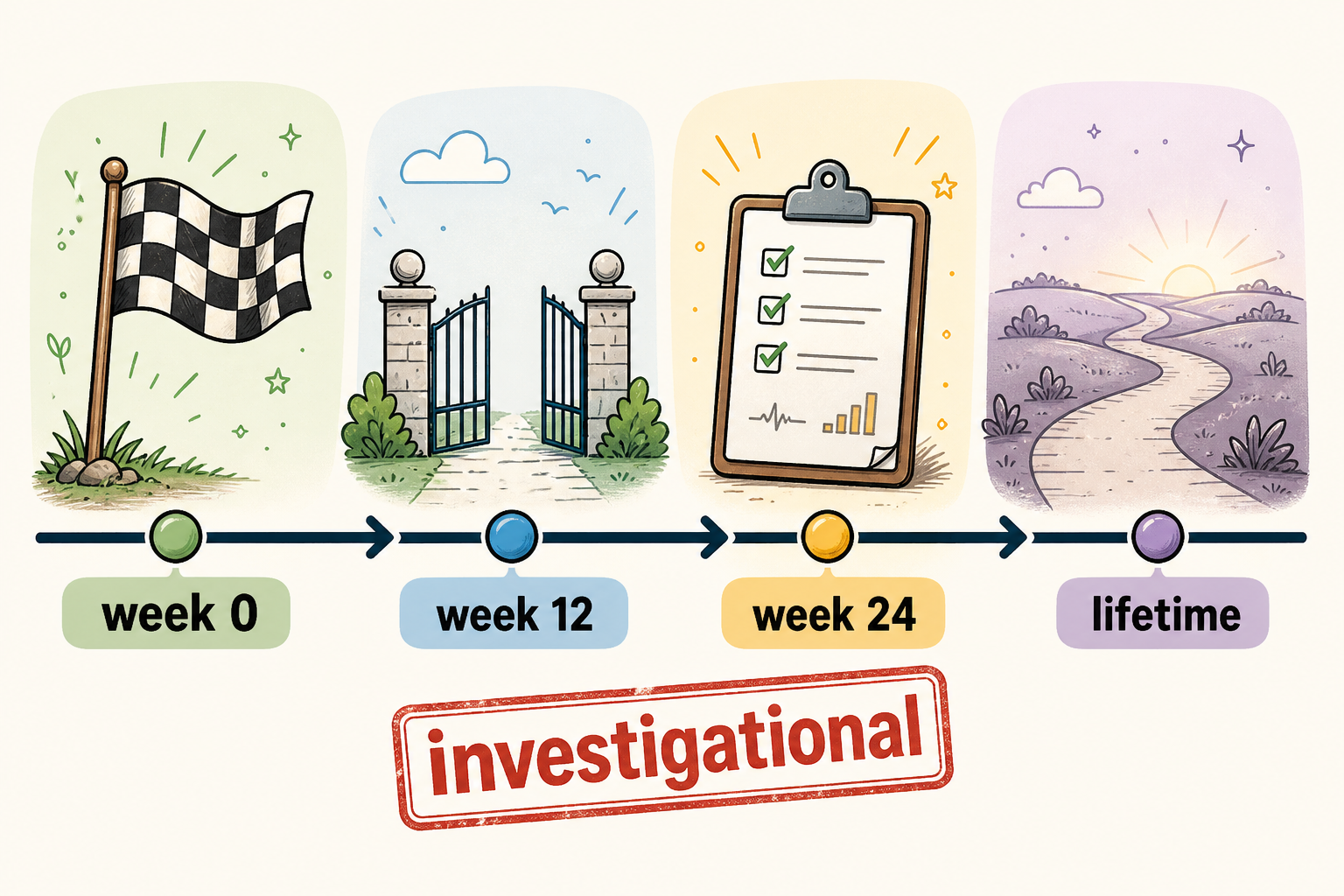
Key study criteria in the 3 November 2025 announcement include age 55–70, end-stage kidney failure, at least six months on hemodialysis, a matching test before transplant, no need for more than one organ, no listed severe other illnesses, and no history of not following medical plans that would make the study unsafe to finish.
United Therapeutics cited U.S. numbers from the American Kidney Fund (2025): about 815,000 people with kidney failure; more than 555,000 on dialysis; about 90,000 on the kidney transplant waitlist; 22,000 deceased-donor kidney transplants in 2024. It also cited USRDS 2023: three years after starting dialysis, only 12% had been placed on the national waitlist, while more than 40% had died.
On 5 August 2026, United Therapeutics' official earnings release said kidney (and other) xeno trials were ongoing and that two production facilities were planned. It did not name EXPAND, the first recipient, or any graft-function number.
The one idea
A kidney is a living filter. A trial is not a product. Ten edits do three jobs — they do not ship a therapy.
Gene edits try to make a pig kidney less foreign to a human body and better sized: six human genes in, four pig genes out, aimed at sugar tags, clotting, and growth. That is why this class of organ could enter a human study meant to support a later license. Entering that study is a milestone. It does not mean anyone aged 55–70 can walk in and get one tomorrow. It does not mean the first operation proved the organ for years. It does not mean this was the first pig kidney ever.
Follow the facts. Understand the difference. Learn the class — a gene-edited donor organ under study — not a brand name.
Honest limits
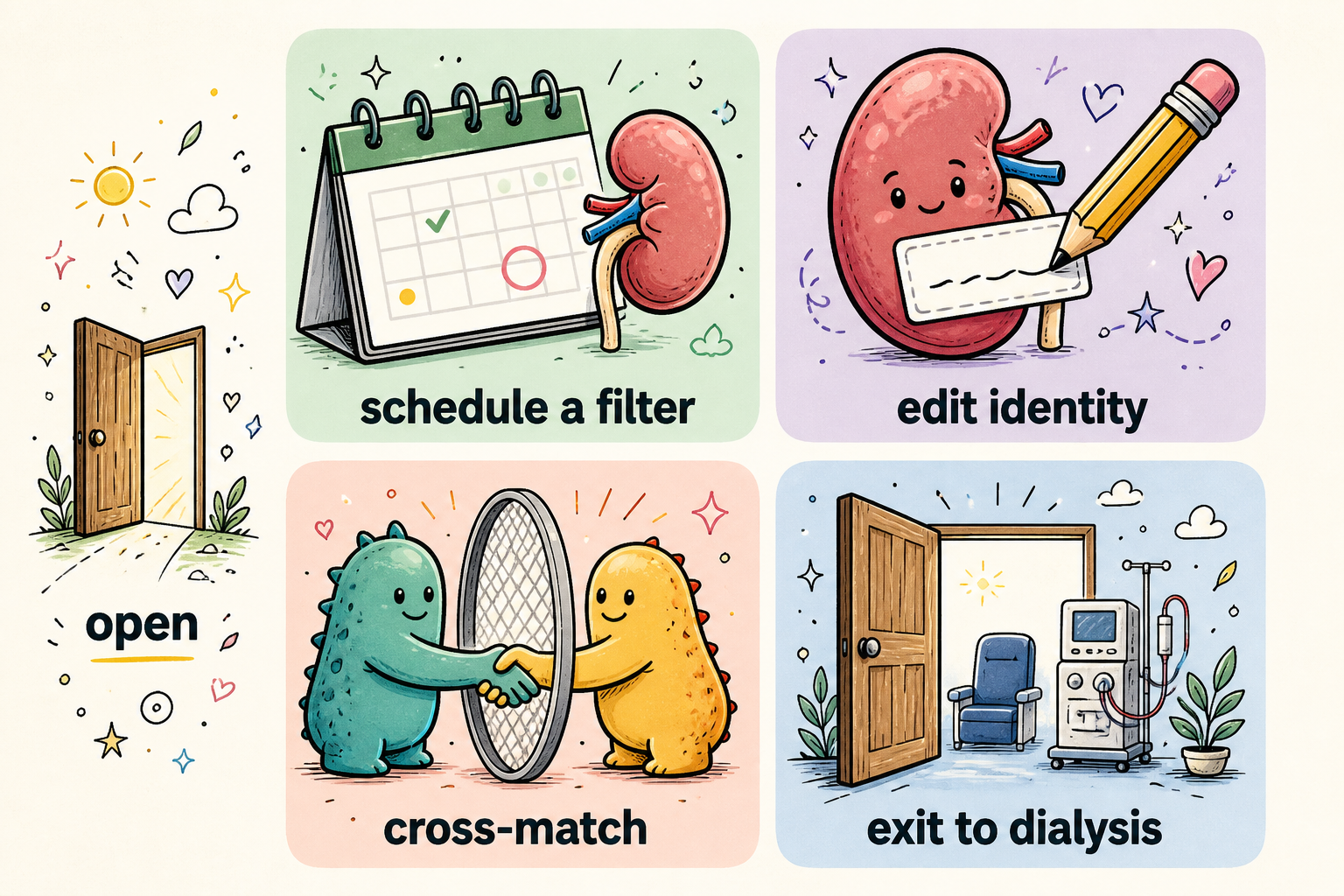
- First inside a trial meant to support a later license — not the first pig kidney ever. Earlier living cases used FDA expanded access; some grafts were later removed and some recipients died.
- First of six people in the first group, at two centers.
- Twelve weeks between the first and second transplant. As of 25 August 2026 the public record does not say transplant two has happened.
- No public independent-committee (IDMC) decision as of 25 August 2026.
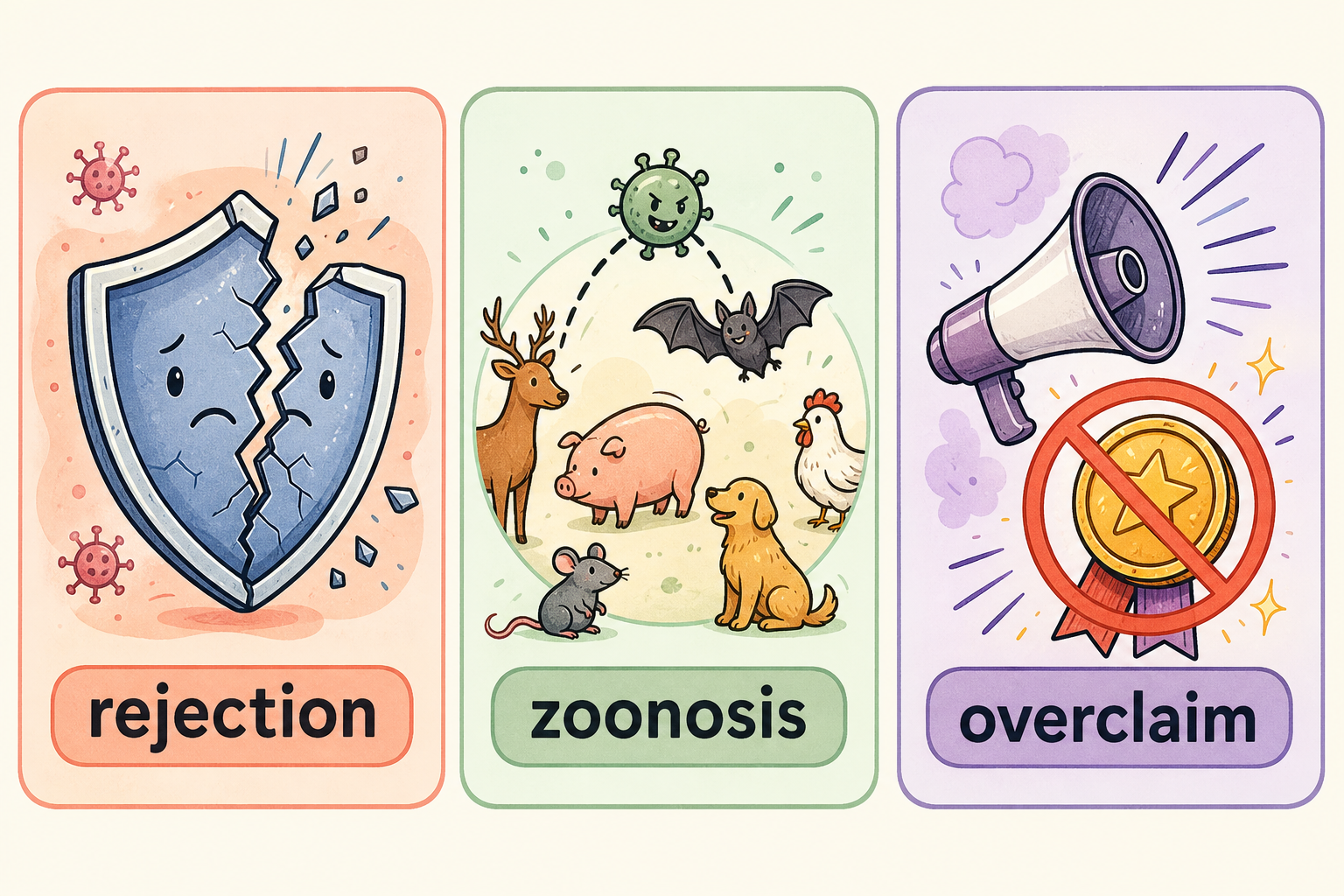
- Lifelong watch for organ function and animal-to-human infection.
- Age 55–70 in the 3 November 2025 announcement. At least six months on hemodialysis.
- Not for people who need more than one organ.
- Not approved. Not available. Not a shelf product.
- As of 25 August 2026 the public record still does not publish how the first EXPAND recipient is doing. This page does not invent 24-week outcomes.
- Official 5 August 2026 IR only says kidney xeno trials are ongoing. It does not name the first recipient or report outcomes.
Sources
- United Therapeutics, 3 November 2025: https://ir.unither.com/press-releases/2025/11-03-2025-120022270
- ClinicalTrials.gov NCT06878560: https://clinicaltrials.gov/study/NCT06878560
- United Therapeutics, 5 August 2026 earnings IR (trials ongoing; no EXPAND outcomes): https://ir.unither.com/press-releases/2026/08-05-2026-113027315
- United Therapeutics, 17 December 2024 (expanded-access UKidney): https://ir.unither.com/press-releases/2024/12-17-2024-120130031
- American Kidney Fund 2025 facts (as cited by United Therapeutics): https://www.kidneyfund.org/all-about-kidneys/quick-kidney-disease-facts-and-stats
- USRDS 2023 transplantation chapter (as cited by United Therapeutics): https://usrds-adr.niddk.nih.gov/2023/end-stage-renal-disease/7-transplantation
- Associated Press, 9 July 2024 (Lisa Pisano): https://apnews.com/article/pig-kidney-transplant-xenotransplant-nyu-c88fd6e3f72de09ed6e3c929ffdb53bc
- Associated Press, April 2025 (Towana Looney removal): https://apnews.com/article/pig-kidney-xenotransplant-geneedited-9fae82b85c98bf67398d5b4798977c2b
- CNN, 11 April 2025 (Looney removal): https://www.cnn.com/2025/04/11/health/pig-kidney-transplant-removed-longest-in-living-patient
- CNN, 8 September 2025 (Slayman / trial contrast): https://www.cnn.com/2025/09/08/health/pig-kidney-transplant-human-trial-fda
Try inventing
Warmer Sun is where people come to follow, understand, and learn — not a lab. If you can restate the difference — a trial kidney is not a kidney tomorrow — you understand the week.
You can try inventing with this at https://warmersun.com/forge. No account. No card. Just try it.